Electric Delivery Vehicles Comparison Guide: Explore Insights, Facts, Tips & Practical Knowledge
Electric delivery vehicles (EDVs) are commercial transport vehicles powered by electricity instead of traditional internal combustion engines. These include electric vans, trucks, and last-mile delivery vehicles widely used in logistics, e-commerce, and urban transportation. Over the past few years, EDVs have gained significant attention due to rising fuel costs, stricter environmental regulations, and increasing demand for sustainable logistics solutions.
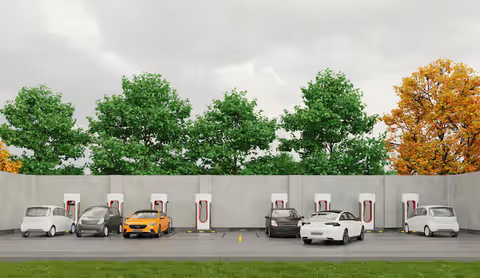
This comparison matters more than ever in today’s rapidly evolving transportation landscape. Governments across the world are introducing emission reduction targets, while companies are under pressure to reduce their carbon footprint. At the same time, battery technology is improving, making electric vehicles more practical for delivery operations.
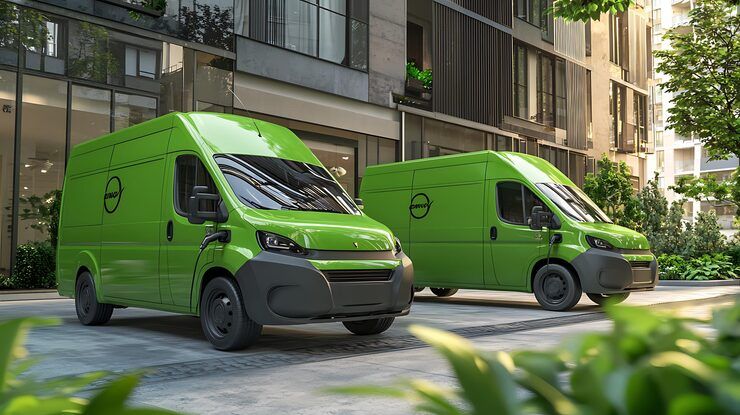
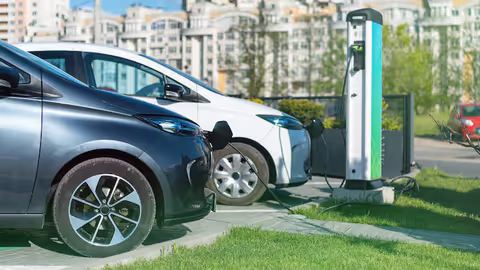
Recent trends show strong adoption in urban logistics, especially for last-mile delivery. Growth in e-commerce has increased delivery volumes, and electric vehicles are seen as a solution to reduce operational costs and emissions. Additionally, advances in charging infrastructure and battery efficiency are making EDVs a viable alternative to diesel-powered fleets.
Who It Affects and What Problems It Solves
Electric delivery vehicles impact multiple stakeholders across industries. Logistics companies, fleet operators, e-commerce businesses, and urban delivery services are the primary users. Governments and city planners are also involved due to environmental and infrastructure considerations. Even consumers are indirectly affected, as delivery efficiency and environmental sustainability influence service quality and pricing.
For businesses, EDVs offer an opportunity to align with sustainability goals while potentially reducing long-term operational costs. For cities, they help reduce air pollution and noise levels, improving urban living conditions. For drivers, electric vehicles often provide a smoother and quieter driving experience.
Problems It Solves
- High Fuel Costs: Electric vehicles reduce dependence on fluctuating fuel prices.
- Urban Pollution: EDVs produce zero tailpipe emissions, helping reduce air pollution.
- Noise Pollution: Electric motors are quieter than diesel engines, especially beneficial in urban areas.
- Regulatory Compliance: Helps businesses meet emission standards and environmental regulations.
- Maintenance Complexity: Fewer moving parts reduce maintenance needs compared to traditional vehicles.
Recent Updates and Industry Trends
The past year has seen several notable developments in the electric delivery vehicle sector:
- Battery Advancements: Lithium-ion battery efficiency continues to improve, with higher energy density and longer lifespans.
- Expansion of Charging Infrastructure: Many countries are investing heavily in public and private charging networks, improving accessibility.
- Fleet Electrification Initiatives: Major logistics companies are committing to transitioning their fleets to electric vehicles over the next decade.
- Government Incentives: Subsidies, tax benefits, and grants are encouraging businesses to adopt EDVs.
- Rise of Micro-Mobility Delivery: Electric bikes and small cargo vehicles are gaining popularity for last-mile delivery in congested cities.
- Data Integration: Fleet management systems now include telematics and AI tools to optimize routes and battery usage.
These developments indicate a shift toward mainstream adoption, especially in urban logistics.
Comparison Table: Electric vs Traditional Delivery Vehicles
| Feature | Electric Delivery Vehicles (EDVs) | Traditional Diesel Vehicles |
|---|---|---|
| Fuel/Energy Source | Electricity | Diesel/Petrol |
| Emissions | Zero tailpipe emissions | High CO₂ emissions |
| Operating Cost | Lower (electricity cheaper) | Higher (fuel costs) |
| Maintenance | Lower (fewer moving parts) | Higher (engine complexity) |
| Initial Cost | Higher upfront | Lower upfront |
| Range | Moderate (100–300 km typical) | High (400+ km) |
| Charging/Refueling Time | Longer (charging required) | Quick refueling |
| Noise Level | Low | High |
| Government Incentives | Often available | Limited |
| Urban Suitability | Highly suitable | Less efficient |
Laws, Policies, and Practical Guidance
Electric delivery vehicles are strongly influenced by government regulations and environmental policies. Many countries have introduced frameworks to promote electric mobility.
Key Policy Areas
- Emission Regulations: Governments are enforcing stricter emission standards, making diesel vehicles less attractive.
- Subsidies and Incentives: Financial incentives such as tax rebates, grants, and reduced registration fees encourage EDV adoption.
- Low Emission Zones (LEZs): Many cities restrict high-emission vehicles, giving electric vehicles a clear advantage.
- Charging Infrastructure Policies: Governments are supporting the development of charging stations through public-private partnerships.
Practical Guidance
- Urban Delivery: Electric vehicles are ideal due to shorter routes and frequent stops.
- Long-Distance Logistics: Hybrid or traditional vehicles may still be more practical due to range limitations.
- Fleet Transition Strategy: Businesses should adopt a phased approach, starting with high-frequency urban routes.
- Cost Planning: Evaluate total cost of ownership (TCO), not just upfront costs.
Tools and Resources
Several tools and platforms can help businesses and individuals evaluate and manage electric delivery vehicles:
- Fleet Management Software: Helps track vehicle performance, routes, and energy usage.
- EV Cost Calculators: Compare total cost of ownership between electric and diesel vehicles.
- Charging Station Locators: Apps that identify nearby charging points.
- Telematics Systems: Provide real-time data on vehicle efficiency and battery health.
- Government Portals: Offer updated information on subsidies, policies, and incentives.
- Route Optimization Tools: Use AI to plan efficient delivery routes and reduce energy consumption.
These resources support informed decision-making and efficient fleet operations.
Frequently Asked Questions
What are electric delivery vehicles used for?
Electric delivery vehicles are primarily used for transporting goods, especially in urban and last-mile delivery operations.
Are electric delivery vehicles cost-effective?
While the upfront cost is higher, lower fuel and maintenance expenses often result in long-term savings.
How far can electric delivery vehicles travel on a single charge?
Most EDVs offer a range between 100 and 300 kilometers, depending on the model and load conditions.
Is charging infrastructure sufficient?
Charging infrastructure is expanding rapidly, but availability can vary by region and requires planning.
Are electric delivery vehicles suitable for all businesses?
They are best suited for urban deliveries and predictable routes but may not yet fully replace long-haul vehicles.
Conclusion
Electric delivery vehicles represent a significant shift in the logistics and transportation sector. Data trends show increasing adoption driven by environmental concerns, regulatory pressures, and advancements in battery technology. While challenges such as higher upfront costs and range limitations remain, the overall total cost of ownership is becoming more favorable over time.
For urban logistics and last-mile delivery, electric vehicles are increasingly the preferred choice due to their efficiency, lower emissions, and compatibility with regulatory requirements. For long-distance operations, a hybrid approach may still be necessary.
Overall, the comparison suggests that electric delivery vehicles are a practical and future-ready solution, particularly for businesses operating in urban environments or aiming to meet sustainability goals.