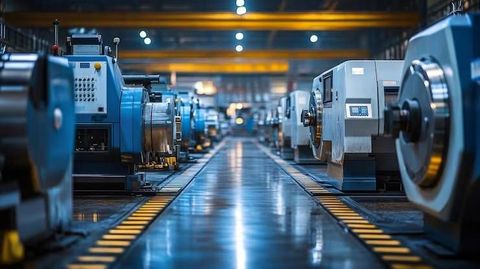
Manufacturing Machinery Guide: Powering Modern Industrial Production with Advanced Equipment
Manufacturing machinery forms the backbone of industrial production across the globe. From precision components in aerospace to everyday consumer goods, the right industrial machinery and manufacturing equipment determine efficiency, quality, and competitiveness. Businesses seeking industrial equipment manufacturers or heavy machinery solutions increasingly focus on systems that deliver accuracy, scalability, and long-term value.
Understanding manufacturing machinery helps companies select the tools that match their production needs while maximizing output and minimizing downtime.
What Is Manufacturing Machinery?
Manufacturing machinery refers to the specialized industrial equipment used to transform raw materials into finished products. This includes machine tools, fabrication systems, material handling equipment, and automated production lines. Industrial machinery ranges from traditional lathes and milling machines to advanced CNC machining centers and robotic automation systems.
These machines enable processes such as cutting, shaping, forming, assembling, and finishing. In today’s factories, manufacturing equipment often integrates sensors, software, and connectivity for smarter operations. Companies searching for industrial machinery suppliers or factory automation solutions prioritize reliability and compatibility with existing workflows.
Key Types of Manufacturing Machinery
Machining Equipment
Machining equipment removes material to create precise shapes. Common examples include CNC lathes, milling machines, grinding machines, and drilling systems. CNC machining stands out for its ability to produce complex parts with tight tolerances, making it essential in aerospace, automotive, and medical device manufacturing. Precision manufacturing relies heavily on these tools for consistent results across high-volume or custom runs.
Fabrication and Forming Machinery
Fabrication equipment shapes metal and other materials through cutting, bending, welding, and punching. Laser cutters, plasma cutters, press brakes, and welding systems fall into this category. Heavy machinery in this group supports structural components for construction, transportation, and energy sectors. Industrial equipment manufacturers often customize these systems for specific materials like stainless steel or aluminum.
Material Handling and Automation Systems
Material handling equipment moves components efficiently through production lines. Conveyors, robotic arms, automated guided vehicles, and palletizing systems reduce manual labor and speed up workflows. Factory automation integrates these with sensors and control software to create seamless operations. Industrial automation solutions help manufacturers achieve higher throughput while improving workplace safety.
Specialized Production Machinery
Certain industries require dedicated equipment. Injection molding machines serve plastics production, while packaging machinery handles food, beverage, and pharmaceutical lines. Semiconductor and electronics manufacturing depend on highly precise assembly and inspection systems. Additive manufacturing equipment, such as industrial 3D printers, supports rapid prototyping and complex geometries that traditional methods struggle to achieve.
Benefits of Modern Manufacturing Machinery
Investing in quality industrial machinery delivers measurable advantages. Advanced manufacturing equipment increases production speed and consistency, reducing defects and rework. CNC machining and automated systems maintain tight tolerances that manual processes cannot match, supporting high-value applications in precision manufacturing.
Cost efficiency improves over time through lower labor requirements, reduced scrap rates, and energy-optimized designs. Factory automation enables 24/7 operation with predictive maintenance features that minimize unexpected downtime. Many industrial equipment manufacturers now offer connected machines that provide real-time data on performance, helping operators optimize processes and schedule maintenance proactively.
Flexibility is another key benefit. Modern manufacturing machinery adapts to changing product designs or smaller batch sizes, supporting both mass production and custom orders. This versatility helps businesses respond to market demands without major retooling investments.
Choosing the Right Industrial Machinery for Your Needs
Selecting manufacturing equipment starts with clear production requirements. Evaluate volume targets, material types, tolerance needs, and available floor space. Consider total cost of ownership, including energy use, maintenance, training, and software updates, rather than focusing only on purchase price.
Look for industrial machinery from reputable industrial equipment manufacturers that provide strong support, spare parts availability, and training. Certifications and compliance with industry standards matter, especially in regulated sectors like aerospace or medical devices. Integration capability with existing systems and future expansion plans should also influence decisions.
For many operations, starting with modular or scalable factory automation solutions allows gradual upgrades. Pilot testing or consulting with specialists can confirm that the chosen heavy machinery or CNC systems deliver expected performance before full commitment.
Trends Shaping Manufacturing Machinery Today
Digital transformation continues to reshape industrial machinery. Smart manufacturing equipment collects data for predictive analytics, quality monitoring, and process optimization. Robotics and collaborative robots work alongside human operators, handling repetitive or hazardous tasks.
Sustainability drives design improvements, with energy-efficient motors, reduced material waste, and longer equipment lifespans becoming standard. Additive manufacturing expands design possibilities while hybrid systems combine traditional machining with 3D printing for greater flexibility.
Demand for precision manufacturing and industrial automation solutions remains strong as companies seek competitive edges through higher quality and lower operating costs.
Manufacturing machinery remains central to industrial progress. Whether upgrading a single CNC machining center or building a fully automated production line, the right industrial equipment delivers lasting value through improved efficiency, quality, and adaptability. Businesses that invest thoughtfully in modern manufacturing equipment position themselves for sustained growth in competitive markets.