A Complete Guide to Extruder Machines and Their Importance
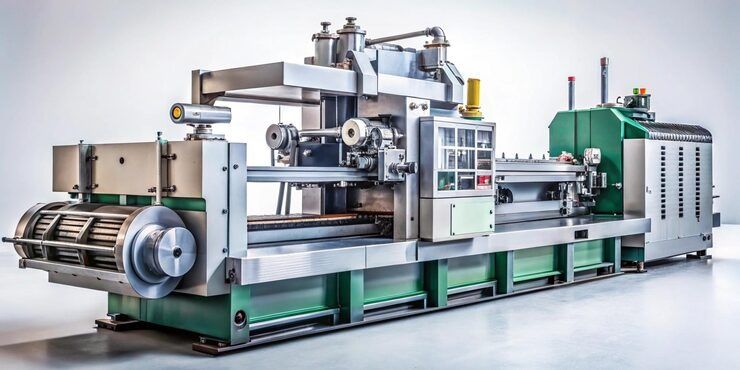
The principle is simple: the material is fed in a barrel, heated (if necessary) and pushed out by a rotating screw or stamp. As it goes through a dead, the material appears in a constant shape such as a tube, sheet, film, profile or string
Principle of Extrusion
The principle is simple:
-
The material is fed into a barrel.
-
It is heated (if necessary).
-
It is pushed out by a rotating screw or stamp.
-
As it passes through a die, the material comes out in a constant shape such as a tube, sheet, film, profile, or string.
This continuous form makes extrusion one of the most effective industrial processes.
Why Extruder Machines Matter
Extruder machines solve major industrial needs because they:
-
Enable continuous, high-throughput production.
-
Allow accurate forms of complex profiles and designs.
-
Support material efficiency with minimal waste.
-
Facilitate recycling and the use of durable materials.
-
Maintain consistent quality through temperature and process control.
Industries Affected
Extruder machines are widely used in:
-
Packaging industry → films, sheets, containers.
-
Construction → pipes, PVC profiles, insulation.
-
Automotive & electrical → wire covering, panels, trim parts.
-
Food processing → snacks, cereals, pasta, pet foods.
-
Rubber & silicone → gaskets, seals, medical tubes.
-
Recycling industry → turning plastic waste into usable profiles.
Extrusion not only improves production efficiency but also plays a role in sustainability by supporting plastic recovery and alternative material use.
New Updates & Trends
Recent innovations in extrusion technology include:
-
Automation & digitization → smart sensors, process monitoring, Industry 4.0 integration.
-
Energy-efficient design → reduced power consumption, optimized screw geometry.
-
Recycled material support → twin-screw extruders that process mixed or post-consumer plastics.
-
Food sector innovation → precise feeding and shaping for consistent textures.
-
Compact machines → space-saving extrusion lines for efficient factory layouts.
Global demand for extruder machines is increasing, driven by packaging needs, durable materials, and infrastructure growth.
Laws & Guidelines Affecting Extruder Machines
Extruder machines must comply with various safety and quality regulations, such as:
-
Machine safety rules → guards, emergency stops, operator safety.
-
Quality certifications → BIS (India), CE (Europe), etc.
-
Environmental policies → recycled plastics and bio-based materials encouraged.
-
Import/export tariffs → customs, GST/VAT, and other duties.
-
Material-specific standards → regulations for PVC, polyethylene, food-grade materials.
Technical Equipment
-
Polymer simulation software for heat transfer and die design.
-
Real-time process monitoring systems (temperature, pressure, torque).
-
Material databases for polymers, additives, and food-grade materials.
-
Extrusion calculators for throughput, power, and cooling needs.
Useful Resources
-
Standard organizations → ISO, BIS, ASTM guidelines.
-
Trade shows & expos → latest extrusion technologies.
-
Process troubleshooting services → for technical issues.
-
Testing labs → polymer characterization and extrusion testing.
Q1: What is the difference between single screw and twin screw extruders?
-
Single screw → best for simple shapes and standard polymers.
-
Twin screw → ideal for mixing, compounding, or recycling materials.
Q2: Can extruder machines process recycled plastic?
-
Yes, especially modern twin-screw designs. Proper filtration is essential for consistent results.
Q3: What are the main safety risks?
-
High temperature and pressure risks: burns, mechanical jams, or electrical hazards.
-
Safety locks, guards, and operator training are crucial.
Q4: What foods are made using extrusion?
-
Snacks, pasta, breakfast cereals, pet foods, and meat alternatives (soy proteins).
Q5: How does extrusion differ from casting?
-
Extrusion → continuous process, long uniform profiles.
-
Casting (injection molding) → discrete parts formed in closed molds.
Final Observation
Extruder machines are a cornerstone of modern industry—essential for construction, packaging, recycling, and food processing.