Understanding Horizontal CNC Machines: Features, Functions, and Specifications
A horizontal CNC machine, often referred to as a horizontal machining center (HMC machine), is a type of computer-controlled manufacturing equipment designed to perform precision machining operations. Unlike vertical machines, where the spindle is oriented vertically, a horizontal CNC machine positions the spindle horizontally, allowing tools to approach the workpiece from the side.
This design exists to address specific manufacturing challenges. In industries where complex parts require machining on multiple faces, a horizontal machining center improves efficiency by reducing the need for manual repositioning. It enables continuous operation, higher accuracy, and better chip removal, which is essential for maintaining surface quality.
An industrial horizontal machining center is widely used in sectors such as automotive, aerospace, heavy equipment, and metal fabrication. These machines are capable of handling high-volume production as well as intricate components, making them a core part of modern manufacturing systems.
Why Horizontal CNC Machines Matter Today
Horizontal CNC machines play a critical role in today’s manufacturing landscape due to increasing demand for precision, speed, and automation. Their importance can be understood through the following factors:
Improved Productivity
- Multiple-sided machining reduces setup time
- Automated pallet changers allow continuous operation
- Faster cycle times compared to manual or vertical setups
Enhanced Accuracy and Consistency
- CNC control systems ensure repeatability
- Reduced human intervention minimizes errors
- Stable structure supports tight tolerances
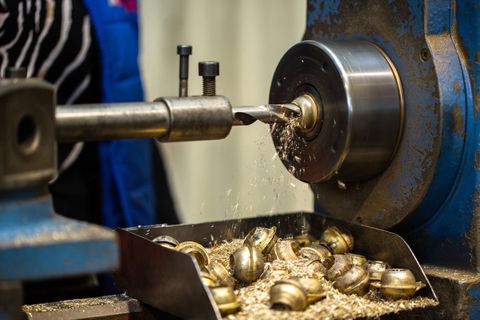
Better Chip Management
- Gravity helps remove chips naturally
- Reduces tool wear and improves surface finish
- Minimizes machine downtime for cleaning
Industries Impacted
- Automotive manufacturing (engine blocks, transmission parts)
- Aerospace components (precision metal parts)
- Defense and heavy machinery
- Medical device manufacturing
Problems Solved
- Complex multi-face machining challenges
- Inefficiencies in batch production
- Tool wear due to poor chip evacuation
- Inconsistent part quality in manual processes
As global manufacturing continues to evolve toward automation and smart factories, the role of the horizontal machining center becomes increasingly significant.
Recent Developments and Trends
Over the past year (2025–2026), several advancements have influenced the design and application of horizontal CNC machines.
Integration with Smart Manufacturing (2025)
Manufacturers have increasingly integrated HMC machines with Industrial Internet of Things (IIoT) systems. This allows real-time monitoring of machine performance, predictive maintenance, and data-driven decision-making.
AI-Assisted Machining Optimization (Late 2025)
Artificial intelligence is being used to optimize cutting parameters automatically. These systems analyze tool wear, vibration, and material behavior to improve machining efficiency.
Energy Efficiency Improvements (Early 2026)
Newer models of industrial horizontal machining centers focus on reduced power consumption. Energy-efficient motors and standby modes help align with sustainability goals.
Advanced Automation Systems
- Robotic pallet handling systems
- Automated tool changers with higher capacity
- Integration with flexible manufacturing systems (FMS)
Hybrid Manufacturing Capabilities
Some modern HMC machines now combine additive and subtractive processes, enabling more complex part production within a single setup.
Regulatory and Policy Considerations
The use of horizontal CNC machines is influenced by industrial regulations and government policies, particularly in countries like India.
Safety Standards
- Compliance with machine safety guidelines under organizations such as BIS (Bureau of Indian Standards)
- Mandatory safety features like emergency stops, guards, and interlocks
Environmental Regulations
- Policies related to energy consumption and emissions
- Waste management rules for metal chips and coolant fluids
Skill Development Initiatives
Government programs encourage CNC training to build a skilled workforce. For example:
- Skill India Mission
- National Skill Development Corporation (NSDC) programs
Make in India Initiative
Encourages domestic manufacturing, increasing demand for advanced equipment like horizontal machining centers.
Import and Export Policies
Regulations on machinery imports can influence the availability of advanced HMC machines and components.
Key Features and Specifications
Understanding horizontal machining center specifications is essential for evaluating performance and suitability. Below is a simplified overview:
Core Components of an HMC Machine
- Horizontal spindle
- Worktable or pallet system
- Tool magazine
- CNC control panel
- Chip conveyor system
Typical Specifications Table
| Specification | Description |
|---|---|
| Spindle Speed | 5,000 – 20,000 RPM |
| Tool Capacity | 30 – 200 tools |
| Axis Travel (X, Y, Z) | Varies by machine size |
| Pallet Size | 300 mm – 1000 mm |
| Load Capacity | Up to several tons |
| Control System | CNC (Computer Numerical Control) |
Performance Comparison (Horizontal vs Vertical CNC)
| Feature | Horizontal CNC Machine | Vertical CNC Machine |
|---|---|---|
| Spindle Orientation | Horizontal | Vertical |
| Chip Removal | More efficient | Less efficient |
| Setup Complexity | Lower for multi-face parts | Higher |
| Floor Space Requirement | Larger | Smaller |
| Ideal Use Case | Complex, high-volume parts | Simpler components |
Tools and Resources for Working with HMC Machines
Several tools and platforms support the effective use of horizontal CNC machines:
Software Tools
- CAD (Computer-Aided Design) software for part modeling
- CAM (Computer-Aided Manufacturing) software for toolpath generation
- CNC simulation software to test machining operations
Machine Monitoring Systems
- Real-time dashboards for performance tracking
- Predictive maintenance tools
- Production analytics platforms
Training Resources
- CNC programming tutorials
- Industrial automation courses
- Certification programs in machining technology
Calculators and Utilities
- Cutting speed and feed rate calculators
- Tool life estimation tools
- Material removal rate calculators
Documentation Templates
- Machine maintenance checklists
- Quality inspection reports
- Production planning sheets
These resources help improve efficiency, reduce errors, and ensure consistent production quality.
Frequently Asked Questions
1. What is the main difference between a horizontal CNC machine and a vertical CNC machine?
The primary difference lies in spindle orientation. A horizontal CNC machine has a horizontally aligned spindle, allowing better chip removal and efficient multi-face machining, while a vertical CNC machine has a vertically oriented spindle.
2. What industries commonly use horizontal machining centers?
Industries such as automotive, aerospace, defense, and heavy equipment manufacturing widely use horizontal machining centers due to their ability to handle complex and high-volume production tasks.
3. What are the advantages of an HMC machine?
Key advantages include improved productivity, better chip evacuation, reduced setup time, and higher precision in machining operations.
4. Are horizontal machining centers suitable for small-scale production?
While they are typically used for large-scale and complex production, they can also be applied in smaller operations if multi-face machining or automation is required.
5. What factors should be considered when reviewing horizontal machining center specifications?
Important factors include spindle speed, tool capacity, axis travel, pallet size, control system, and compatibility with automation systems.
Conclusion
Horizontal CNC machines, or horizontal machining centers, represent a critical advancement in modern manufacturing. Their design addresses key challenges such as multi-face machining, chip management, and production efficiency. As industries continue to move toward automation and precision engineering, the relevance of the industrial horizontal machining center continues to grow.
Recent developments in smart manufacturing, AI integration, and energy efficiency highlight the evolving capabilities of these machines. At the same time, regulatory frameworks and government initiatives influence their adoption and usage across industries.
Understanding the features, functions, and specifications of horizontal CNC machines allows manufacturers, engineers, and learners to make informed decisions and adapt to changing industrial demands. These machines are not just tools but essential components of a highly optimized and technologically advanced production environment.