Understanding Artificial Turf Installation: Techniques, Environmental Factors, and Performance Tips
Artificial turf installation refers to the process of preparing ground surfaces and placing synthetic grass systems designed to replicate the appearance and functional qualities of natural grass. These systems are commonly used in residential landscapes, sports facilities, playgrounds, commercial spaces, and public parks.
Artificial turf emerged as a practical alternative to natural grass in areas where maintaining traditional lawns proved difficult due to climate conditions, water availability, or high usage levels. Natural grass requires regular watering, mowing, and soil management, which can be challenging in regions with limited rainfall or extreme weather patterns.
Synthetic turf systems were developed to address these challenges by providing a durable surface that maintains consistent appearance and usability with less intensive maintenance. Modern artificial turf is engineered with layered structures that support drainage, stability, and surface resilience.
Importance: Why Artificial Turf Installation Matters Today
Artificial turf installation has become increasingly relevant as cities and communities explore sustainable landscape solutions and long-lasting recreational surfaces.
Key reasons this topic matters today include:
-
Water conservation: Synthetic turf can reduce the need for irrigation in dry climates
-
Consistent surface quality: Maintains usability during heavy foot traffic
-
Low seasonal variability: Remains stable through changing weather conditions
-
Reduced landscape maintenance: Minimizes mowing, fertilizing, and reseeding
-
Urban space optimization: Supports green-looking environments in dense areas
Artificial turf affects homeowners, sports facility managers, landscape planners, school administrators, and municipal authorities. It helps solve problems such as soil erosion, high maintenance requirements, and uneven playing surfaces.
In urban areas where green spaces are limited, artificial turf offers a way to maintain visually appealing and functional landscapes without the intensive upkeep associated with natural lawns.
Recent Updates: Trends and Developments (2024–2025)
In the past year, artificial turf technology and installation practices have evolved to address environmental considerations and performance improvements.
| Year | Trend or Development | Impact |
|---|---|---|
| 2024 | Improved recyclable turf materials | Reduced environmental footprint |
| 2024 | Advanced drainage backing layers | Better water management during heavy rainfall |
| 2025 | Hybrid turf systems combining natural and synthetic fibers | Enhanced durability for sports fields |
| 2025 | Cooler surface technologies | Lower heat retention in sunny climates |
Several research initiatives published in late 2024 also examined microplastic management and sustainable infill materials. As a result, manufacturers are experimenting with plant-based or mineral infill alternatives to traditional materials.
Laws, Regulations, and Policy Influence
Artificial turf installation is influenced by environmental regulations, construction standards, and public facility guidelines.
Key regulatory considerations include:
-
Environmental protection rules: Address drainage management and material disposal
-
Municipal landscaping regulations: Define acceptable surface materials in residential or commercial areas
-
Sports facility standards: Ensure playing surfaces meet safety and performance criteria
-
Urban planning guidelines: Encourage sustainable landscape practices
-
Waste management policies: Influence recycling and disposal of synthetic materials
Some regions have introduced policies encouraging water-efficient landscaping solutions, which indirectly support the use of synthetic turf in drought-prone areas.
At the same time, environmental agencies continue to evaluate long-term sustainability impacts, particularly regarding materials and lifecycle management.
Installation Techniques: Key Steps in Artificial Turf Setup
Artificial turf installation involves several technical stages to ensure stability, drainage, and long-term performance.
Typical installation stages include:
-
Site Preparation
-
Removal of existing grass or debris
-
Leveling and grading the ground
-
-
Base Layer Construction
-
Installation of compacted aggregate layers
-
Creation of stable drainage foundation
-
-
Weed Barrier Placement
-
Prevents vegetation growth beneath the turf
-
-
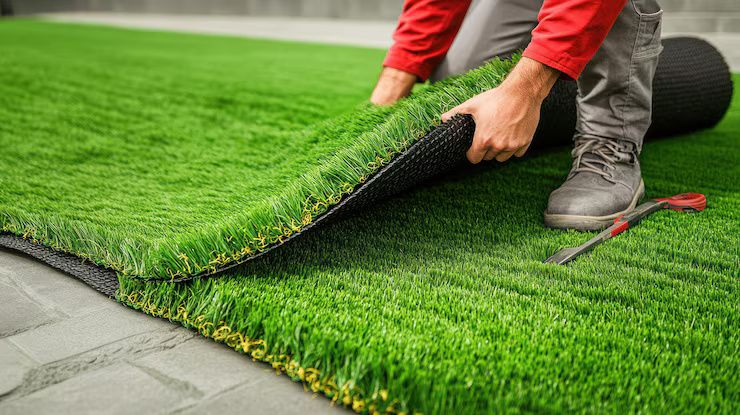
Turf Positioning and Seaming
-
Synthetic turf rolls are laid and aligned
-
Seams are secured to maintain continuous surface
-
-
Infill Application
-
Granular materials are distributed to support fiber structure
-
-
Final Grooming and Inspection
-
Surface is brushed and inspected for evenness
-
| Installation Stage | Purpose |
|---|---|
| Ground preparation | Creates stable base |
| Aggregate layer | Supports drainage and stability |
| Turf alignment | Ensures consistent appearance |
| Infill distribution | Maintains fiber position |
| Final brushing | Improves surface uniformity |
Each step contributes to the durability and performance of the turf system.
Environmental Factors Affecting Artificial Turf Performance
Environmental conditions play an important role in artificial turf behavior and longevity.
Key environmental considerations include:
-
Temperature exposure: High heat may affect surface comfort
-
Rainfall and drainage: Proper base layers prevent water accumulation
-
Sunlight intensity: UV-resistant fibers help maintain color stability
-
Soil stability: Ground movement can affect turf alignment
-
Usage intensity: High foot traffic requires durable turf fibers
Understanding these factors helps planners select appropriate materials and installation techniques for specific environments.
Tools and Resources for Planning and Installation
Various tools and reference resources assist in artificial turf planning and installation.
Helpful tools include:
-
Surface area measurement calculators
-
Drainage planning charts
-
Landscape layout templates
-
Material coverage estimators
-
Ground compaction assessment guides
Educational and informational resources:
-
Landscape architecture textbooks
-
Sports facility design manuals
-
Environmental landscaping guidelines
-
Municipal planning resources
-
Sustainable landscaping research publications
These resources help installers, planners, and learners understand best practices and performance considerations.
Frequently Asked Questions
What is the main advantage of artificial turf compared to natural grass?
Artificial turf maintains a consistent appearance and usability with minimal watering and reduced maintenance.
How long can artificial turf last?
Durability varies depending on usage and environmental conditions, but many systems are designed for long-term performance.
Does artificial turf require drainage systems?
Yes. Proper base layers and drainage design are essential to prevent water accumulation.
Can artificial turf be used in sports facilities?
Yes. Many sports fields use specialized synthetic turf systems designed for performance and safety.
Does artificial turf affect environmental sustainability?
It can reduce water consumption, but sustainability considerations also include material lifecycle and recycling options.
Conclusion
Artificial turf installation has become an important landscape solution in modern urban and recreational environments. By providing durable, visually consistent surfaces that require less water and maintenance than natural grass, synthetic turf systems address several challenges associated with traditional lawns.
Understanding installation techniques, environmental influences, regulations, and available planning resources helps ensure effective implementation and long-term performance. As material technology continues to evolve, artificial turf systems are likely to become more sustainable, efficient, and adaptable to a wide range of landscape applications.