Turret Punch Presses: Complete Guide, Basics & Key Insights
Turret punch presses are industrial machines used in sheet metal fabrication to create holes, shapes, and cutouts in flat metal sheets. They combine mechanical or hydraulic force with precision tooling arranged in a rotating turret system. This configuration allows multiple tools to be stored and automatically selected during operation.
The main purpose of turret punch presses is to increase efficiency and precision in metal forming processes. Before the development of CNC turret punch press systems, sheet metal work often required separate machines for different operations. Turret systems streamlined this process by allowing multiple punching operations in a single setup.
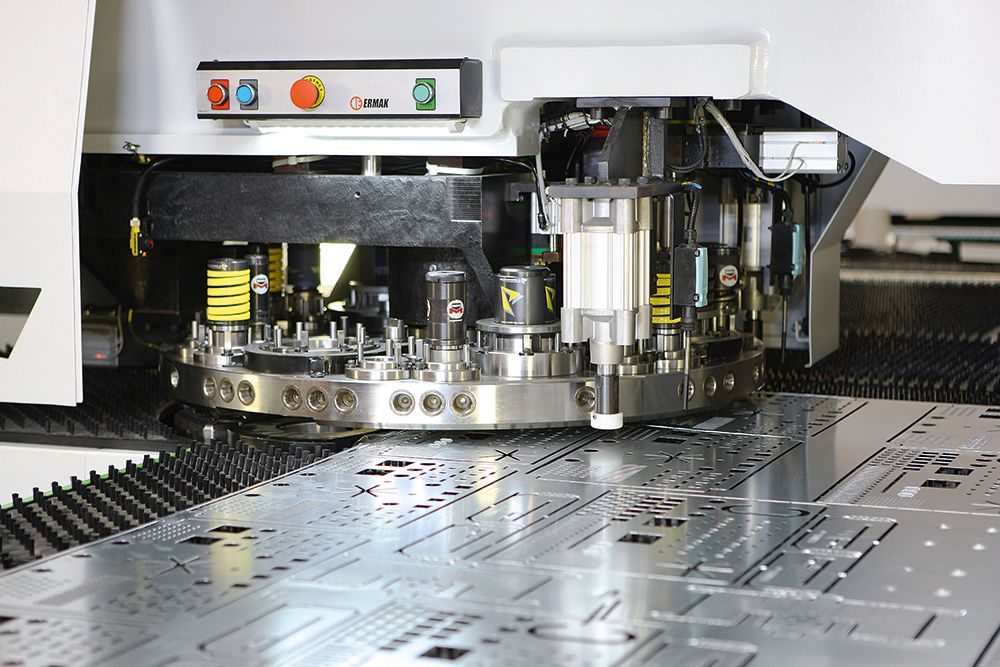
In modern manufacturing, these machines are typically controlled by computer numerical control (CNC) systems. CNC turret punch press technology enables automated tool selection, programmable punching patterns, and consistent accuracy. This innovation supports advanced sheet metal fabrication in industries such as automotive manufacturing, electrical enclosures, construction equipment, aerospace components, and industrial automation systems.
A turret punch press usually consists of:
-
A machine frame that provides structural stability
-
A turret holding multiple punch and die sets
-
A clamping system for sheet positioning
-
A CNC control unit
-
Mechanical or hydraulic drive systems
This setup allows high-speed, repeatable punching of complex designs in aluminum, steel, stainless steel, and other metal alloys.
Importance: Why Turret Punch Presses Matter Today
Turret punch presses play a central role in precision metal forming and production efficiency optimization. As industries demand higher productivity and tighter tolerances, automated metal processing equipment becomes essential.
These machines matter today for several reasons:
They improve production efficiency.
A single CNC turret punch press can perform multiple operations without manual tool changes. This reduces downtime and supports high-volume manufacturing.
They enhance accuracy and repeatability.
Computer-controlled systems reduce human error and maintain consistent dimensions across large production batches.
They support industrial automation systems.
Many modern units integrate with material handling systems, CAD/CAM software, and smart manufacturing solutions. This integration aligns with Industry 4.0 manufacturing trends, where data-driven production improves overall equipment effectiveness.
They reduce material waste.
Optimized nesting software ensures that sheet metal is used efficiently, minimizing scrap and improving sustainability performance.
They affect multiple sectors.
Industries such as electronics, telecommunications, renewable energy infrastructure, transportation, and heavy equipment manufacturing rely on sheet metal components produced using hydraulic punch press machines or mechanical punch press technology.
In a competitive global manufacturing environment, turret punch presses help organizations maintain productivity while meeting compliance standards for quality and safety.
Recent Updates and Trends in Turret Punch Press Technology
Over the past year, several developments have influenced CNC turret punch press systems and the broader metal processing equipment market.
Greater integration with smart manufacturing platforms
Manufacturers increasingly connect turret punch presses to cloud-based monitoring systems. These platforms track machine performance, maintenance cycles, and energy consumption. Real-time analytics supports predictive maintenance and reduces unplanned downtime.
Focus on energy efficiency
New hydraulic punch press machine models are designed to reduce power consumption through servo-driven systems. Energy-efficient motors and optimized drive systems contribute to sustainability goals in industrial operations.
Improved automation and robotics
Automated sheet loading and unloading systems are becoming more common. Robotic integration enhances throughput and reduces manual handling risks, improving workplace safety.
Advanced tooling materials
Tool manufacturers are developing stronger and more wear-resistant materials. These improvements extend tool life and maintain precision metal forming standards even under high-speed operations.
Enhanced software capabilities
Modern CAD/CAM integration enables more accurate simulation before production. Operators can preview punching sequences, reduce collision risks, and improve nesting strategies for better material utilization.
These updates reflect broader trends in Industry 4.0 manufacturing and digital transformation across the industrial automation systems landscape.
Laws and Regulatory Framework Affecting Turret Punch Press Operations
Turret punch presses operate within established safety and industrial compliance standards. Although specific regulations vary by jurisdiction, several general principles apply globally.
Workplace safety standards
Industrial machinery must comply with occupational health and safety regulations. These standards typically require:
-
Proper machine guarding
-
Emergency stop mechanisms
-
Operator training programs
-
Noise and vibration control
-
Routine inspection and maintenance documentation
Electrical and mechanical safety codes
CNC turret punch press systems must follow electrical installation standards and machine safety directives. Control panels, wiring systems, and hydraulic components must meet recognized industrial safety certifications.
Environmental regulations
Metal fabrication facilities are often subject to environmental rules related to:
-
Waste disposal and scrap recycling
-
Energy consumption reporting
-
Emission controls for associated processes
-
Noise level limitations
Data security and digital compliance
As machines integrate with smart manufacturing solutions and cloud platforms, cybersecurity requirements are becoming increasingly relevant. Industrial networks must protect sensitive production data and prevent unauthorized access.
Compliance with these frameworks ensures safe operation, regulatory alignment, and long-term reliability of metal processing equipment.
Tools and Resources for Working with Turret Punch Presses
A range of digital and technical tools supports effective operation and planning in sheet metal fabrication environments.
CAD/CAM Software
Programs such as:
-
AutoCAD
-
SolidWorks
-
Fusion 360
These tools allow engineers to design sheet metal components, simulate punching operations, and generate CNC programs.
Nesting Software
Specialized applications optimize material layout on metal sheets. Efficient nesting reduces scrap and improves production efficiency optimization.
Machine Monitoring Dashboards
Industrial IoT platforms provide real-time data on machine uptime, cycle time, and maintenance intervals. These dashboards support predictive maintenance strategies.
Material Thickness and Tonnage Calculators
Engineering calculators help determine required punching force based on material type and thickness. These calculations are important for safe and accurate hydraulic punch press machine operation.
Technical Documentation and Standards
International standards organizations publish machine safety guidelines and testing protocols. Access to these documents ensures alignment with recognized mechanical punch press technology standards.
Training Resources
Many technical institutes and online learning platforms provide courses on CNC programming, industrial automation systems, and sheet metal fabrication techniques.
Key Specifications Overview
Below is a simplified comparison of common turret punch press configurations:
| Feature | Mechanical Turret Press | Hydraulic Turret Press | Servo-Electric Turret Press |
|---|---|---|---|
| Drive Mechanism | Flywheel and clutch | Hydraulic cylinder | Servo motor system |
| Energy Efficiency | Moderate | Moderate | High |
| Noise Level | Higher | Lower | Lower |
| Control Precision | Good | Very Good | Excellent |
| Typical Application | High-speed punching | Versatile operations | Advanced smart manufacturing |
This table highlights how different drive systems influence performance, precision, and integration with Industry 4.0 manufacturing systems.
FAQs About Turret Punch Presses
What is the difference between a turret punch press and a laser cutting machine?
A turret punch press uses physical punch and die tools to create shapes, while a laser cutting machine uses a focused laser beam to cut material. Punch presses are efficient for repetitive hole patterns and forming operations, whereas lasers are often preferred for intricate contours.
How accurate are CNC turret punch presses?
Modern CNC turret punch press systems can achieve high levels of precision, often within tight tolerances depending on machine calibration, tooling quality, and material type.
What materials can be processed?
Common materials include mild steel, stainless steel, aluminum, copper, and certain alloys. Material thickness limits depend on machine capacity and tooling design.
How does automation improve turret punch press productivity?
Automation reduces manual handling, supports continuous operation, and integrates with smart manufacturing solutions. This improves production efficiency optimization and reduces downtime.
Is regular maintenance necessary?
Yes. Routine inspection of tooling, lubrication systems, hydraulic components, and CNC controls ensures reliable performance and compliance with safety regulations.
Conclusion
Turret punch presses remain a foundational technology in sheet metal fabrication. By combining mechanical or hydraulic force with CNC precision, these machines enable efficient and repeatable metal forming processes across diverse industries.
Recent advancements in smart manufacturing solutions, energy-efficient drive systems, and industrial automation systems have strengthened their role in modern production environments. Compliance with safety standards and environmental regulations ensures responsible operation, while digital tools such as CAD/CAM software and machine monitoring dashboards enhance performance and reliability.