Smart Parking Systems: Explore Guide, Basics, Insights, and Essential Knowledge
Smart parking systems are advanced parking management technologies designed to detect parking space availability, guide drivers to open spaces, and monitor parking usage in real time.
Traditional parking methods rely heavily on manual observation or static parking infrastructure. In contrast, smart parking technology integrates IoT parking sensors, wireless communication networks, and centralized parking analytics platforms to collect and analyze parking data.
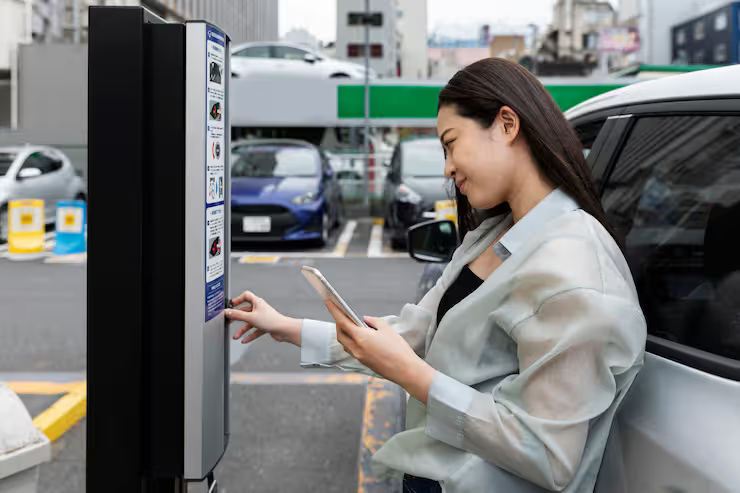
Typical smart parking infrastructure includes:
-
Ground-based or overhead parking sensors that detect vehicle presence
-
Parking guidance displays showing real-time availability
-
Mobile parking applications connected to digital parking platforms
-
Automated license plate recognition (ALPR) technology
-
Cloud-based parking management software
These systems help drivers quickly locate parking spots through digital maps, mobile notifications, or smart signage installed throughout parking areas.
The emergence of connected vehicles, artificial intelligence traffic management, and urban mobility analytics has further enhanced smart parking capabilities, allowing cities to monitor parking demand patterns and improve transportation planning.
Importance: Why Smart Parking Technology Matters Today
Parking inefficiency is one of the major contributors to urban traffic congestion. Studies in transportation planning indicate that a large portion of city traffic consists of drivers searching for parking spaces. Smart parking technology addresses this challenge through intelligent infrastructure and real-time data.
Key reasons why smart parking systems are important include:
• Traffic congestion reduction
Drivers can locate available parking quickly, decreasing unnecessary circulation.
• Improved urban mobility planning
Transportation agencies can analyze parking usage data to optimize infrastructure development.
• Environmental sustainability
Reduced vehicle idling helps lower fuel consumption and urban carbon emissions.
• Enhanced smart city infrastructure
Smart parking integrates with intelligent transportation systems (ITS) and connected mobility networks.
• Better parking space utilization
Data analytics platforms help identify peak demand zones and underutilized areas.
The growing demand for urban mobility technology, traffic management systems, and digital transportation infrastructure has accelerated smart parking adoption in many cities worldwide.
The technology also benefits several stakeholders:
-
Urban planners and city administrators
-
Commercial real estate developers
-
Transportation researchers
-
Smart city technology providers
-
Drivers and commuters
By improving parking accessibility and providing accurate parking availability data, smart parking solutions help cities operate more efficiently.
Recent Updates: Trends and Developments in Smart Parking Technology
Smart parking technology has evolved rapidly over the past year as cities adopt advanced digital infrastructure.
Recent developments include:
AI-Driven Parking Analytics (2025)
Artificial intelligence is increasingly used in parking data analysis. AI algorithms can predict parking demand patterns and optimize space allocation in urban areas.
Integration with Smart City Platforms (2024–2025)
Many municipalities now integrate parking data with urban traffic management platforms, enabling real-time coordination between parking availability and traffic control systems.
Expansion of IoT Sensor Networks (2025)
Cities are deploying large-scale IoT sensor networks capable of monitoring thousands of parking spaces simultaneously.
Electric Vehicle Parking Integration (2025)
Smart parking infrastructure increasingly includes EV charging station monitoring and management, supporting the growth of electric mobility.
Cloud-Based Parking Management Platforms
Transportation departments and city authorities now use scalable cloud platforms that provide real-time dashboards, parking utilization reports, and predictive analytics.
Smart Parking Technology Components
The smart parking ecosystem relies on several interconnected technologies.
| Technology Component | Function |
|---|---|
| IoT Parking Sensors | Detect vehicle presence in parking spaces |
| Wireless Communication Networks | Transmit parking data to central systems |
| Parking Guidance Displays | Show real-time parking availability |
| Parking Analytics Platforms | Analyze parking usage patterns |
| License Plate Recognition | Identify vehicles entering parking areas |
These technologies together create a digital ecosystem that supports efficient parking management and improved urban traffic flow.
Laws and Policies Influencing Smart Parking Systems
Government regulations and smart city initiatives play an important role in the deployment of smart parking infrastructure.
Many countries have introduced policies encouraging the development of intelligent transportation systems and urban mobility technologies.
Examples of regulatory influence include:
Smart City Development Programs
Government-led smart city initiatives often include smart parking infrastructure as part of urban modernization strategies.
Urban Transportation Policies
Many transportation policies promote digital traffic management systems and connected mobility infrastructure.
Data Privacy and Surveillance Regulations
Because smart parking systems use cameras and license plate recognition technology, they must comply with data protection and privacy laws.
Environmental Sustainability Policies
Smart parking supports environmental policies by helping reduce unnecessary vehicle movement and urban emissions.
In India, several smart city projects and urban digital infrastructure initiatives have encouraged the implementation of intelligent parking solutions in major metropolitan areas.
Tools and Resources for Understanding Smart Parking Systems
Professionals, researchers, and urban planners often rely on specialized tools and digital platforms to study and implement smart parking technology.
Common tools and resources include:
Parking analytics platforms
These platforms process parking occupancy data and generate traffic insights.
Urban mobility simulation software
Used by transportation engineers to analyze parking demand and traffic behavior.
IoT device management dashboards
Allow monitoring and configuration of thousands of parking sensors.
Smart city data portals
Provide access to transportation data for urban research.
Mobile parking guidance applications
Help drivers view real-time parking availability in supported areas.
Examples of commonly referenced platforms and technologies:
-
Parking analytics dashboards
-
Smart city infrastructure management tools
-
IoT sensor monitoring platforms
-
Traffic simulation software
-
Urban transportation data visualization tools
These resources support research, planning, and technology development related to smart parking and intelligent transportation infrastructure.
Smart Parking Impact on Traffic Efficiency
The relationship between smart parking systems and traffic efficiency can be illustrated using parking search behavior.
| Scenario | Average Time Searching for Parking |
|---|---|
| Traditional Parking Environment | 10–20 minutes |
| Smart Parking Environment | 2–5 minutes |
Reduced parking search time helps improve:
-
Traffic flow efficiency
-
Fuel consumption patterns
-
Urban air quality indicators
-
Driver experience in busy city centers
Frequently Asked Questions
What is a smart parking system?
A smart parking system is a technology-driven parking management solution that uses IoT sensors, data analytics, and digital guidance platforms to monitor parking space availability and assist drivers in locating open spaces efficiently.
How do parking sensors detect vehicle presence?
Parking sensors typically use magnetic sensors, infrared sensors, or ultrasonic technology to detect whether a vehicle occupies a parking space. The sensor transmits occupancy data to a central system through wireless communication networks.
How does smart parking reduce traffic congestion?
Smart parking systems provide real-time parking availability information, allowing drivers to locate spaces quickly instead of driving around searching for parking. This reduces unnecessary vehicle movement and improves traffic flow.
Are smart parking systems part of smart city infrastructure?
Yes. Smart parking systems are commonly integrated into smart city infrastructure and intelligent transportation systems, working alongside traffic monitoring systems, digital signage, and urban mobility platforms.
Can smart parking systems support electric vehicles?
Many modern smart parking platforms integrate electric vehicle charging station monitoring, enabling drivers to identify parking spaces equipped with EV charging facilities.
Conclusion
Smart parking systems represent a major advancement in urban mobility technology and intelligent transportation infrastructure. By combining IoT sensors, data analytics, and real-time parking guidance platforms, these systems help cities address the challenges of limited parking space, traffic congestion, and inefficient parking management.
As smart city initiatives continue to expand, smart parking infrastructure will play an increasingly important role in creating connected urban environments, sustainable transportation networks, and data-driven traffic management systems.
The future of parking technology will likely involve deeper integration with autonomous vehicles, AI-driven traffic platforms, and predictive urban mobility analytics, further transforming how cities manage parking and transportation resources.