Smart Door Locks: An Explore Guide with Tips, Insights, Overview, Basics, and Essential Knowledge
Smart door locks are advanced digital security devices designed to replace or enhance traditional mechanical locks. Powered by WiFi, Bluetooth, biometric sensors, or keypad authentication, these intelligent access control systems allow homeowners and property managers to secure entry points using encrypted credentials instead of physical keys.
Understanding Smart Door Locks and Why They Exist
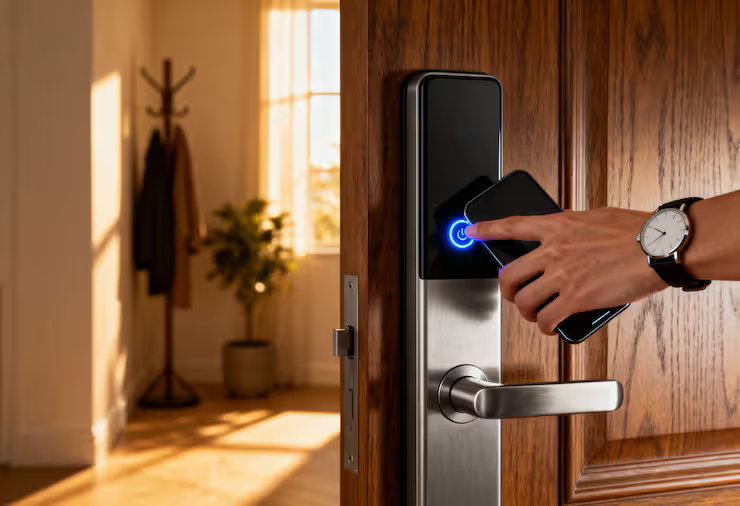
Smart door locks emerged from the growing demand for home automation systems and connected IoT security devices. Traditional locks depend on metal keys that can be lost, duplicated, or tampered with. Digital locks eliminate many of these vulnerabilities by using:
-
Biometric authentication (fingerprint recognition)
-
PIN-based digital keypads
-
Smartphone app control
-
RFID cards or encrypted digital credentials
-
Voice assistant integration
The integration of cloud-based security systems and remote monitoring applications has further expanded their functionality. Many models now include activity logs, tamper alerts, auto-lock timers, and multi-user access management — features aligned with modern cybersecurity standards.
Unlike traditional locks, smart locks are part of a broader digital access control ecosystem. They are often integrated into home surveillance systems, alarm systems, and smart lighting networks to create a comprehensive home security solution.
Why Smart Door Locks Matter Today
Digital transformation has reshaped residential and commercial security. Smart locks are no longer niche devices; they are becoming core components of high-value real estate infrastructure and connected smart homes.
Their importance stems from several factors:
Enhanced Security Protocols
Modern smart locks use advanced encryption protocols such as AES-128 or AES-256 encryption. This reduces risks associated with lock picking and unauthorized duplication.
Remote Access Management
Users can grant or revoke digital access instantly via mobile apps. This is particularly useful for property managers, landlords, and families managing multiple occupants.
Audit Trails and Monitoring
Activity logs allow homeowners to track entry times. This data-driven security model supports transparency and accountability.
Reduced Physical Key Risks
Lost or stolen keys no longer require complete lock replacement. Access credentials can be disabled digitally.
Integration with Smart Home Automation
Smart locks connect with platforms like:
-
Google Home
-
Amazon Alexa
-
Apple HomeKit
This integration enables automation scenarios such as locking doors when security systems are armed or when users leave a defined geofence.
The technology also supports short-term rental properties, gated communities, and office environments where digital credential management is essential.
Recent Updates and Trends (2025 Developments)
The smart security industry has experienced rapid growth over the past year, driven by IoT adoption and cybersecurity awareness.
AI-Enhanced Biometric Recognition (Early 2025)
Manufacturers introduced AI-driven fingerprint scanners that improve accuracy and reduce false rejections in high-humidity environments.
Matter Protocol Adoption (Late 2024 – 2025)
The universal smart home standard Matter has expanded compatibility among devices. Several smart lock manufacturers announced firmware updates supporting Matter integration, improving cross-platform communication.
Zero-Trust Home Security Models (2025)
Some brands now incorporate multi-factor authentication, requiring biometric verification plus mobile authentication for high-security installations.
Battery Optimization and Power Efficiency
2025 models include longer battery cycles and emergency USB-C power backup options to address power failure concerns.
Cybersecurity Certifications
Increased compliance with cybersecurity frameworks has become a marketing differentiator. Manufacturers are seeking third-party validation to reassure consumers about data encryption and firmware integrity.
Laws, Regulations, and Policy Considerations
Smart door locks operate within broader legal frameworks related to cybersecurity, data protection, and building safety.
Data Protection Regulations
If biometric data is stored (such as fingerprints), compliance with privacy laws becomes critical. For example:
-
General Data Protection Regulation in Europe governs personal data processing.
-
Digital Personal Data Protection Act regulates personal data handling in India.
Biometric authentication systems must ensure encrypted storage and restricted access to prevent legal exposure.
Building and Fire Safety Codes
Many jurisdictions require emergency mechanical override access. Smart locks must comply with fire safety regulations that allow immediate egress without electronic failure risks.
Consumer Protection Standards
Wireless communication devices may require certification from authorities such as:
-
Federal Communications Commission
-
Telecommunication Engineering Centre
These certifications ensure radio-frequency compliance and safe wireless transmission.
Rental and Tenancy Regulations
In some regions, landlords must provide physical key access or ensure tenant consent before installing digital access control systems.
Tools and Resources for Smart Lock Users
Managing a digital door lock system effectively requires complementary tools and platforms.
Mobile Applications
Most brands provide proprietary apps for credential management, firmware updates, and activity logs.
Password Managers
Secure PIN storage using encrypted password managers enhances overall digital security hygiene.
Home Security Platforms
Integration with platforms such as:
-
Samsung SmartThings
-
IFTTT
These tools enable automation workflows such as triggering lights when doors unlock.
Cybersecurity Best Practices Checklist
| Security Measure | Why It Matters |
|---|---|
| Enable two-factor authentication | Prevents unauthorized remote access |
| Update firmware regularly | Fixes vulnerabilities |
| Use encrypted WiFi networks | Protects device communication |
| Limit shared credentials | Reduces misuse risks |
| Monitor access logs | Detects unusual activity |
Battery Monitoring Tools
Some applications provide battery status alerts and predictive replacement reminders.
Smart Lock Feature Comparison Overview
| Feature | Basic Digital Lock | Advanced Smart Lock |
|---|---|---|
| Keypad Access | Yes | Yes |
| Biometric Authentication | Limited | Advanced AI fingerprint |
| WiFi Connectivity | Optional | Integrated |
| Remote Monitoring | No | Yes |
| Encryption Standards | Basic | AES-256 |
| Multi-User Access | Limited | Extensive |
This comparison highlights how higher-tier models prioritize encrypted connectivity, remote management, and biometric authentication.
Frequently Asked Questions
Are smart door locks secure against hacking?
When properly configured with strong encryption, updated firmware, and secure WiFi networks, smart locks can provide robust protection. Security depends on responsible configuration and regular updates.
Do smart locks function during power outages?
Most devices use battery power and remain operational during outages. Many models include mechanical override keys or emergency power ports.
Is biometric data stored locally or in the cloud?
This varies by manufacturer. Some systems store encrypted biometric data locally within the device, while others synchronize securely with cloud servers.
Can multiple users access the same smart lock?
Yes. Most advanced models support multiple digital credentials, allowing administrators to assign and revoke access individually.
Are smart locks suitable for commercial properties?
Yes. Many commercial-grade models include audit logs, time-based access controls, and integration with enterprise access management systems.
Conclusion
Smart door locks represent a significant advancement in digital access control and residential cybersecurity infrastructure. By integrating biometric authentication, encrypted wireless communication, and smart home automation compatibility, they address modern security challenges more effectively than traditional locks.
However, successful implementation requires attention to cybersecurity best practices, compliance with data protection laws, and awareness of building safety regulations. As IoT ecosystems expand and standards like Matter improve interoperability, smart locks are likely to become a foundational component of intelligent building systems.