Motor Winding Machines: Explore the Guide, Basics, Insights, and Essential Knowledge
Motor winding machines are specialized industrial equipment used to wind conductive wire typically copper or aluminum into coils that form the electromagnetic core of electric motors, generators, transformers, and inductors. These machines help create precise and uniform coil patterns that are essential for efficient electromagnetic performance.
Electric motors rely on coils that generate magnetic fields when electricity flows through them. The quality, alignment, and density of these windings directly influence energy efficiency, torque output, and operational reliability. Motor winding machines were developed to ensure accurate coil placement and consistent production, replacing manual winding methods that were slower and less precise.
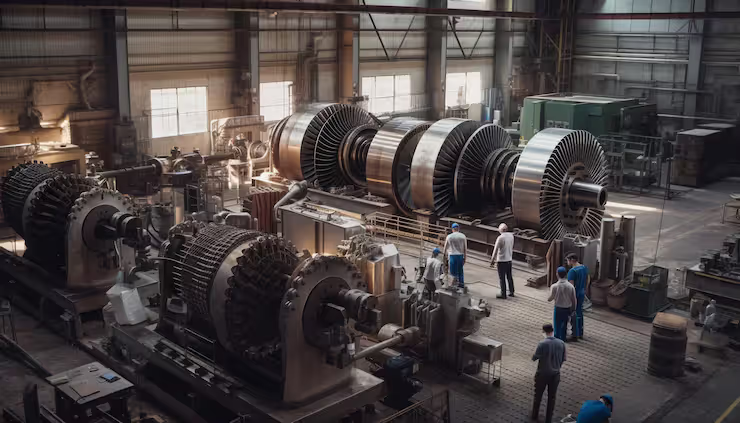
Modern motor winding technology supports industries such as electric vehicles, industrial automation, renewable energy systems, robotics, and HVAC equipment. As the demand for high-efficiency motors grows worldwide, winding machines have become critical components in manufacturing ecosystems.
The basic working principle involves rotating a core or armature while wire is guided into precise slots or layers. Advanced machines integrate programmable control systems that adjust winding speed, tension, and pattern automatically.
Key components typically include:
-
Wire tension control systems
-
Programmable winding controllers
-
Spindle and coil fixtures
-
Wire guiding mechanisms
-
Digital monitoring interfaces
The evolution of winding technology has led to several machine types depending on motor design requirements.
| Motor Winding Machine Type | Typical Application | Key Characteristic |
|---|---|---|
| Armature Winding Machine | DC motors and generators | Slot-based coil winding |
| Stator Winding Machine | AC motors and compressors | High precision slot filling |
| Needle Winding Machine | Compact motors | Needle-based coil insertion |
| Toroidal Winding Machine | Transformers and inductors | Circular core winding |
| Automatic CNC Winding Machine | Industrial manufacturing | Programmable multi-axis control |
These machines play a central role in modern electrical manufacturing where precision coil winding determines motor performance and energy efficiency.
Why Motor Winding Technology Matters in Modern Industry
Electric motors account for a large portion of global electricity consumption. Because of this, motor design and manufacturing efficiency are major factors in improving industrial energy performance.
Motor winding machines contribute to several important technological and economic goals:
-
Improved energy efficiency in electric motors
-
Consistent electromagnetic coil design
-
Higher manufacturing productivity
-
Reduced material waste
-
Better thermal management in motors
Industries that rely heavily on motor winding technology include:
-
Electric vehicle manufacturing
-
Renewable energy equipment production
-
Industrial automation and robotics
-
HVAC and refrigeration systems
-
Household appliance manufacturing
The demand for high-efficiency motors has grown significantly as countries aim to reduce energy consumption and carbon emissions. Precision winding improves electromagnetic balance, which helps motors operate with lower power losses.
Motor efficiency standards such as IE3 and IE4 efficiency classes encourage manufacturers to adopt advanced winding techniques. Automated winding machines help achieve these requirements through precise wire placement and optimized coil geometry.
Another key benefit is scalability. Automated machines enable large-scale production of motors used in infrastructure, transportation systems, and industrial machinery.
The relationship between motor efficiency and winding quality can be summarized as follows:
| Factor | Impact on Motor Performance |
|---|---|
| Wire alignment | Reduces electrical resistance |
| Coil density | Improves magnetic field strength |
| Winding precision | Enhances efficiency and durability |
| Thermal distribution | Prevents overheating |
These factors demonstrate why winding machines are considered a core technology within electrical engineering and industrial manufacturing.
Recent Developments and Trends in Motor Winding Technology
The past year has seen several advancements in motor winding automation and smart manufacturing technologies.
Automation and Industry 4.0 integration (2024–2025)
Manufacturers are integrating motor winding machines with smart factory systems. Sensors and industrial IoT technologies allow real-time monitoring of coil tension, wire feed rate, and machine performance.
Smart control software helps optimize production cycles and detect winding errors before they affect motor performance.
Growth of electric mobility manufacturing
Electric vehicle production expanded globally in 2024 and early 2025, increasing demand for high-precision stator winding machines used in EV traction motors. Hairpin winding technology, which uses rectangular copper conductors, has become more common in EV motor production.
Advanced coil designs for energy efficiency
Engineers are experimenting with new winding configurations designed to reduce electromagnetic losses and improve cooling efficiency.
Examples include:
-
Distributed winding structures
-
Concentrated coil winding patterns
-
Multi-layer stator winding designs
Robotic integration in motor production lines
Many manufacturing facilities have begun integrating robotic systems with winding machines to automate coil insertion, insulation handling, and assembly operations.
The following chart illustrates a simplified trend showing increased automation adoption in motor manufacturing.
| Year | Automation Adoption in Motor Manufacturing |
|---|---|
| 2022 | Moderate |
| 2023 | Increasing |
| 2024 | High |
| 2025 | Rapid Expansion |
These developments indicate that motor winding technology is evolving alongside smart manufacturing and electrification trends.
Regulations, Standards, and Government Policies
Motor manufacturing and winding processes are influenced by various international standards and national energy policies.
Governments and regulatory organizations have introduced energy efficiency standards that encourage improvements in motor design and production technology.
Common regulatory frameworks include:
-
Minimum Energy Performance Standards (MEPS)
-
Industrial motor efficiency classifications
-
Electrical safety standards for manufacturing equipment
-
Electromagnetic compatibility regulations
In many countries, regulatory agencies require industrial motors to meet specific efficiency levels before they can be used in commercial or industrial systems.
Examples of policy influences include:
| Policy or Standard | Purpose |
|---|---|
| Motor efficiency regulations | Reduce electricity consumption |
| Electrical equipment safety codes | Protect operators and equipment |
| Environmental manufacturing policies | Encourage energy-efficient production |
| Industrial automation guidelines | Support smart manufacturing adoption |
Manufacturers designing motors for global markets must comply with multiple standards related to efficiency, insulation, and electrical safety.
These policies drive innovation in motor winding equipment because improved winding precision contributes to meeting regulatory efficiency targets.
Helpful Tools and Resources for Understanding Motor Winding Technology
Engineers, students, and industrial professionals often rely on specialized tools and digital platforms to analyze winding designs and motor performance.
Several useful resources help support learning, research, and design analysis.
Common tools used in motor winding studies include:
-
Electromagnetic simulation software
-
Motor design calculators
-
Coil winding pattern generators
-
Electrical engineering reference databases
-
Industrial automation documentation platforms
Typical resource categories include:
| Resource Type | Purpose |
|---|---|
| Motor design simulation tools | Analyze electromagnetic performance |
| Coil winding calculators | Estimate wire length and coil turns |
| Engineering research databases | Access technical papers and studies |
| Industrial standards documentation | Review regulatory requirements |
Educational platforms and engineering communities also provide tutorials and technical discussions about stator winding, armature design, and motor efficiency optimization.
These resources help engineers understand the relationship between coil design, electromagnetic fields, and motor performance.
Frequently Asked Questions About Motor Winding Machines
What is the main function of a motor winding machine?
A motor winding machine creates electromagnetic coils by wrapping insulated wire around a motor core or armature. These coils generate magnetic fields that enable electric motors to operate.
What materials are commonly used for motor windings?
Copper is the most widely used material because of its excellent electrical conductivity. Aluminum is also used in some applications due to its lighter weight.
What industries use motor winding machines?
Industries such as electric vehicle manufacturing, renewable energy equipment production, industrial automation, HVAC systems, and appliance manufacturing use motor winding technology.
What is the difference between stator winding and armature winding?
Stator winding refers to coils placed in the stationary part of an electric motor, while armature winding refers to coils located on the rotating component in certain motor types.
How does automated winding improve motor performance?
Automated machines ensure consistent wire tension, accurate coil placement, and repeatable winding patterns, which improves efficiency, reliability, and thermal performance.
Conclusion
Motor winding machines are essential technologies in the production of electric motors, generators, and electromagnetic devices. By ensuring accurate coil formation and consistent wire placement, these machines support the development of efficient and reliable electrical systems.
As global demand for electric mobility, renewable energy systems, and industrial automation continues to grow, the role of advanced winding technology becomes increasingly important. Innovations in automation, digital monitoring, and smart manufacturing are transforming how motor windings are produced and optimized.
Regulatory standards focused on energy efficiency further encourage improvements in winding precision and motor design. Together, these factors position motor winding machines as a key component of modern electrical engineering and industrial manufacturing infrastructure.
Understanding the fundamentals, trends, and regulatory influences surrounding motor winding technology provides valuable insight into how electric machines are designed and produced in today’s rapidly evolving industrial landscape.