Metal Forming Machines Guide: Working Principles, Types, and Industrial Manufacturing Insights for Modern Production
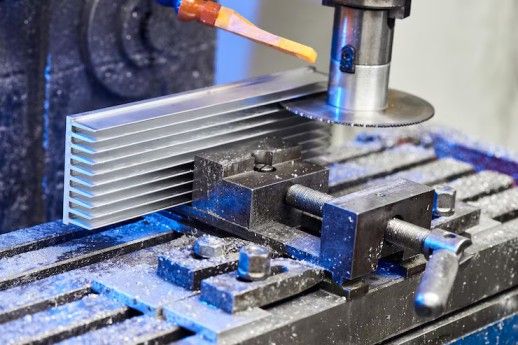
Metal forming machines are industrial systems used to shape metal into desired forms by applying force without removing material. Instead of cutting or machining, these machines deform metal into specific geometries while maintaining its mass and improving its structural properties.
These machines exist because modern manufacturing requires components that are strong, precise, and efficiently produced. Traditional machining processes can lead to material loss and longer production times. Metal forming provides an alternative by reshaping raw materials into usable forms with minimal waste and improved mechanical strength.
Common applications include automotive parts, structural components, pipelines, industrial tools, and household products. Metal forming machines support both small precision parts and large structural elements used in infrastructure and heavy industry.
Why Metal Forming Machines Matter Today
Metal forming machines are essential in modern production due to their ability to deliver efficiency, consistency, and strength.
Key reasons this topic matters today:
-
Material efficiency: Reduces waste compared to cutting-based processes
-
High strength output: Improves grain structure and durability of formed parts
-
Mass production capability: Enables large-scale manufacturing with uniform quality
-
Energy efficiency: Often requires less energy than material removal processes
-
Industrial reliability: Supports consistent production across various sectors
These machines affect engineers, manufacturers, production planners, quality inspectors, and industrial designers. They solve challenges such as material wastage, inconsistent product dimensions, long production cycles, and weak structural performance.
Industries such as automotive, aerospace, construction, shipbuilding, and energy systems rely heavily on metal forming processes to produce durable and high-performance components.
Working Principles of Metal Forming Machines
Metal forming machines operate by applying controlled force to change the shape of metal while maintaining its volume.
Core working principles include:
-
Plastic deformation: Metal is reshaped beyond its elastic limit without breaking
-
Force application: Mechanical or hydraulic systems apply pressure
-
Tooling interaction: Dies, rollers, or molds guide the shape
-
Temperature control: Processes may be performed at room temperature or elevated temperatures
-
Material flow control: Ensures uniform shaping and prevents defects
These principles allow metal to be formed into complex shapes with high accuracy and structural integrity.
Types of Metal Forming Machines
Different forming methods are used depending on material type, thickness, and application.
| Machine Type | Working Method | Typical Applications |
|---|---|---|
| Press machines | Apply compressive force using dies | Sheet metal components |
| Rolling machines | Pass metal through rollers | Plates, sheets, structural sections |
| Forging machines | Shape metal using compressive force and heat | High-strength components |
| Extrusion machines | Force material through a die | Pipes, profiles |
| Bending machines | Apply force to create angles or curves | Structural frames |
Each type is selected based on production requirements, material characteristics, and desired geometry.
Recent Developments and Industry Trends (2024–2025)
Metal forming technology has advanced significantly in recent years, focusing on automation, efficiency, and precision.
| Year | Development | Impact on Industry |
|---|---|---|
| 2024 | Increased adoption of automated forming systems | Improved consistency and reduced manual errors |
| 2024 | Advanced die materials and coatings | Longer tool life and better surface finish |
| 2025 | Integration of digital monitoring systems | Enhanced process control and quality tracking |
| 2025 | Energy-efficient forming presses | Reduced operational energy consumption |
Recent trends also include the use of high-strength lightweight materials, improved forming simulation techniques, and modular machine configurations that allow flexible production.
Laws, Regulations, and Policy Influence
Metal forming machines are subject to industrial safety, environmental, and manufacturing standards.
Common regulatory frameworks include:
-
Workplace safety regulations: Cover machine guarding, emergency stops, and operator protection
-
ISO manufacturing standards: Ensure quality management and process consistency
-
Environmental regulations: Address emissions, noise levels, and waste management
-
Industrial compliance guidelines: Define acceptable tolerances and inspection procedures
In many countries, government programs promote energy-efficient manufacturing and safe industrial practices, encouraging the adoption of modern forming equipment and improved process controls.
Tools and Resources for Better Understanding
Learning about metal forming machines is supported by a variety of technical resources and practical tools.
Helpful resources include:
-
Engineering textbooks on manufacturing processes
-
Industrial forming handbooks and guides
-
Metal forming simulation models and case studies
-
Government and industry safety publications
-
Manufacturing research journals
Reference tools commonly used:
-
Forming force calculation charts
-
Material deformation tables
-
Tooling design diagrams
-
Quality inspection checklists
These resources help professionals understand material behavior, process limitations, and production optimization strategies.
Frequently Asked Questions
What is the main purpose of metal forming machines?
They reshape metal into desired forms without removing material, improving strength and efficiency.
How is metal forming different from machining?
Metal forming changes shape through deformation, while machining removes material to create shape.
Which industries use metal forming machines the most?
Automotive, aerospace, construction, energy, and heavy manufacturing industries.
Why is temperature important in metal forming?
Temperature affects material flexibility and determines whether forming is performed as hot or cold processing.
How is product quality ensured in forming processes?
Through controlled force, precise tooling, and inspection of dimensions and surface quality.
Conclusion
Metal forming machines are a cornerstone of modern industrial manufacturing. By enabling efficient shaping of materials with minimal waste, they support high-strength, reliable, and cost-effective production across multiple industries.
As technology advances, metal forming continues to evolve through automation, improved materials, and enhanced process control. Understanding how these machines work, their types, and their regulatory environment provides valuable insight into one of the most important manufacturing processes in the modern world.