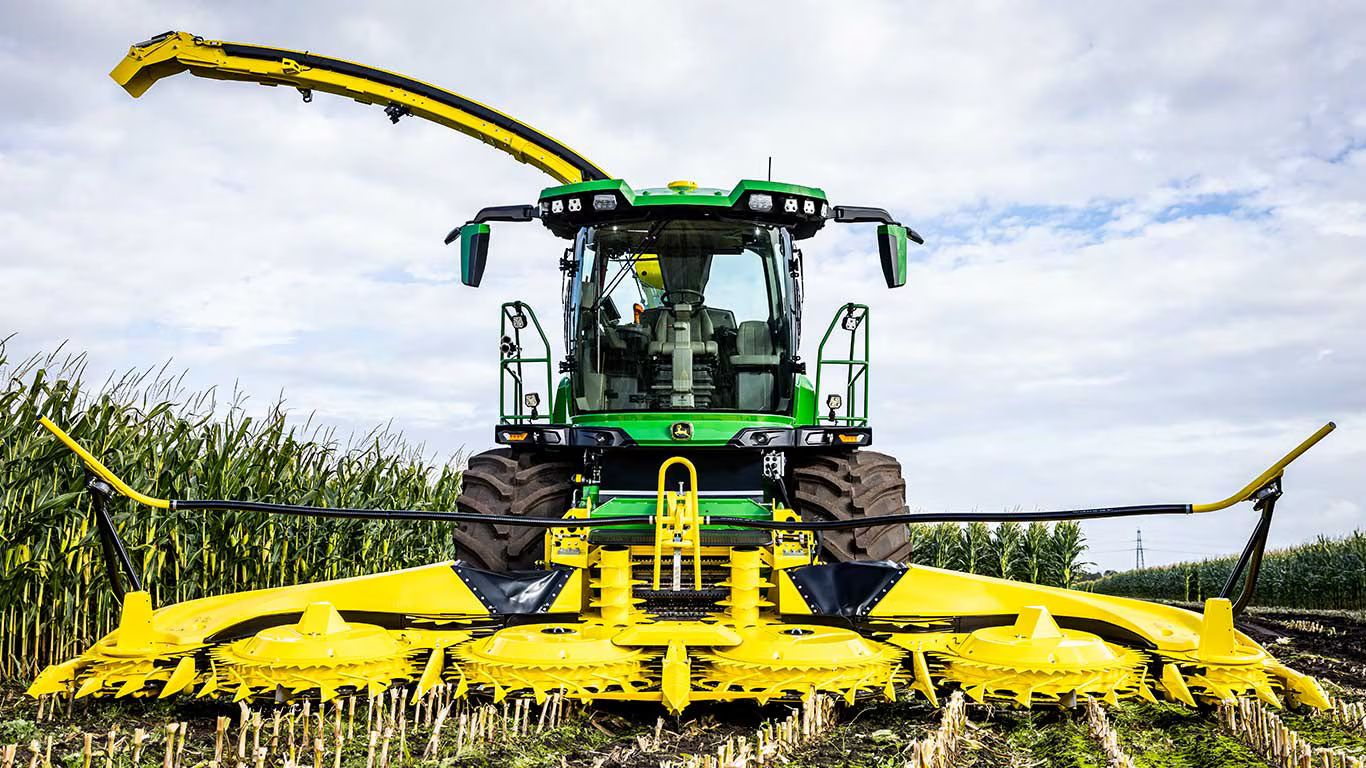
Importance – Why Forage Harvesters Matter Today
Forage harvesters are crucial in improving agricultural productivity and livestock feed quality. They directly impact farm efficiency, crop utilization, and overall output.
By automating harvesting, these machines reduce manual effort and allow farmers to manage larger areas effectively. They also help maintain consistent silage quality, which is important for animal health and production.
Key Benefits
-
Improved feed quality through consistent chopping
-
Faster harvesting, reducing weather-related crop losses
-
Reduced dependency on manual labor
-
Increased farm productivity and scalability
-
Minimized crop waste during harvesting
Where They Are Used
-
Dairy farms
-
Cattle operations
-
Mixed and integrated farming systems
These machines contribute to better silage, which supports higher milk production and healthier livestock.
Recent Updates – Trends and Developments
Modern forage harvesters have evolved with advanced technologies that improve precision, efficiency, and sustainability.
Key Trends
-
Integration with precision farming using GPS systems
-
Smart sensors for monitoring crop moisture and quality
-
Automation features like auto-steering and feed control
-
Improved fuel efficiency and reduced emissions
-
Cloud-based data tracking and performance monitoring
Traditional vs Modern Forage Harvesters
| Feature | Traditional Machines | Modern Machines |
|---|
| Operation | Manual control | Automated & GPS-assisted |
| Feed Quality Control | Basic | Advanced sensors |
| Efficiency | Moderate | High |
| Data Tracking | Limited | Real-time analytics |
| Environmental Impact | Higher emissions | Improved efficiency |
These advancements reflect the shift toward smart and data-driven agriculture.
Laws or Policies – Regulatory Considerations
Forage harvesters are subject to regulations related to safety, environmental protection, and agricultural practices.
Key Regulatory Areas
-
Machine safety standards for secure operation
-
Emission regulations to reduce environmental impact
-
Government subsidy programs supporting mechanization
-
Operator training requirements
-
Policies promoting sustainable farming practices
These regulations help ensure safe usage while balancing productivity with environmental responsibility.
Tools and Resources – Helpful Solutions
Various tools and resources support the effective use of forage harvesters and improve decision-making.
Useful Tools
-
Silage calculators for estimating yield and storage
-
Farm management software for tracking operations
-
Maintenance checklists to reduce downtime
-
Training guides and instructional videos
-
Weather monitoring applications for planning harvest
Forage Planning Example
| Parameter | Example Value | Purpose |
|---|
| Crop Type | Maize | Determines harvesting method |
| Moisture Level | 60–70% | Ideal for silage fermentation |
| Chop Length | 10–20 mm | Affects feed digestibility |
| Harvest Timing | Early maturity | Ensures nutrient retention |
These tools help farmers optimize harvesting efficiency and improve feed quality.
FAQs – Common Questions About Forage Harvesters
What crops can forage harvesters process?
They are commonly used for maize, grass, sorghum, and alfalfa, handling both fresh and partially dried crops.
How does chop length affect silage quality?
Shorter chop lengths improve compaction and fermentation, while longer lengths support better fiber structure depending on feeding needs.
What is a self-propelled forage harvester?
It is an independent machine with its own engine, offering higher capacity and advanced features compared to tractor-mounted versions.
Why is moisture level important?
Proper moisture ensures effective fermentation and prevents spoilage, directly affecting silage quality.
How often should maintenance be done?
Regular maintenance, including blade sharpening and system checks, should be performed before and during the harvesting season.
Conclusion
Forage harvesters are essential in modern agriculture, especially in livestock farming. They improve efficiency, enhance feed quality, and support large-scale operations.
With advancements in technology, these machines are becoming more precise, efficient, and environmentally friendly. Understanding their role, features, and supporting tools helps farmers make better operational decisions and improve productivity.