Hay Baler Guide: Basics, Working Process & Key Insights
A hay baler is a type of agricultural machinery designed to compress cut and dried crops such as hay, straw, or silage into compact bundles known as bales. These bales are easier to handle, transport, store, and protect from moisture or spoilage.
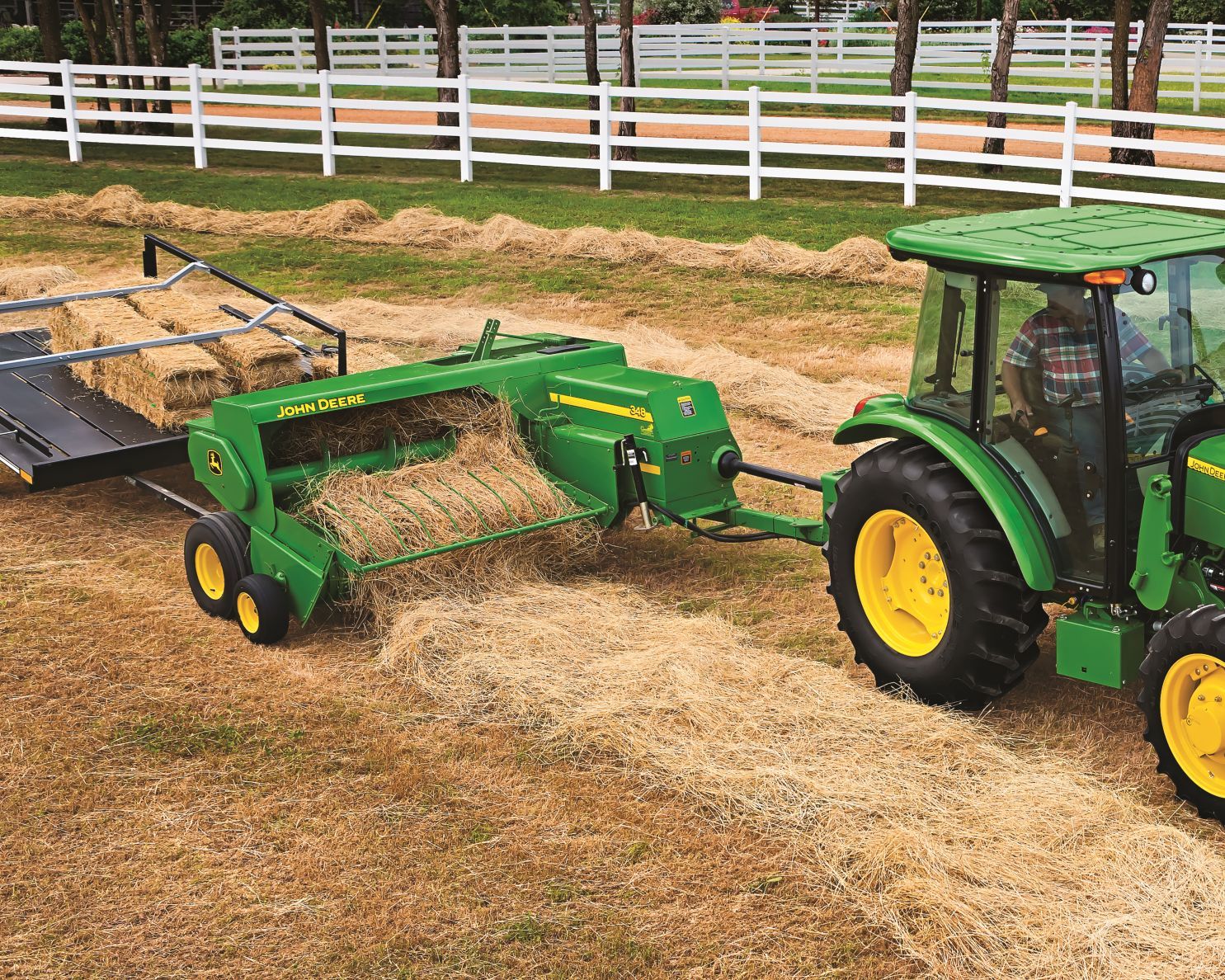
Before the development of baling equipment, farmers relied on manual bundling, which was time-consuming and labor-intensive. As farming operations expanded and mechanization increased, the need for efficient crop harvesting equipment became clear. The hay baler was developed to solve this challenge.
There are two main types of hay balers commonly used in modern agriculture:
-
Round balers
-
Square balers
Round balers create cylindrical bales that shed water more effectively when stored outdoors. Square balers produce rectangular bales that are easier to stack and transport. Both designs serve the same purpose but are selected based on farm size, storage space, and livestock feeding systems.
The working process of a hay baler generally follows these steps:
-
The tractor pulls the baler across a windrow of dried hay.
-
Pickup tines lift the crop into the machine.
-
Internal rollers or plungers compress the material.
-
Twine, net wrap, or wire secures the bale.
-
The finished bale is ejected onto the field.
This automated process supports productivity, consistency, and reduced manual labor.
Importance: Why Hay Balers Matter Today
Hay balers play a critical role in sustainable farming practices and livestock feed management. Efficient baling ensures that harvested crops maintain nutritional quality and are protected from environmental exposure.
This topic affects several groups:
-
Livestock farmers who depend on stored forage
-
Large-scale agricultural producers
-
Equipment operators and farm managers
-
Agricultural engineers and machinery manufacturers
Modern agricultural operations face challenges such as:
-
Labor shortages
-
Climate variability
-
Rising operational expenses
-
Increasing demand for efficient resource management
A reliable hay baler improves crop preservation and reduces post-harvest losses. It also contributes to precision agriculture technology by enabling consistent bale size and density. Uniform bales make transportation planning and storage management more predictable.
From an environmental perspective, improved baling methods reduce waste and support better land use. When crops are properly dried and compacted, spoilage decreases and feed quality remains stable over time.
Recent Updates and Trends in Hay Balin
Recent developments in agricultural machinery overview discussions have focused on automation and data integration. In the past year, several trends have become more visible across farming sectors:
Integration with precision farming systems
Many modern balers now connect with tractor displays using standardized communication systems. This allows operators to monitor bale density, moisture levels, and productivity metrics in real time.
Improved moisture monitoring
Advanced sensors help detect crop moisture content during baling. This reduces the risk of mold formation and spontaneous heating in stored bales.
Automation enhancements
Automatic tying, wrapping, and bale ejection systems have improved consistency and reduced operator fatigue.
Fuel efficiency improvements
Manufacturers are focusing on reducing fuel consumption through optimized mechanical design and better hydraulic systems.
Data-driven farm management
Some models now record bale count and field location data. This supports digital farm recordkeeping and agricultural data analytics.
These innovations reflect the broader shift toward smart agriculture and data-supported decision-making.
Laws and Policy Considerations
Hay balers and similar crop harvesting equipment are influenced by national agricultural safety regulations and machinery standards. While exact rules vary by country, several general policy areas affect their use:
Farm equipment safety regulations
Operators are typically required to follow workplace safety standards, including:
-
Proper guarding of moving parts
-
Use of personal protective equipment
-
Training in machinery handling
Environmental protection policies
Governments often regulate crop residue management and storage practices to reduce environmental impact. Proper baling can support compliance with soil conservation and sustainable land use policies.
Agricultural modernization programs
In many regions, agricultural departments promote mechanization through modernization initiatives. These programs encourage efficient farming technology and improved productivity.
Emission standards
Tractors that operate balers may fall under national emission regulations designed to reduce air pollution.
Farmers and equipment operators should stay informed through official agricultural departments and recognized regulatory bodies to ensure compliance.
Tools and Resources for Hay Baler Management
Several tools and digital platforms support effective hay baler use and maintenance. These resources contribute to agricultural equipment maintenance and operational efficiency.
Helpful tools include:
-
Moisture meters: Portable devices for testing crop dryness before baling
-
Tractor performance monitors: Integrated displays showing fuel usage and productivity
-
Maintenance tracking software: Digital logs for service intervals
-
Farm management systems: Platforms for field data recording
-
Operator manuals and safety guides: Official manufacturer documentation
Below is a simplified overview of common hay baler types and features:
| Feature | Round Baler | Square Baler |
|---|---|---|
| Bale Shape | Cylindrical | Rectangular |
| Storage Suitability | Outdoor-friendly | Efficient stacking |
| Handling Method | Mechanical handling common | Manual or mechanical |
| Typical Use | Large-scale farms | Livestock feeding systems |
| Density Control | Adjustable in modern models | Adjustable in advanced units |
These tools and comparisons help farmers make informed operational decisions without relying on guesswork.
Frequently Asked Questions
What crops can a hay baler process?
Hay balers can process grass hay, alfalfa, straw, and certain silage crops, provided the material is properly dried to recommended moisture levels.
How does bale density affect storage?
Higher density bales are more compact and durable. Proper density improves storage efficiency and reduces spoilage risk, but excessive compression may affect airflow.
Is operator training important?
Yes. Proper training ensures safe machinery operation, reduces equipment damage, and supports compliance with farm equipment safety regulations.
How often should a hay baler be maintained?
Maintenance frequency depends on usage. Regular inspection of belts, chains, bearings, and tying mechanisms is essential during harvesting season.
What factors influence bale quality?
Key factors include crop moisture content, windrow consistency, machine calibration, and field conditions.
Conclusion
A hay baler is an essential component of modern agricultural machinery. It exists to simplify crop handling, protect forage quality, and improve overall farm efficiency. Through mechanical innovation and integration with precision agriculture technology, balers continue to evolve.
Their importance extends beyond convenience. They support livestock nutrition, reduce post-harvest waste, and contribute to sustainable farming practices. Recent technological updates emphasize automation, data tracking, and moisture control, aligning with broader agricultural modernization trends.
Regulations and safety standards ensure responsible operation, while digital tools and monitoring systems enhance performance and maintenance planning.
Understanding the basics, working process, and policy context of hay balers enables farmers, students, and agricultural professionals to make informed decisions. As agriculture continues to adapt to environmental and economic pressures, efficient crop harvesting equipment remains a key part of the solution.