Guide to Spraying Drones: Working Principles, Coverage Methods, and Safety Knowledge
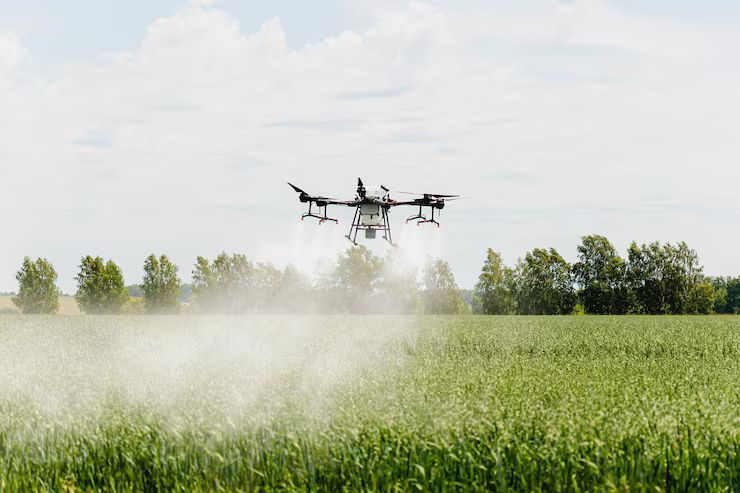
Spraying drones are unmanned aerial systems designed to distribute liquids such as water-based solutions, nutrients, or protective agents over targeted areas. They are equipped with tanks, pumps, nozzles, navigation sensors, and flight controllers that allow precise, low-altitude spraying across fields or defined zones.
These drones exist because traditional ground-based spraying methods can be time-consuming, uneven, and limited by terrain. In areas with uneven land, dense crops, or restricted access, conventional equipment may struggle to achieve uniform coverage. Spraying drones provide an aerial alternative that improves reach, control, and adaptability.
Initially introduced for agricultural use, spraying drones have expanded into forestry support, land management, and environmental applications where accuracy and minimal ground disturbance are important.
Importance: Why Spraying Drones Matter Today
Spraying drones are increasingly important due to changes in land use, labor availability, and environmental awareness.
Why this topic matters today:
-
Precision application: Reduces overspray and improves target accuracy
-
Terrain flexibility: Operates effectively on slopes, terraces, and irregular fields
-
Time efficiency: Covers defined areas quickly with minimal setup
-
Reduced exposure: Limits direct human contact with sprayed substances
-
Data-driven operation: Integrates mapping and positioning for consistent results
These systems affect farmers, agronomists, land managers, environmental planners, and technology researchers. Spraying drones help solve challenges related to uneven distribution, crop damage from heavy equipment, and limited access in difficult terrain.
Recent Updates: Trends and Developments (2024–2025)
Over the past year, spraying drone technology has advanced with a focus on accuracy, autonomy, and operational safety.
| Year | Development or Trend | Practical Impact |
|---|---|---|
| 2024 | Improved positioning accuracy | More uniform spray patterns |
| 2024 | Enhanced nozzle control systems | Better droplet size management |
| 2025 | Automated route planning | Reduced operator workload |
| 2025 | Increased payload stability | More consistent flow during flight |
Recent developments also include better wind compensation algorithms, stronger flight stability in variable conditions, and integration with field mapping data to adjust spray rates based on area requirements.
Laws, Standards, and Regulatory Influence
Spraying drones operate under aviation, safety, and environmental regulations that vary by country but share common principles.
Common regulatory considerations include:
-
Civil aviation rules: Govern unmanned aircraft operation, altitude limits, and pilot certification
-
Agricultural safety guidelines: Define acceptable spraying practices and buffer zones
-
Environmental protection policies: Address drift control and protection of surrounding ecosystems
-
Data and operational logging requirements: Support traceability and accountability
Many regions require operators to complete training programs and follow designated operating procedures to ensure safe and responsible drone use.
Working Principles: How Spraying Drones Operate
Spraying drones combine flight control systems with liquid distribution mechanisms.
Basic working principle explained:
-
A tank stores the liquid to be applied
-
Pumps deliver liquid from the tank to spray nozzles
-
Nozzles atomize the liquid into controlled droplets
-
Flight controllers maintain altitude, speed, and direction
-
Navigation systems guide the drone along predefined paths
Key onboard systems include:
-
Flight stabilization sensors
-
GPS or positioning modules
-
Flow rate controllers
-
Battery-powered propulsion systems
Together, these systems ensure that liquid is applied evenly while maintaining stable and safe flight.
Coverage Methods Used in Spraying Drones
Coverage methods determine how efficiently and uniformly spraying drones treat an area.
Common coverage approaches include:
-
Grid-based coverage: The area is divided into parallel paths for uniform application
-
Contour-following coverage: Adjusts altitude to match terrain shape
-
Variable-rate coverage: Modifies spray output based on zone requirements
-
Edge-focused coverage: Applies reduced output near boundaries to limit drift
| Coverage Method | Key Advantage | Typical Use |
|---|---|---|
| Grid-based | Even distribution | Open fields |
| Contour-following | Terrain adaptability | Sloped land |
| Variable-rate | Resource efficiency | Mixed crop zones |
| Edge control | Drift reduction | Boundary areas |
These methods help optimize coverage while minimizing waste and environmental impact.
Safety Knowledge and Operational Awareness
Safety is a critical aspect of spraying drone operation due to aerial movement and liquid handling.
Important safety considerations include:
-
Pre-flight inspection of motors, propellers, and nozzles
-
Verification of weather conditions, especially wind speed
-
Maintaining safe distances from people and structures
-
Using appropriate protective measures during preparation
-
Monitoring battery levels and return-to-home settings
Operational safety also involves respecting restricted airspace, following altitude limits, and maintaining clear visual awareness of the drone during flight.
Tools and Learning Resources
Understanding spraying drones is supported by a range of educational and technical resources.
Helpful learning resources include:
-
Unmanned aircraft operation manuals
-
Agricultural engineering textbooks
-
Environmental application guidelines
-
Drone safety training materials
-
Field mapping and coverage planning guides
Reference tools commonly used:
-
Spray pattern comparison charts
-
Droplet size classification tables
-
Flight planning templates
-
Maintenance and inspection checklists
These resources help users develop informed, safe, and efficient spraying practices.
Frequently Asked Questions
What are spraying drones mainly used for?
They are primarily used for targeted aerial application of liquids over crops or land areas.
How do spraying drones manage uneven terrain?
They use altitude sensors and navigation data to adjust flight height and maintain consistent coverage.
Why is droplet size important?
Proper droplet size helps achieve effective coverage while reducing drift.
Are spraying drones suitable for small areas?
Yes. Their precise control makes them effective for both small and segmented zones.
What skills are important for operators?
Understanding flight control, coverage planning, safety procedures, and local regulations.
Conclusion
Spraying drones represent a significant advancement in precision application technology. By combining controlled flight, accurate liquid distribution, and intelligent coverage planning, they address many limitations of traditional spraying methods.
As technology continues to improve, spraying drones are becoming safer, more precise, and more adaptable to diverse environments. Understanding their working principles, coverage methods, and safety considerations helps users apply this technology responsibly and effectively in modern land management and agricultural practices.