Guide to Rubber Powder Grinding Machines: Working Principles, Output Quality, and Applications
Rubber powder grinding machines are industrial systems designed to convert rubber materials into fine powder or granules. These machines are commonly used to process rubber sourced from manufacturing scrap, rejected components, and end-of-life rubber products. The resulting powder is reused across various industries as a functional raw material.
The need for rubber powder grinding machines emerged as industries sought ways to manage rubber waste more effectively. Rubber is durable and resistant to natural degradation, which makes disposal challenging. Grinding technology provides a practical solution by transforming rubber into reusable forms while preserving its material properties.
These machines exist to support material recovery, consistent particle sizing, and industrial reuse, making them an important part of modern circular manufacturing systems.
Importance: Why Rubber Powder Grinding Machines Matter Today
Rubber powder grinding machines play a key role in industrial sustainability, material efficiency, and product performance.
Why this topic matters today:
-
Waste reduction: Supports reuse of rubber materials instead of disposal
-
Material efficiency: Converts scrap into usable powder with controlled properties
-
Industrial versatility: Rubber powder is used across multiple sectors
-
Environmental responsibility: Reduces landfill dependency
-
Process consistency: Produces uniform particle sizes for predictable performance
These machines affect recycling facilities, manufacturing plants, material engineers, quality inspectors, and infrastructure developers. They help solve challenges related to rubber waste accumulation, inconsistent particle size, and limited reuse options.
Industries such as construction, automotive components, footwear, flooring, sports surfaces, and molded rubber goods rely on rubber powder produced through controlled grinding processes.
Recent Updates: Industry Trends and Developments (2024–2025)
Over the past year, rubber powder grinding technology has advanced with a focus on efficiency, output consistency, and material performance.
| Year | Development or Trend | Industrial Impact |
|---|---|---|
| 2024 | Improved cooling-assisted grinding | Reduced heat damage to rubber particles |
| 2024 | Enhanced particle size control | Better consistency across batches |
| 2025 | Increased adoption of cryogenic grinding | Cleaner cuts and finer powder output |
| 2025 | Integrated screening systems | Improved separation accuracy |
Recent developments show increased use of cryogenic grinding, where rubber is cooled before grinding to improve brittleness and reduce deformation. There is also growing attention to energy-efficient drive systems and modular machine designs that allow flexible output ranges.
Laws, Standards, and Regulatory Influence
Rubber powder grinding machines are influenced by environmental, safety, and industrial waste regulations.
Common regulatory considerations include:
-
Environmental protection laws: Control emissions, dust levels, and waste handling
-
Industrial safety standards: Address machine guarding, noise, and operator protection
-
Waste management regulations: Define acceptable recycling and material recovery practices
-
Occupational health guidelines: Focus on dust exposure and ventilation
Many countries promote rubber recycling as part of broader waste reduction programs, indirectly supporting the use of grinding equipment that meets safety and environmental expectations.
Working Principles: How Rubber Powder Grinding Machines Operate
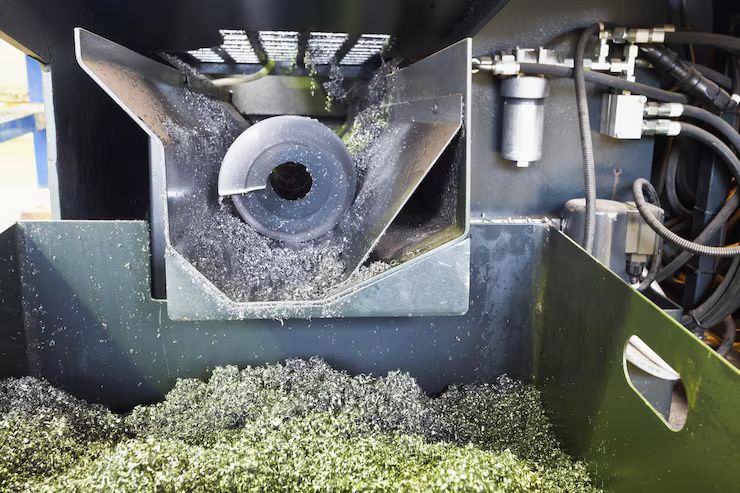
Rubber powder grinding machines operate by applying controlled mechanical force to break rubber into smaller particles while managing heat and deformation.
Basic working process:
-
Rubber material is cleaned and prepared
-
Material enters the grinding chamber
-
Cutting, shearing, or impact forces reduce particle size
-
Screens or classifiers control output size
-
Fine powder is collected and separated
Key operating elements include:
-
Feed system: Controls material input rate
-
Grinding mechanism: Uses blades, rollers, or discs
-
Cooling system: Manages heat generation
-
Screening unit: Ensures uniform particle size
-
Dust control system: Maintains clean operation
Proper control of speed, pressure, and temperature is essential to maintain rubber elasticity and prevent thermal degradation.
Output Quality: What Defines Good Rubber Powder
Output quality is one of the most important performance measures of rubber powder grinding machines.
Key quality factors include:
-
Particle size distribution
-
Surface texture and cleanliness
-
Absence of contaminants
-
Consistent color and composition
-
Controlled heat exposure
| Quality Factor | Why It Matters |
|---|---|
| Particle uniformity | Ensures predictable mixing behavior |
| Clean surfaces | Improves bonding in new products |
| Controlled temperature | Preserves rubber properties |
| Low dust residue | Improves handling safety |
High-quality rubber powder performs more reliably in downstream applications such as compounding, molding, and surface treatments.
Types of Rubber Powder Grinding Machines
Different grinding technologies are used depending on desired output and material characteristics.
Common machine types include:
-
Ambient grinding machines: Operate at normal temperatures
-
Cryogenic grinding machines: Use cooling to improve brittleness
-
Granulators: Produce coarse rubber particles
-
Fine pulverizers: Generate micron-level powder
-
Multi-stage grinding systems: Combine coarse and fine processing
Each type is selected based on required particle size, throughput, and application needs.
Applications of Rubber Powder Across Industries
Rubber powder produced by grinding machines is used in a wide range of applications.
Key application areas include:
-
Rubber flooring and mats
-
Road and pavement modification
-
Molded rubber products
-
Sports surfaces and tracks
-
Industrial seals and gaskets
-
Sound and vibration damping materials
The versatility of rubber powder makes consistent grinding quality essential for reliable industrial performance.
Tools and Learning Resources
Understanding rubber powder grinding machines is supported by technical and educational resources.
Helpful learning resources include:
-
Recycling engineering textbooks
-
Industrial rubber processing handbooks
-
Environmental material recovery studies
-
Manufacturing process journals
-
Safety and compliance manuals
Reference tools commonly used:
-
Particle size distribution charts
-
Temperature control guidelines
-
Output quality inspection checklists
-
Material compatibility tables
These resources help professionals evaluate process performance and output suitability.
Frequently Asked Questions
What is the main purpose of rubber powder grinding machines?
They convert rubber materials into fine powder or granules suitable for reuse in industrial applications.
Why is temperature control important during grinding?
Excess heat can damage rubber structure and reduce material performance.
What particle sizes can be achieved?
Sizes range from coarse granules to fine powders, depending on machine type and settings.
Is cryogenic grinding always required?
Not always. It is mainly used when very fine or clean powder is needed.
How is output quality verified?
Quality is checked using particle size analysis, visual inspection, and material testing.
Conclusion
Rubber powder grinding machines are vital tools in modern recycling and material recovery systems. By transforming rubber into controlled, reusable powder, they support sustainability, industrial efficiency, and material innovation.
With ongoing advancements in cooling methods, particle control, and system integration, these machines continue to improve output quality and application flexibility. Understanding their working principles, quality factors, and industrial uses provides valuable insight into how rubber recycling supports both economic and environmental goals.