Exploring Woodworking Machines: Automation, Cutting Systems, and Performance Factors
Woodworking machines are industrial and workshop tools designed to shape, cut, drill, sand, and assemble wood materials with precision and efficiency. These machines range from basic cutting equipment to fully automated production lines used in furniture, cabinetry, construction components, and engineered wood products.
The need for woodworking machines emerged as demand for uniform, high-quality wooden products increased. Manual woodworking methods, while skilled and artistic, could not consistently meet industrial-scale production requirements. Machines were introduced to improve accuracy, repeatability, and speed, enabling standardized manufacturing across large volumes.
Today, woodworking machines support everything from small-scale workshops to advanced automated factories producing modular panels, doors, flooring systems, and structural timber components.
Importance: Why Woodworking Machines Matter Today
Woodworking machines are vital to modern construction, furniture production, and interior design industries.
Why this topic matters today:
-
Production efficiency: Machines enable faster output compared to manual processing
-
Precision cutting: Ensures tight-fitting joints and clean finishes
-
Material optimization: Reduces waste through accurate measurements
-
Safety improvements: Controlled systems reduce manual handling risks
-
Automation growth: Supports scalable manufacturing environments
Industries affected include residential construction, interior design manufacturing, cabinetry, flooring production, packaging, and timber processing. Woodworking machines solve challenges such as inconsistent dimensions, uneven surfaces, high material waste, and labor-intensive processes.
Recent Updates: Trends and Developments (2024–2025)
In the past year, woodworking technology has advanced with a focus on automation, dust control, and cutting precision.
| Year | Development or Trend | Operational Impact |
|---|---|---|
| 2024 | Increased CNC adoption | Improved precision and repeatability |
| 2024 | Smarter dust extraction integration | Cleaner and safer work environments |
| 2025 | Energy-efficient motor systems | Reduced power consumption |
| 2025 | Modular production cells | Flexible manufacturing layouts |
Recent developments also include enhanced blade materials for longer lifespan, improved vibration control systems, and more accurate positioning mechanisms for high-speed cutting operations.
Laws, Standards, and Regulatory Influence
Woodworking machines are subject to workplace safety, machinery design, and environmental regulations.
Key regulatory considerations include:
-
Occupational safety standards: Cover blade guarding, emergency stop systems, and noise exposure
-
Machinery safety directives: Define design and operational safeguards
-
Dust control regulations: Require adequate ventilation and extraction systems
-
Electrical compliance standards: Ensure safe motor and control system design
In many countries, woodworking environments must meet air quality and noise level requirements, especially in large production facilities.
Automation in Woodworking Machines
Automation has significantly transformed woodworking processes.
How automation enhances performance:
-
Computer-controlled cutting paths
-
Automatic material feeding systems
-
Real-time measurement and adjustment
-
Consistent repetition of complex designs
-
Reduced manual setup time
Automated systems improve production consistency while lowering error rates. CNC-based woodworking machines can execute intricate patterns and joints with minimal variation across batches.
Cutting Systems: Core Technologies Explained
Cutting is one of the primary functions of woodworking machines.
Common cutting systems include:
-
Circular saw systems: Used for straight cuts in boards and panels
-
Band saw systems: Suitable for curved or irregular shapes
-
Milling systems: Shape edges and create grooves or profiles
-
Panel saw machines: Designed for precise sheet cutting
-
Drilling and routing systems: Create holes and joinery features
| Cutting System | Primary Function | Typical Use |
|---|---|---|
| Circular saw | Straight cuts | Boards and beams |
| Band saw | Curved shapes | Custom designs |
| Milling machine | Edge shaping | Cabinet components |
| Panel saw | Sheet sizing | Furniture panels |
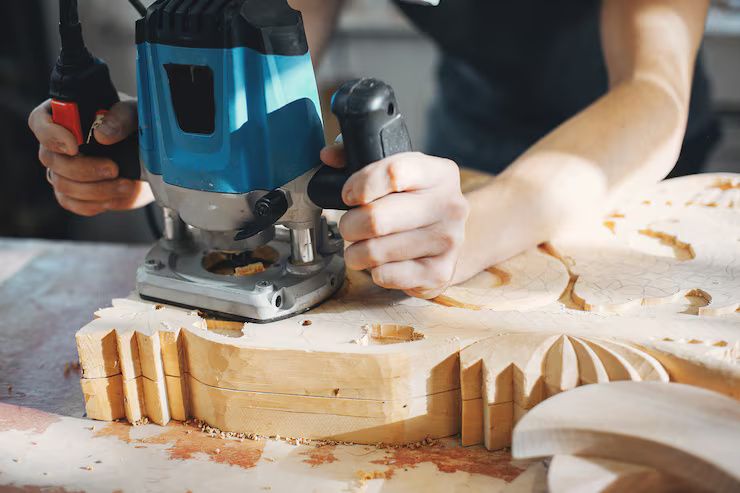
| Router | Grooves and joinery | Structural joints |
Each system is selected based on material thickness, desired finish, and production volume.
Performance Factors in Woodworking Machines
Several factors influence the effectiveness and efficiency of woodworking machines.
Key performance factors include:
-
Cutting accuracy
-
Motor power and torque
-
Vibration stability
-
Feed rate control
-
Blade or tool sharpness
-
Dust extraction efficiency
Proper alignment, calibration, and maintenance significantly impact performance consistency.
Tools and Learning Resources
Understanding woodworking machines requires access to practical and technical resources.
Helpful learning resources include:
-
Wood technology textbooks
-
Machine operation manuals
-
Safety training guides
-
Industrial manufacturing journals
-
Carpentry and fabrication reference books
Reference tools commonly used:
-
Blade selection charts
-
Feed rate calculation tables
-
Material hardness guides
-
Safety inspection checklists
These resources help professionals and learners understand both machine operation and performance optimization.
Frequently Asked Questions
What materials can woodworking machines process?
They typically process solid wood, plywood, MDF, particle board, and engineered wood products.
Why is dust control important?
Wood dust can affect air quality and machine performance, making extraction systems essential.
How does automation improve woodworking accuracy?
Computer-controlled systems reduce manual measurement errors and ensure repeatability.
What maintenance practices are important?
Regular blade sharpening, lubrication, cleaning, and calibration checks maintain performance.
Are woodworking machines suitable for large-scale production?
Yes. Industrial models are specifically designed for high-volume and continuous operation.
Conclusion
Woodworking machines are fundamental to modern timber processing and furniture manufacturing. Through automation, advanced cutting systems, and performance-focused design, these machines enable precise, efficient, and scalable wood production.
As manufacturing standards evolve, woodworking machines continue to integrate smarter controls, improved safety features, and better energy efficiency. Understanding their working principles, regulatory influences, and performance factors provides valuable insight into one of the most widely used industrial manufacturing sectors.