Exploring Tyre Retreading Machines: Manufacturing Workflow, Quality Control, and Performance Factors
Tyre retreading machines are specialized industrial machines used to restore worn tyres by replacing the tread layer while retaining the original tyre casing. This process extends the usable life of tyres and supports efficient material utilization in transportation and logistics sectors.
These machines exist because tyre casings are engineered to withstand multiple life cycles if properly inspected and processed. Discarding tyres after a single tread life results in unnecessary material waste and higher resource consumption. Retreading technology emerged to address these challenges by offering a controlled, repeatable method to renew tread surfaces without compromising structural integrity.
Tyre retreading machines are widely used for commercial vehicles such as trucks, buses, and industrial transport fleets, where tyre durability and consistency are essential for daily operations.
Importance: Why Tyre Retreading Machines Matter Today
Tyre retreading plays a significant role in modern transportation systems due to economic efficiency, environmental responsibility, and fleet performance needs.
Why this topic matters today:
-
Resource efficiency: Extends tyre casing lifespan and reduces raw material demand
-
Environmental impact reduction: Helps limit tyre disposal and landfill pressure
-
Fleet reliability: Maintains consistent tyre performance for heavy vehicles
-
Standardized manufacturing: Controlled processes improve repeatability and safety
-
Operational continuity: Supports large-scale transport and logistics operations
Tyre retreading machines affect fleet operators, transport planners, manufacturing engineers, quality inspectors, and sustainability professionals. They solve problems related to tyre waste, inconsistent tread performance, and premature casing disposal.
Recent Updates: Industry Trends and Developments (2024–2025)
In the past year, tyre retreading technology has advanced with improvements in inspection accuracy, automation, and material performance.
| Year | Development or Trend | Industrial Impact |
|---|---|---|
| 2024 | Enhanced casing inspection systems | Improved detection of internal damage |
| 2024 | Automated tread application equipment | More consistent tread bonding |
| 2025 | Advanced curing control systems | Better tread durability and adhesion |
| 2025 | Data-driven quality tracking | Improved traceability and process control |
Recent developments also include better buffing precision, improved rubber compounds for retreading, and stronger focus on process documentation to meet safety and quality expectations.
Laws, Standards, and Regulatory Influence
Tyre retreading machines operate under transportation safety, manufacturing quality, and environmental regulations.
Common regulatory and standard considerations include:
-
Automotive safety standards: Define performance requirements for retreaded tyres
-
Manufacturing quality systems: Require documented inspection and process control
-
Environmental regulations: Address waste management and emissions
-
Workplace safety guidelines: Cover machinery operation and material handling
Many countries require retreaded tyres to meet the same functional safety expectations as new tyres for specific vehicle categories, making compliance essential throughout the retreading process.
Manufacturing Workflow: How Tyre Retreading Machines Are Used
Tyre retreading follows a structured workflow supported by different machines at each stage.
Typical manufacturing workflow includes:
-
Initial inspection: Visual and non-destructive checks of tyre casing
-
Buffing: Removal of worn tread using precision buffing machines
-
Repair and preparation: Correction of casing injuries and surface conditioning
-
Tread application: Placement of new tread material using controlled pressure
-
Curing: Heat and pressure applied in curing chambers to bond tread
-
Final inspection: Verification of tread integrity, balance, and appearance
| Stage | Purpose | Key Machine Type |
|---|---|---|
| Inspection | Casing evaluation | Inspection systems |
| Buffing | Surface preparation | Tyre buffing machines |
| Tread building | New tread placement | Tread building machines |
| Curing | Bonding and shaping | Curing chambers |
| Inspection | Quality verification | Testing and inspection tools |
Each stage contributes to the final performance and reliability of the retreaded tyre.
Quality Control Practices in Tyre Retreading
Quality control is a critical aspect of tyre retreading operations.
Key quality control measures include:
-
Casing integrity assessment
-
Buffed surface profile accuracy
-
Uniform tread thickness
-
Proper curing temperature and time
-
Visual and dimensional inspection
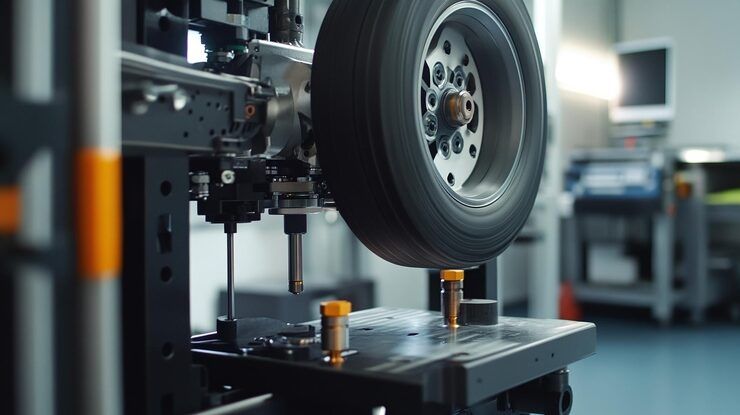
Modern retreading facilities often integrate shearography, pressure testing, and final visual checks to ensure safety and performance consistency.
Performance Factors Influencing Retreaded Tyres
Several factors influence the final performance of retreaded tyres.
Major performance factors include:
-
Original casing quality
-
Precision of buffing process
-
Tread material properties
-
Bonding strength during curing
-
Process consistency and cleanliness
Proper control of these factors ensures that retreaded tyres deliver reliable traction, wear resistance, and load-carrying capability.
Tools and Learning Resources
Understanding tyre retreading machines is supported by technical references and training materials.
Helpful learning resources include:
-
Tyre engineering and materials textbooks
-
Industrial manufacturing journals
-
Retreading process manuals
-
Transportation safety authority publications
-
Quality inspection guideline documents
Reference tools commonly used:
-
Tread depth measurement charts
-
Curing cycle reference tables
-
Casing damage classification guides
-
Quality audit checklists
These resources help professionals maintain consistent and safe retreading operations.
Frequently Asked Questions
What is the main purpose of tyre retreading machines?
They restore worn tyres by replacing the tread while retaining the original casing.
Why is casing inspection so important?
The casing determines the structural safety and suitability of the tyre for retreading.
Are retreaded tyres suitable for heavy vehicles?
Yes, when produced under controlled processes and standards, they are widely used for trucks and buses.
What role does curing play in retreading?
Curing ensures proper bonding between the new tread and casing for durability.
How is retread quality verified?
Through inspection, testing, and process documentation at multiple stages.
Conclusion
Tyre retreading machines are a vital part of modern transportation and manufacturing ecosystems. By enabling the controlled reuse of tyre casings, they support material efficiency, environmental responsibility, and fleet reliability. Understanding the manufacturing workflow, quality control practices, and performance factors behind tyre retreading provides valuable insight into a process that balances engineering precision with sustainability goals.
As technology and standards continue to evolve, tyre retreading machines will remain an important solution for extending tyre life while maintaining safety and performance expectations.