Exploring Rock Drilling Jumbo Machines: Overview, Functions, Advice & Useful Resources
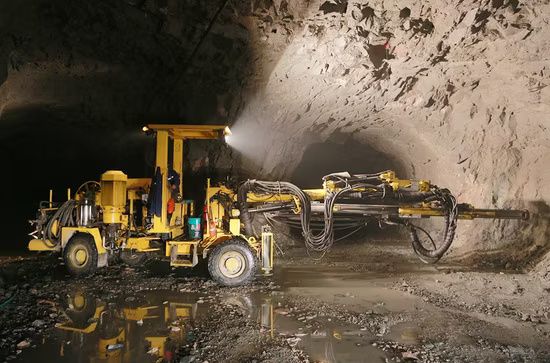
Rock drilling jumbo machines are specialized equipment widely used in mining, tunneling, and underground construction. These machines exist to make drilling faster, more accurate, and safer, especially in environments where manual drilling would be slow or hazardous. A typical rock drilling jumbo machine uses advanced drilling technology to create precise blast holes, support cavities, or openings in hard rock formations.
They operate using automated controls, hydraulic systems, and drilling booms that can handle demanding geological conditions. Their purpose is to improve productivity, increase drilling precision, and minimize risks for workers in underground environments. Modern jumbos also support high-efficiency drilling technologies such as data monitoring, automated positioning, and predictive drilling analytics, which are now common in large-scale infrastructure projects.
Importance
Rock drilling jumbos matter today because mining and underground construction projects are growing significantly across the world. Industries such as transportation, renewable energy, and building development rely on tunnels and underground spaces that require efficient drilling solutions. These machines help engineers and technicians complete projects faster and with improved accuracy, reducing downtime and material waste.
Their importance also extends to:
-
Safety – Automated drilling reduces the need for workers near hazardous rock faces.
-
Precision – Advanced control systems ensure uniform drilling patterns for stable blasting.
-
Efficiency – High penetration rates and smart drilling technologies support large-scale operations.
-
Environmental impact – Cleaner and more controlled drilling reduces dust and vibration levels.
Rock drilling jumbos also support strategic sectors such as mining engineering, geotechnical development, infrastructure modernization, and energy exploration. For countries investing heavily in metros, hydropower tunnels, and mineral exploration, these machines are essential for project timelines and quality.
Recent Updates
Several developments over the past year have influenced how rock drilling jumbos are designed and used. Some of the key updates include:
• Automation and AI-driven drilling
Manufacturers have increasingly introduced semi-autonomous and fully automated drilling functions. These features help operators achieve consistent drilling performance even in complex geological conditions. Systems launched in early 2024 include intelligent boom positioning, vibration reduction algorithms, and real-time performance diagnostics.
• Battery-electric drilling jumbos
To support sustainability goals, battery-powered jumbo machines gained attention in mid-2024. These machines reduce emissions in underground environments, improving air quality and reducing heat build-up.
• Data integration and cloud analytics
Digital platforms now collect drilling parameters, equipment health data, and geological information. Projects started in 2024 allow engineers to monitor drilling accuracy and forecast wear on drill components.
• Improved operator safety technologies
The addition of remote monitoring stations, collision-avoidance sensors, and AI-assisted control panels became more common during early 2025. These features allow operators to work at a distance from hazardous zones.
• Noise and dust control enhancements
New dust suppression attachments and low-noise hydraulic systems were introduced to meet global occupational health standards.
Laws or Policies
Rock drilling jumbos are influenced by various regulations, especially in sectors involving underground construction, mining, and environmental protection. While requirements differ by country, some common regulatory areas include:
• Workplace Safety Regulations
Many countries follow national mining safety acts, underground labor standards, and occupational hazard guidelines. These rules govern ventilation, equipment maintenance, operator training, and emergency procedures.
• Environmental Regulations
Policies often cover vibration control, dust suppression, noise levels, and eco-friendly power options. Recent sustainability guidelines encourage industries to adopt low-emission or battery-electric equipment.
• Equipment Standards and Certifications
Rock drilling jumbos must follow engineering and safety standards such as
-
equipment performance testing
-
hydraulic system compliance
-
electrical system safety
-
structural stability guidelines
• Tunneling and Mining Project Approvals
Government agencies typically require project-specific approvals for underground construction, including geological assessments, drilling plans, and safety audits.
• Data and Automation Guidelines
As automation grows, some regions now require compliance with machine-data privacy, operator training for automated systems, and safe-use protocols for AI-based control technology.
These regulations ensure responsible use of drilling machinery and minimize risks to workers and the environment.
Tools and Resources
A number of tools, platforms, and informational resources support engineers, students, and professionals working with rock drilling jumbos. These help with equipment analysis, drilling planning, geological evaluation, and safety monitoring.
Technical Tools and Digital Resources
-
Drilling Pattern Design Software
Helps create accurate patterns for blast holes and tunnel excavation planning. -
Geological Mapping Tools
Used to analyze rock quality, predict drilling difficulty, and plan support structures. -
Tunnel Simulation Platforms
Provide models for evaluating drilling progress, tunnel stability, and excavation scheduling. -
Equipment Performance Monitoring Systems
Track penetration rates, boom angles, and machine diagnostics in real time. -
Operator Training Simulators
Virtual systems designed to teach safe and efficient drilling techniques.
Useful Websites and Knowledge Resources
-
International Tunneling Associations (ITA) – Updated research and guidelines.
-
Mining Engineering Journals – Offer case studies and drilling technology updates.
-
Occupational Safety Bodies – Provide safety procedures, inspection checklists, and compliance standards.
-
Rock Mechanics Research Platforms – Publish geological insights and drilling performance data.
Templates and Checklists
-
Daily equipment inspection checklist
-
Drilling plan template
-
Geological condition reporting sheet
-
Safety risk assessment form
These resources support accurate planning, equipment reliability, and safe operation.
FAQs
1. What is a rock drilling jumbo machine used for?
A rock drilling jumbo machine is used for drilling holes in hard rock during tunneling, mining, or underground construction. It creates precise holes for blasting, support installation, or excavation work.
2. How does a rock drilling jumbo improve drilling accuracy?
It uses automated boom controls, hydraulic stabilizers, and digital positioning systems. These technologies help maintain consistent drilling angles, depths, and spacing.
3. Are rock drilling jumbos suitable for all types of rock?
They work best in medium-hard to very hard rock formations. In softer or unstable ground, additional ground support or different equipment might be required to maintain stability.
4. What safety features are commonly used in modern jumbos?
New models often include remote controls, anti-collision sensors, operator protection cabins, dust suppression systems, and real-time drilling monitors.
5. What factors affect drilling efficiency?
Rock hardness, drill bit condition, hydraulic pressure, boom stability, and operator skill are major factors. Using accurate drilling patterns also improves overall performance.
Conclusion
Rock drilling jumbo machines play a crucial role in underground engineering, offering precision, safety, and efficiency across mining and tunneling projects. With advancements in automation, data monitoring, and sustainability, these machines continue to evolve and support large-scale infrastructure development. Their importance is reinforced by global safety regulations, technological innovation, and the growing need for reliable underground construction methods.
Understanding how these machines operate, the challenges they address, and the tools available to support their use helps professionals, students, and engineers make informed decisions in the field of rock drilling and underground development.