Explore Luxury Home Theatre Design: Guide, Tips & Key Insights
A “luxury home theatre” refers to a dedicated or well-designed space within a home that delivers an immersive cinematic experience — combining high-quality visuals, premium sound, thoughtful lighting, and refined interiors. Rather than just a living-room TV setup, a home theatre is a carefully engineered environment where design, comfort, acoustics, and technology converge to replicate (or even surpass) the experience of a commercial cinema.
As streaming platforms expanded and high-resolution formats such as 4K and 8K became mainstream, homeowners began creating environments that replicate theatre-grade immersion. Luxury interior design trends have also influenced how these spaces look, focusing on comfort, lighting control, architectural balance, and material quality. Over the years, luxury home theatres moved from being exclusive features of large homes to becoming more accessible due to compact equipment, intelligent room-tuning software, and flexible design concepts.
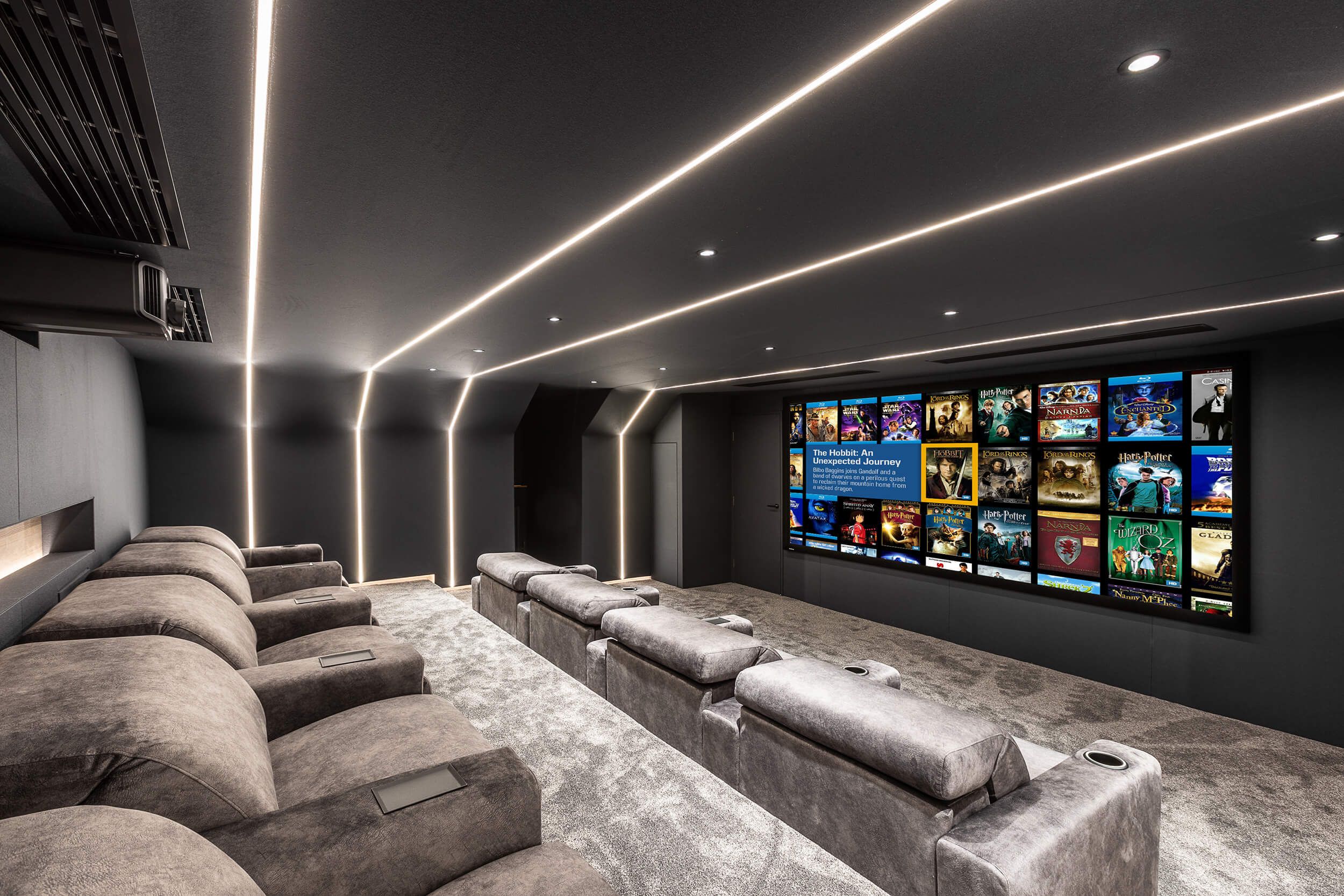
Today, luxury home theatre design is a combination of technology, creativity, and spatial planning. It exists to enhance entertainment at home, support modern lifestyles, and align with the broader shift toward personalized digital experiences.
Importance
Luxury home theatre design matters because it enhances how people interact with entertainment in their everyday lives. It is especially relevant for families, movie enthusiasts, gamers, and individuals who value immersive audio-visual environments.
It solves several common issues related to home entertainment:
-
Comfort: A dedicated space eliminates distractions and improves visual and acoustic clarity.
-
Sound Performance: Proper acoustics address echoes, external noise, and uneven audio distribution.
-
Lighting Balance: Controlled lighting reduces screen glare and improves contrast, particularly with high-end projectors.
-
Convenience: Smart home automation allows users to control sound, screen, temperature, and lighting from a centralized system.
-
Design Harmony: Integrating interior design with technology supports both aesthetics and performance, enhancing the overall living environment.
Luxury home theatres also influence property value and future-ready home planning, aligning with the rise of residential smart technologies.
Recent Updates
The past year has seen several advancements shaping luxury home theatre design. Technology improvements and consumer trends have shifted expectations and introduced new possibilities.
Key updates
-
Dolby Atmos upgrades : Enhanced speaker configurations and adaptive sound formats support more realistic spatial audio experiences.
-
8K and 120-fps content support : Home projectors and displays expanded compatibility for higher-resolution content, improving clarity for large-format screens.
-
AI-based room calibration tools : New audio-tuning software uses machine learning to analyze room shape, materials, and seating layout to adjust sound with greater precision.
-
Growth of minimalist luxury design : Designers shifted toward concealed speakers, hidden projectors, and frameless acoustic panels for cleaner interiors.
-
Rise of gaming-optimized theatre rooms : Theatre spaces now include low-latency displays and immersive sound for large-screen gaming.
-
Eco-friendly materials : Acoustic panels, seating fabrics, and wall treatments increasingly use sustainable materials to match modern environmental preferences.
These developments highlight how luxury home theatre design is becoming more intelligent, more personalized, and more aligned with broader digital lifestyle trends.
Laws or Policies
Luxury home theatre design is influenced by building rules, electrical safety standards, and residential regulations that ensure safe installation and proper infrastructure. While specific laws vary by country and region, several policy areas affect home theatre planning:
-
Electrical and Wiring Standards: Home theatres require structured cabling that complies with national electrical codes to ensure safe connections for amplifiers, networks, and lighting control.
-
Fire Safety Regulations: Many countries mandate the use of fire-retardant materials for wall panels, wiring insulation, and seating upholstery.
-
Noise and Disturbance Guidelines: Urban areas may enforce noise-control rules that influence soundproofing decisions in residential buildings.
-
Construction and Remodeling Permissions: Dedicated theatre rooms may require permissions when structural modifications are involved, such as ceiling reinforcement for acoustic panels or projector mounts.
-
Energy-Efficiency Rules: Smart home automation, LED lighting, and energy-rated electronics help meet modern sustainability guidelines.
These policies encourage safe design practices and ensure that theatre rooms integrate well within residential structures.
Tools and Resources
A range of tools, apps, and digital resources can support luxury home theatre planning, layout optimization, and acoustic tuning. These help homeowners and designers create accurate plans and evaluate audio-visual performance before installation.
Planning and Layout Tools
-
RoomSketcher – For designing room layouts and furniture placement.
-
Floorplanner – For quick spatial planning and visualizing seating arrangements.
-
HomeByMe – For interior design visualization and 3D modelling.
Acoustic and Audio System Tools
-
REW (Room EQ Wizard) – For acoustic analysis, sound measurement, and equalization.
-
Dolby Atmos Setup Guide – For recommended speaker configuration and calibration.
-
Auralization software – For simulating how sound behaves in different room shapes.
Video and Display Tools
-
ProjectorCentral calculators – For calculating throw distance, screen size, and brightness.
-
Display calibration tools – For tuning brightness, contrast, and color accuracy.
Smart Home and Automation Tools
-
Home Assistant – For integrating lighting, audio, and environmental controls.
-
IFTTT – For automating sequences such as dimming lights or activating theatre mode.
Knowledge and Research Resources
-
Architectural design platforms for digital architecture insights.
-
Interior design journals for trends related to luxury interior design and lighting.
-
Technology research websites covering home audio systems and residential technology trends.
Using these tools helps ensure accuracy, performance, and long-term adaptability of luxury theatre spaces.
FAQs
1. What is the ideal room size for a luxury home theatre?
There is no fixed size, but a rectangular room with balanced proportions works best. Larger rooms (around 18–25 feet long) provide better speaker placement and more seating flexibility, while smaller rooms may require adaptive acoustics.
2. What type of audio system is best for a theatre room?
A multi-channel surround system such as Dolby Atmos offers immersive spatial audio. Speaker placement and calibration matter more than the speaker brand, making room design essential.
3. Are projectors better than large TVs for luxury home theatres?
High-end projectors provide large screen sizes suitable for cinematic experiences, while premium TVs offer higher brightness and sharpness. The choice depends on room lighting, seating distance, and user preference.
4. How important is acoustic treatment?
Acoustic treatment is one of the most important elements. It controls reflections, improves dialogue clarity, and ensures consistent sound throughout the room. Even basic treatments such as bass traps and wall panels make a significant difference.
5. Can home theatre systems integrate with smart home technology?
Yes. Modern systems support lighting automation, climate control, and audio-visual integration through smart home platforms, allowing one-touch activation of theatre mode.
Conclusion
Luxury home theatre design has evolved into a sophisticated blend of technology, architecture, and interior styling. It addresses modern expectations for immersive entertainment and aligns with the broader movement toward smart homes and personalized digital experiences. With advancements in audio systems, high-resolution projectors, acoustic engineering, and lighting control, theatre spaces can be tailored to individual lifestyles.
Understanding the importance of room shape, acoustics, layout planning, and regulatory guidelines ensures that the design is safe, functional, and immersive. As updates in residential technology trends continue, luxury home theatres will remain an essential part of modern living environments. This educational guide provides a foundation for anyone wishing to explore the principles behind creating high-quality entertainment spaces with balanced design and performance.