Explore Industrial Mixers: Basics, Explanation, and Key Information
Industrial mixers are mechanical systems designed to combine, blend, or homogenize materials at large scale. These materials may include liquids, powders, pastes, granules, or semi-solid compounds. Unlike small household mixers, industrial mixers are built to operate continuously, handle high volumes, and maintain consistent results across complex production environments.
The purpose of industrial mixers exists because many manufacturing and processing activities require uniform composition. Whether producing construction materials, food products, pharmaceuticals, chemicals, or polymers, consistent mixing directly influences quality, stability, and safety. Without controlled mixing systems, variations in material composition can lead to defects, inefficiencies, and compliance risks.
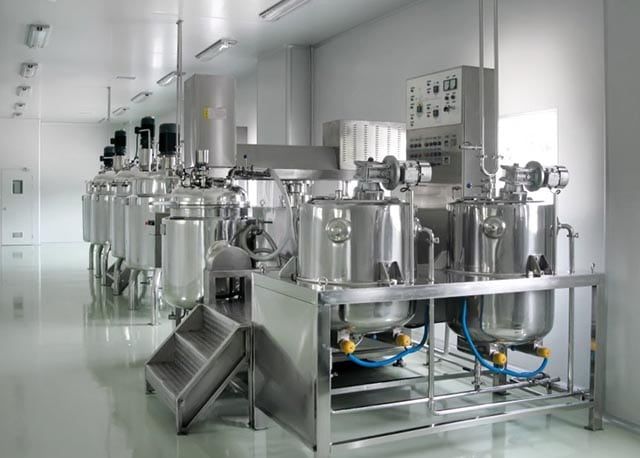
At their core, industrial mixing systems apply mechanical force to move materials in a controlled pattern. This motion ensures ingredients interact evenly, preventing separation, settling, or uneven distribution. The design of a mixer depends on material behavior, viscosity, particle size, and processing objectives.
Why Industrial Mixers Matter Today
Industrial mixers play a critical role in modern manufacturing ecosystems. As industries scale production and automate workflows, mixing accuracy and efficiency become increasingly important.
Key reasons this topic matters include:
-
Process consistency: Uniform mixtures support predictable performance and reduce quality variation.
-
Operational efficiency: Proper mixing minimizes waste, reprocessing, and downtime.
-
Product integrity: Even distribution of ingredients helps maintain structural and chemical stability.
-
Regulatory alignment: Controlled mixing supports documentation, traceability, and compliance standards.
-
Cross-industry impact: Affects construction, pharmaceuticals, food processing, energy materials, coatings, and specialty chemicals.
Industrial mixers also solve practical challenges such as material agglomeration, sedimentation, air entrapment, and uneven curing. For industries working with advanced materials or sensitive formulations, precise mixing is not optional—it is foundational.
Recent Developments and Industry Trends
Industrial mixing technology continues to evolve in response to efficiency demands, digital transformation, and sustainability goals. Over the past several update cycles, several notable trends have emerged.
One major development is the integration of smart monitoring systems. Sensors embedded in mixers now track torque, temperature, rotational speed, and load variation. These metrics help operators detect inconsistencies early and maintain stable mixing conditions.
Another key trend is energy-optimized mixer design. Advances in impeller geometry and motor control systems allow mixers to achieve the same blending performance while reducing energy intensity.
Automation and digital control platforms have also expanded. Programmable logic controllers and industrial software interfaces allow repeatable mixing profiles, automated batch documentation, and predictive maintenance insights.
Additionally, modular mixer configurations are becoming more common. These designs allow components to be adapted for different material types without redesigning the entire system, supporting flexible production requirements.
Regulatory and Policy Considerations
Industrial mixers are influenced by a range of regulatory frameworks related to safety, environmental protection, and quality control. These rules typically focus on how equipment is designed, operated, and maintained rather than on commercial activity.
Common regulatory considerations include:
-
Workplace safety standards governing mechanical guarding, emergency shutoff systems, and noise exposure
-
Environmental regulations addressing emissions, dust control, and waste handling
-
Material handling guidelines for hazardous or sensitive substances
-
Quality management frameworks requiring documentation of processing conditions and validation records
Many policies encourage the use of equipment that supports energy efficiency, operator safety, and traceable production processes. Compliance often requires routine inspection, operator training, and adherence to documented operating procedures.
Tools, Technologies, and Learning Resources
A range of tools and resources support understanding, operating, and optimizing industrial mixing systems. These resources are used by engineers, technicians, researchers, and facility managers.
Helpful tools and platforms include:
-
Mixing simulation software for modeling flow patterns and shear behavior
-
Process calculators for estimating mixing time, power input, and material load
-
Condition monitoring dashboards that visualize performance data
-
Technical standards documents outlining equipment classifications and testing methods
-
Educational portals and industry journals covering mixing science and process engineering
Below is an example table showing common mixer types and their general applications:
| Mixer Type | Typical Material Form | Mixing Characteristics |
|---|---|---|
| Ribbon Mixer | Powders and granules | Gentle, axial mixing |
| Paddle Mixer | Dry or moist solids | Low-shear blending |
| High-Shear Mixer | Pastes and emulsions | Intense dispersion |
| Planetary Mixer | Viscous compounds | Multi-directional flow |
| Static Mixer | Liquids | Continuous inline flow |
These tools help users evaluate system suitability without physical trials, reducing uncertainty during planning and optimization stages.
Common Questions About Industrial Mixers
What determines the right type of industrial mixer for an application?
Material properties such as viscosity, density, particle size, and moisture content are key factors. Desired mixing intensity and processing time also influence selection.
How does mixing speed affect material quality?
Mixing speed controls shear force and flow pattern. Excessive speed can damage sensitive materials, while insufficient speed may result in uneven distribution.
Are industrial mixers used in continuous processes?
Yes. Some mixers operate in batch mode, while others support continuous processing where materials flow steadily through the system.
What role does automation play in industrial mixing?
Automation improves repeatability, reduces manual intervention, and enables data-driven control of mixing parameters.
How is mixer performance typically evaluated?
Performance is assessed through uniformity testing, energy consumption analysis, and monitoring of operational stability over time.
Visual Comparison of Mixing Approaches
| Mixing Approach | Flow Pattern | Control Level | Typical Use Case |
|---|---|---|---|
| Batch Mixing | Cyclic | High | Formulated products |
| Continuous Mixing | Linear flow | Moderate | High-throughput systems |
| High-Shear Mixing | Turbulent | Precise | Emulsions and dispersions |
These comparisons help clarify how different approaches align with production objectives.
Conclusion: Building Knowledge Around Industrial Mixing
Industrial mixers are foundational systems that support consistency, efficiency, and reliability across many industries. Their role extends beyond simple blending, influencing quality control, regulatory alignment, and process optimization.
As technology advances, industrial mixing continues to integrate smarter controls, improved efficiency, and adaptable designs. Understanding how mixers work, why they matter, and how they are governed helps stakeholders make informed technical decisions.
By focusing on fundamentals, recent developments, and practical resources, this overview provides clear and accessible knowledge for anyone seeking to learn about industrial mixers in a modern context.