Explore High-Pressure Homogenizer Machines: Overview, Basics & Key Insights
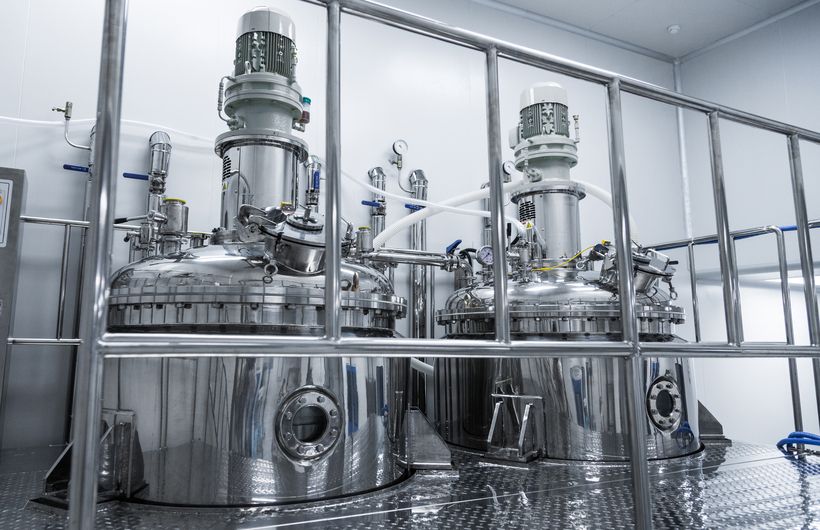
High-pressure homogenizer machines are industrial and laboratory devices used to break down particles, mix substances uniformly, and create stable emulsions or dispersions. They work by forcing materials through a narrow gap at extremely high pressure, which reduces particle size and improves consistency. This technology exists because many modern products—such as pharmaceuticals, food formulations, biotechnology materials, and cosmetic emulsions—require precise uniformity and stability.
The need for improved texture, bioavailability, dispersion quality, and shelf-stability in various sectors led to the development of advanced homogenization systems. Over time, high-pressure homogenizers have evolved into essential equipment for achieving nanoscale refinement, microbial reduction, and controlled particle engineering.
Importance
High-pressure homogenizers matter today because industries increasingly rely on nano-emulsion technology, fine particle processing, and consistent formulation quality. The machines support multiple fields such as biotechnology, pharmaceuticals, food processing, nutraceutical manufacturing, and chemical research.
They help address problems such as:
-
Particle size variability
-
Instability in emulsions
-
Poor bioavailability of active compounds
-
Lack of uniform texture in food and cosmetic products
-
Cell disruption challenges in biotech workflows
A wide range of groups are affected, including researchers, product developers, quality assurance teams, laboratory analysts, and industrial manufacturers. The continued focus on innovation in high-shear processing, nanotechnology applications, and controlled dispersion methods makes these machines relevant across multiple high-value sectors.
To illustrate the role of homogenization, here is a simple comparison of typical particle sizes achieved:
| Processing Method | Approx. Particle Size Range |
|---|---|
| Mechanical Mixing | 20–50 microns |
| Ultrasonic Processing | 1–5 microns |
| High-Pressure Homogenization | 100–500 nanometers |
Such capabilities enable improved formulation stability and enhance the performance of advanced materials.
Recent Updates
In the past year, several developments have shaped how high-pressure homogenizers are used in industries:
-
2024–2025 rise in nano-emulsion research
Research institutions have increased focus on nano-emulsion development for pharmaceuticals, functional foods, and advanced cosmetic formulations. -
Greater attention to energy-efficient models
Manufacturers and research labs have begun shifting toward homogenizers designed to optimize pressure levels and reduce energy consumption. -
Integration with automation platforms (2024)
More laboratories are adopting homogenizers that feature automated pressure control, digital monitoring, and integrated data-logging for precise batch documentation. -
Biotechnology growth
Cell-disruption requirements in 2024–2025 expanded due to the rise in microbial fermentation, protein extraction, and enzyme production research. -
Enhanced particle size analytics
New tools for monitoring nanoscale particles have improved accuracy in evaluating homogenization outcomes.
These updates reflect higher demand for uniform particle engineering and advanced formulation development.
Laws or Policies
High-pressure homogenizer use is influenced by safety standards, equipment-handling guidelines, and quality regulations in multiple countries. While the exact rules vary, the following types of policies commonly apply:
-
Mechanical safety standards
Many countries require compliance with machine safety codes related to pressure vessels, protective enclosures, and operator safeguards. -
Good Manufacturing Practices (GMP)
Laboratories and industrial sites—especially in pharmaceutical and biotechnology sectors—must follow GMP guidelines that cover equipment maintenance, calibration, and hygiene. -
Food safety regulations
Food-grade homogenization processes must comply with food safety authorities, which include equipment sanitation requirements and traceability rules. -
Environmental and energy guidelines
Some regions encourage the use of energy-efficient industrial equipment to support sustainability efforts. -
Laboratory safety norms
Rules related to handling high-pressure systems, personal protective equipment, and emergency shut-off protocols apply across scientific institutions.
These policies ensure safe operation, consistent product quality, and controlled handling of high-pressure processes.
Tools and Resources
Various tools and resources support the use, monitoring, and understanding of high-pressure homogenizers. They include:
Digital Tools
-
Particle size analysis software for evaluating nanoscale dispersions.
-
Pressure-monitoring dashboards integrated into modern homogenizers.
-
Laboratory data-logging systems that track cycles, temperature, and flow rate.
Online Resources
-
Scientific journals featuring studies on nano-emulsion formation and cell disruption.
-
Industry guidelines from engineering safety bodies and laboratory associations.
-
Material science databases providing insights into dispersion behavior and rheology.
Practical Tools
-
Viscosity measurement instruments
-
Temperature-control units and chillers
-
Sterility monitoring tools for food and biotech environments
These resources help ensure safe operation, reliable data capture, and improved understanding of homogenization effects.
FAQs
What is the main function of a high-pressure homogenizer?
It reduces particle size and creates uniform mixtures by forcing materials through a narrow gap at high pressure. This leads to improved stability and consistency in emulsions and dispersions.
Which industries commonly use high-pressure homogenizers?
They are widely used in pharmaceuticals, biotechnology, food processing, cosmetics, chemical formulation, and nutraceutical research, mainly for achieving fine particle structures and stable nano-emulsions.
How does high-pressure homogenization differ from traditional mixing?
Traditional mixing produces larger and more uneven particles. High-pressure homogenizers use intense shear, impact, and turbulence to achieve nanoscale uniformity, leading to more stable results.
What safety considerations apply to homogenizer operation?
Operators typically follow guidelines related to high-pressure handling, protective equipment use, pressure-relief mechanisms, and routine equipment inspection to ensure safe functioning.
Does homogenization affect product stability?
Yes. Particle size reduction achieved through homogenization generally improves stability, enhances texture, and reduces the likelihood of separation in emulsions or dispersions.
Conclusion
High-pressure homogenizer machines have become essential in fields that require fine particle control, uniform mixing, and stable emulsions. Their ability to create nanoscale dispersions supports innovation in biotechnology, pharmaceuticals, food technology, and material science. Recent advancements—including automation, energy optimization, and improved analytical tools—continue to expand their applications. With regulatory frameworks guiding safe and consistent use, these machines remain at the forefront of modern formulation and research processes. This balance of precision, stability, and controlled processing ensures that high-pressure homogenization will remain a key technology in many scientific and industrial workflows.