Explore Filling Machines: Overview, Explanation, Facts, and Practical Knowledge for Modern Manufacturing
Filling machines are industrial systems designed to dispense measured quantities of liquids, powders, granules, or semi-solid materials into containers such as bottles, jars, pouches, or cartons. They are widely used in industries where consistent product packaging is essential, including food processing, beverages, pharmaceuticals, cosmetics, chemicals, and household goods manufacturing.
The concept of filling machines developed as production volumes increased during industrial expansion. Early packaging operations were performed manually, which often resulted in inconsistent quantities, slower output, and higher contamination risks. To overcome these limitations, automated and semi-automated filling equipment was introduced to provide precise measurement, improved hygiene, and faster production rates.
Today, filling machines exist to support accuracy, efficiency, and product consistency in large-scale manufacturing. They ensure that each container receives the correct quantity while maintaining hygienic conditions and minimizing material loss.
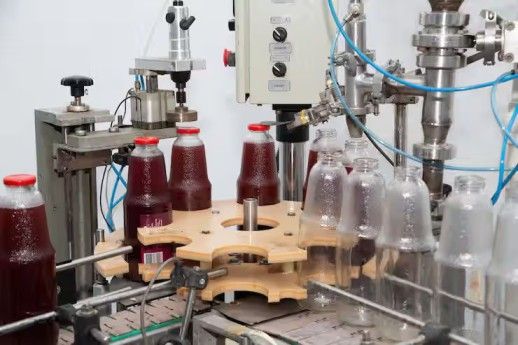
Importance: Why Filling Machines Matter Today
Filling machines are essential for modern manufacturing because packaging accuracy and efficiency directly influence product quality, consumer trust, and regulatory compliance.
Why this topic matters today:
-
Precision packaging: Ensures consistent product quantity in each container
-
Production efficiency: High-speed filling systems support large manufacturing volumes
-
Hygiene and safety: Automated systems reduce contamination risk
-
Material control: Accurate dispensing minimizes waste
-
Process standardization: Supports repeatable and traceable production workflows
These machines affect manufacturing engineers, packaging specialists, quality inspectors, plant operators, and logistics planners. They solve challenges related to inconsistent filling levels, product loss, manual labor intensity, and contamination risks.
Industries such as dairy processing, beverage production, pharmaceuticals, cosmetics, chemicals, and packaged food manufacturing depend heavily on filling machines to maintain reliable production systems.
Recent Updates: Trends and Developments (2024–2025)
In the past year, filling machine technology has continued to evolve, focusing on automation, precision, and adaptability to different packaging formats.
| Year | Development or Trend | Industrial Impact |
|---|---|---|
| 2024 | Increased adoption of servo-driven filling systems | Improved accuracy and speed control |
| 2024 | Integration with smart production monitoring | Better tracking of production efficiency |
| 2025 | Flexible filling machines for multiple container sizes | Faster product changeovers |
| 2025 | Enhanced hygienic design standards | Improved compliance in food and pharmaceutical sectors |
Manufacturers have also focused on reducing product residue during changeovers and improving automated cleaning processes. Advanced sensors and digital monitoring tools are now used to track filling levels and detect irregularities in real time.
Laws or Policies Affecting Filling Machines
Filling machines operate under several safety, quality, and packaging regulations that ensure consumer protection and product consistency.
Common regulatory frameworks include:
-
Food safety regulations: Define hygienic equipment design and contamination prevention practices
-
Pharmaceutical manufacturing guidelines: Require sterile and precise filling systems for medical products
-
Packaging and labeling standards: Ensure accurate product quantity declaration
-
Occupational safety regulations: Address machine guarding, operator protection, and emergency stops
In many countries, government agencies responsible for food safety and consumer protection require manufacturers to maintain documented production procedures and quality control records. These regulations encourage reliable measurement systems and traceable packaging processes.
Tools and Resources for Understanding Filling Machines
Learning about filling machines and their applications can be supported by several technical resources and planning tools.
Helpful tools and references include:
-
Production capacity calculators for packaging lines
-
Container volume measurement charts
-
Flow rate estimation guides for liquids and powders
-
Preventive maintenance checklist templates
-
Quality inspection documentation formats
Learning resources often used by professionals:
-
Industrial packaging engineering textbooks
-
Manufacturing technology journals
-
Equipment operation manuals
-
Industry association publications on packaging technology
-
Training materials for automated production systems
These resources help engineers and technicians understand system performance, maintenance requirements, and quality standards.
Common Types of Filling Machines
Filling machines are classified according to the type of product and dispensing method.
| Filling Machine Type | Working Principle | Typical Applications |
|---|---|---|
| Gravity filling machines | Use natural flow for low-viscosity liquids | Beverages, water |
| Piston filling machines | Use piston movement for accurate volume | Sauces, creams |
| Vacuum filling machines | Use vacuum pressure to fill containers | Glass bottle packaging |
| Auger filling machines | Use rotating screw mechanisms for powders | Spices, flour |
| Pump filling machines | Use pumps to control product flow | Chemical liquids |
Each type is designed to maintain consistent filling accuracy based on product characteristics such as viscosity, density, and flow behavior.
Frequently Asked Questions
What is the primary purpose of a filling machine?
A filling machine dispenses precise quantities of product into containers during manufacturing or packaging operations.
Why is filling accuracy important in manufacturing?
Accurate filling ensures product consistency, reduces waste, and helps meet regulatory packaging requirements.
Which industries use filling machines most frequently?
Food and beverage production, pharmaceutical manufacturing, cosmetics packaging, and chemical processing industries rely heavily on filling equipment.
How do manufacturers maintain filling machine performance?
Routine inspection, cleaning procedures, and calibration help maintain accuracy and operational reliability.
Can filling machines handle different container sizes?
Yes. Many modern systems are designed to adjust for different container shapes and volumes.
Conclusion
Filling machines are essential components of modern manufacturing and packaging operations. By providing accurate, efficient, and hygienic product dispensing, they support consistent production across multiple industries. As automation and monitoring technologies continue to improve, filling machines are becoming more adaptable and precise, enabling manufacturers to meet higher quality expectations and regulatory standards.
Understanding how filling machines work, the regulations that influence them, and the resources available for learning helps professionals and learners appreciate their critical role in efficient production systems.