Explore Container Handlers: Complete Guide, Basics, and Essential Knowledge
Container handlers are large industrial machines used to lift, transport, stack, and position shipping containers in ports, freight terminals, rail yards, and logistics hubs. These machines are essential components of modern port logistics systems and global supply chain management operations.
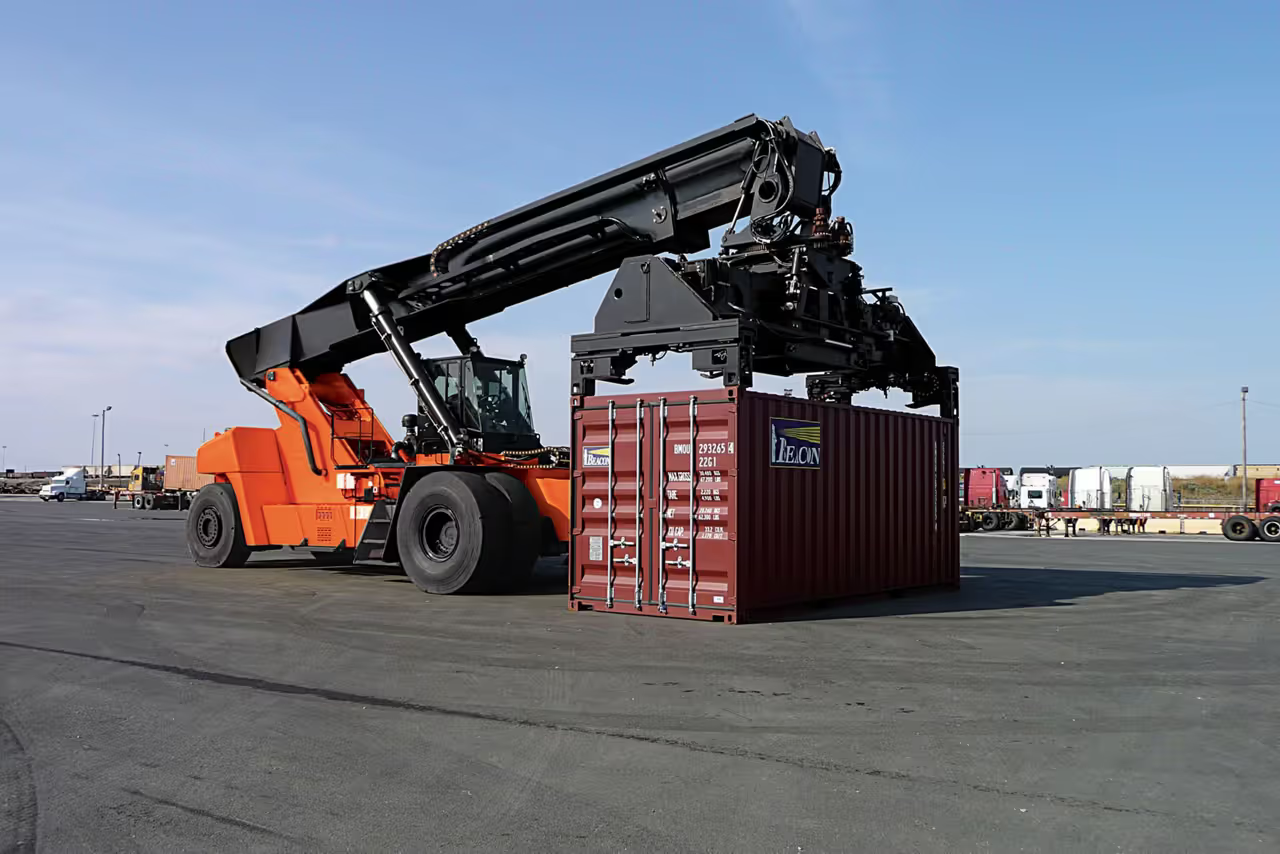
Shipping containers are standardized steel units designed for efficient cargo movement across ships, trucks, and trains. However, their heavy weight and size require specialized container handling equipment. Container handlers were developed to streamline loading and unloading processes, reduce manual labor risks, and improve operational efficiency in maritime infrastructure and inland cargo terminals.
The growth of global trade, e-commerce expansion, and intermodal transport networks has increased the demand for advanced freight handling solutions. Container handlers now integrate industrial automation technology, telematics, and digital monitoring systems to support high-volume cargo movement safely and efficiently.
Common Types of Container Handlers
Container handlers vary based on operational needs, stacking height, and terminal layout. Below are the primary types used in terminal operations management.
Reach Stackers
Reach stackers are flexible machines designed for short-distance container movement and stacking. They can stack containers in multiple rows and tiers, making them suitable for medium-sized terminals and rail yards.
Key features:
- Extendable boom arm
- High maneuverability
- Efficient for intermodal operations
Empty Container Handlers
These machines specialize in handling empty containers, which are lighter but often stacked higher. They are commonly used in storage yards where space optimization is critical.
Key features:
- Lightweight lifting systems
- Higher stacking capability
- Optimized for yard management
Straddle Carriers
Straddle carriers lift containers by straddling over them and are widely used in large container terminals. They support both transport and stacking functions.
Key features:
- High operational speed
- Reduced ground infrastructure needs
- Compatible with automation systems
Why Container Handlers Matter Today
Container handlers play a central role in global trade efficiency. Their importance extends across multiple industries:
- Maritime shipping and port authorities
- Rail freight networks
- Warehouse logistics systems
- Industrial manufacturing supply chains
Growing international trade volumes require fast and reliable cargo movement. Without advanced heavy equipment operations, delays in loading and unloading can disrupt supply chains, increase congestion, and affect inventory planning.
Modern container handlers contribute to:
- Faster vessel turnaround times
- Improved yard organization
- Reduced workplace safety risks
- Enhanced container tracking through digital systems
They also support sustainability initiatives. Many terminals now integrate hybrid or electric-powered models to reduce emissions, aligning with environmental regulations and carbon-reduction frameworks.
Operational Workflow Overview
Container handlers operate within structured port logistics systems. The process generally follows these steps:
- Container arrives via vessel, truck, or train
- Terminal system identifies storage or transfer location
- Handler lifts and moves container
- Container is stacked or transferred to outbound transport
The coordination between container handlers and cargo management software ensures real-time tracking and reduced errors.
Below is a simplified comparison of handler capabilities:
| Equipment Type | Stacking Height | Mobility Level | Typical Use Area |
|---|---|---|---|
| Reach Stacker | Medium | High | Rail yards |
| Empty Container Handler | High | Medium | Storage yards |
| Straddle Carrier | Medium-High | High | Large terminals |
This structured workflow supports efficient terminal operations management and optimized freight movement.
Recent Updates and Industry Trends
The container handling industry has seen notable technological and regulatory shifts over the past year.
Automation and Digitalization
Several global ports have expanded automation initiatives, integrating autonomous straddle carriers and AI-driven yard planning systems. These systems improve container positioning accuracy and reduce idle equipment time.
Electrification and Emission Reduction
Recent months have shown accelerated adoption of electric and hybrid container handlers. Terminal operators are aligning equipment fleets with international emission reduction guidelines to support environmental compliance.
Advanced Telematics
Modern container handling equipment now includes telematics systems that provide:
- Real-time equipment diagnostics
- Predictive maintenance alerts
- Fuel efficiency monitoring
- Operator performance tracking
Supply Chain Resilience
Recent global logistics disruptions have encouraged investment in diversified transport hubs and digital freight visibility platforms. Container handlers now operate within smarter logistics ecosystems that prioritize flexibility and risk management.
Laws and Regulatory Considerations
Container handlers are subject to occupational safety standards, environmental regulations, and industrial machinery compliance frameworks. These regulations aim to ensure safe operations and environmental protection.
Key regulatory areas include:
Workplace Safety Standards
Operators must follow occupational safety guidelines related to heavy equipment operations, including training requirements, load limits, and inspection procedures.
Environmental Compliance
Emission regulations increasingly influence machinery design, particularly regarding fuel efficiency and noise control. Electrification aligns equipment with environmental sustainability policies.
Port Authority Regulations
Terminal operations must adhere to port authority guidelines covering traffic management, stacking rules, and operational safety zones.
Customs and Trade Compliance
Container movement must comply with customs inspection procedures and international trade documentation standards, integrated into digital cargo management systems.
Compliance ensures risk reduction, operational continuity, and adherence to broader logistics governance frameworks.
Tools and Resources for Container Handling
Digital transformation has expanded the range of tools supporting container handler operations.
Cargo Management Software
Platforms integrate container tracking, yard planning, and vessel scheduling into centralized dashboards.
Fleet Telematics Systems
These systems provide equipment monitoring, maintenance tracking, and operational analytics.
Terminal Operating Systems (TOS)
TOS platforms coordinate container flow within ports and intermodal terminals, improving operational efficiency.
Industrial Automation Technology
Automation tools include:
- AI-based yard optimization
- Remote equipment control systems
- Automated stacking guidance systems
Safety Management Platforms
Digital inspection checklists and compliance tracking tools help maintain workplace safety standards.
Training Simulators
Virtual simulation tools allow operators to practice heavy equipment operations in controlled digital environments, enhancing safety and efficiency.
Operational Efficiency Graph Overview
Container handling performance is often evaluated using metrics such as:
- Moves per hour
- Equipment utilization rate
- Fuel or energy consumption
- Downtime frequency
A typical efficiency comparison shows automated systems achieving higher container throughput while reducing idle time compared to conventional manual operations.
These metrics guide investment in advanced maritime infrastructure equipment and automation upgrades.
Frequently Asked Questions
What is the main purpose of a container handler?
A container handler is designed to lift, move, and stack shipping containers safely and efficiently within ports, rail yards, and logistics hubs.
How are reach stackers different from straddle carriers?
Reach stackers use an extendable boom to lift containers, while straddle carriers lift containers by positioning over them. Straddle carriers often operate in larger automated terminals.
Are container handlers automated?
Some modern terminals use semi-automated or fully automated systems integrated with industrial automation technology and terminal operating systems.
What safety measures are required for operation?
Operators must follow safety protocols, including equipment inspections, load limit compliance, and certified training under occupational safety standards.
How do container handlers support supply chain management?
They ensure efficient container movement, reduce delays, and integrate with cargo management software to improve tracking and logistics coordination.
Conclusion
Container handlers are fundamental components of modern port logistics systems and global supply chain management. From reach stackers to straddle carriers, these machines enable efficient freight handling solutions across maritime and inland transport networks.
Advancements in automation, electrification, and telematics continue to reshape heavy equipment operations, supporting both operational efficiency and environmental compliance. Regulatory frameworks ensure safety, sustainability, and trade compliance, reinforcing the structured role of container handling equipment within global logistics ecosystems.
As global trade networks evolve, container handlers remain central to terminal operations management, supporting resilient and technology-driven cargo movement across interconnected supply chains.