Electrical Connectors Explained: Types, Functions, and Informative Details
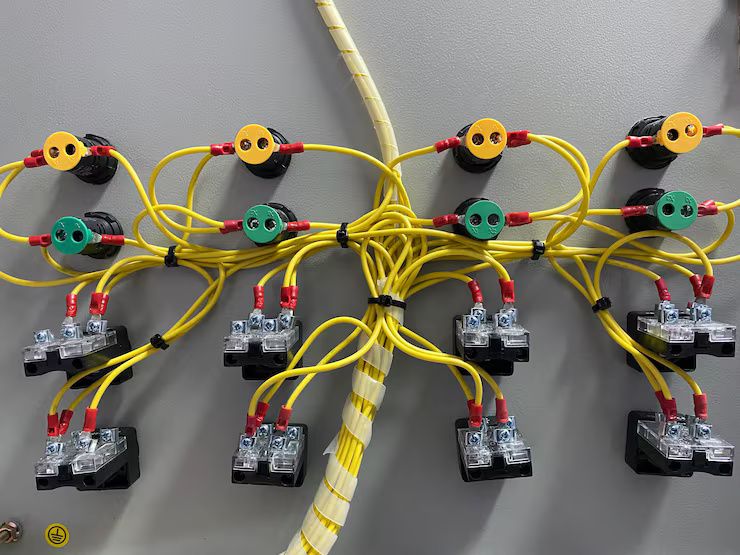
Electrical connectors are essential components that join electrical circuits, allowing power or signals to pass reliably between devices, machines, and systems. They exist because modern electrical and electronic setups require stable, removable, and organized connections instead of permanently joined wires. Connectors simplify assembly, maintenance, upgrades, and troubleshooting across everyday equipment, industrial systems, vehicles, and communication devices.
From simple household plugs to high-precision connectors used in aviation, these interfaces enable safe transfer of electricity while maintaining performance, durability, and system integrity. Their design ensures compatibility, mechanical strength, insulation, and protection from external influences.
Importance
Electrical connectors influence how safely and efficiently power and data systems operate. Their importance spans multiple fields:
-
Electronics: Ensuring reliable connections inside computers, appliances, sensors, and communication boards
-
Automotive systems: Supporting engine electronics, lighting, safety systems, and vehicle control modules
-
Industrial machinery: Enabling automated systems, control panels, and heavy-duty equipment
-
Construction and infrastructure: Providing structured wiring for buildings, grids, and renewable energy units
-
Telecommunication: Allowing signal transfer in networks, antennas, and fiber systems
Modern environments demand connectors that withstand heat, vibration, moisture, and electromagnetic interference. They solve problems related to unstable wiring, maintenance difficulty, and inconsistent electrical performance.
Recent Updates
In the past year, several developments have shaped connector technology:
-
Miniaturized high-density connectors (2023–2024) became common in compact electronics, medical devices, and aerospace systems, offering strong signal stability in smaller footprints.
-
Advanced waterproof and dust-resistant designs (2024) expanded use in outdoor infrastructure, renewable energy installations, and electric mobility applications.
-
Growth of high-current connectors (2024) supported expanding needs in electric vehicles, robotics, and industrial automation.
-
Standards refresh (2023–2024) by organizations such as IEC and UL improved testing guidelines, environmental compliance, and safety parameters.
These updates reflect the rising need for energy efficiency, durable materials, and enhanced connectivity performance.
Laws or Policies
Electrical connectors are influenced by national and international regulations focusing on safety, environmental impact, and electrical integrity. Common frameworks include:
-
IEC Standards (International): Define performance, safety testing, insulation properties, pin design, and mechanical strength
-
RoHS Regulations (India, EU, UK, 2024 updates): Restrict hazardous substances such as lead, mercury, and certain flame retardants
-
UL Certification (Global use): Ensures connectors meet fire safety, current-handling, and material reliability norms
-
IS/IEC Codes (India): Specify requirements for low-voltage connectors, industrial plugs, and wiring components
-
Environmental compliance rules: Focus on recyclable materials and reduced environmental impact in manufacturing
These policies ensure that connectors used across industries meet safe operating conditions and minimize risks associated with electrical failures.
Types of Electrical Connectors
Power connectors
Designed for transmitting high or low voltage power in household, industrial, and automotive systems.
Signal connectors
Used in communication systems, sensors, and control circuits where data accuracy is important.
RF connectors
Support radio-frequency signals in antennas, network devices, and communication equipment.
Fiber-optic connectors
Used for high-speed data transmission, reducing signal loss and electromagnetic interference.
Modular and board-to-board connectors
Often used in electronics, automation hardware, and printed circuit boards.
Functions of Electrical Connectors
-
Ensuring stable electrical contact
-
Allowing quick assembly and disassembly
-
Preventing exposure to live wires
-
Protecting internal metals from moisture, chemicals, and dust
-
Reducing electrical resistance
-
Maintaining signal quality
-
Providing mechanical support against vibration
Materials and Durability Factors
| Component | Common Materials | Purpose |
|---|---|---|
| Contacts | Copper, brass, phosphor bronze | Electrical conduction |
| Plating | Gold, tin, silver | Corrosion resistance & lower contact resistance |
| Housing | Plastic, nylon, thermoset materials | Insulation & protection |
| Seals | Rubber, silicone | Environmental resistance |
Durability depends on temperature limits, mechanical load, environmental exposure, and cycle ratings.
Tools and Resources
These resources help with learning, technical understanding, and connector identification:
-
IEC and UL Standards websites for updated safety guidelines
-
IEEE Xplore for technical papers on connector performance
-
Engineering design portals for diagrams, pin layouts, and learning modules
-
Electrical safety calculators for voltage drop and load analysis
-
Technical handbooks for wiring practices, insulation rules, and connector classification charts
FAQs
What makes one connector different from another?
Differences come from current capacity, insulation level, pin configuration, materials, environmental resistance, and application-specific design.
Why is plating important in electrical connectors?
Plating prevents corrosion, improves conductivity, and ensures long-term contact reliability, especially in sensitive circuits.
What causes connector failures?
Common causes include moisture, dust, vibration, overheating, poor installation, or worn-out contacts over repeated cycles.
How do I know which connector is suitable for a system?
Selection depends on voltage level, current demand, temperature limits, insulation category, and environmental exposure.
Why are waterproof connectors increasing in use?
Outdoor equipment, EV systems, and renewable energy setups require sealed connectors to prevent moisture-related failures.
Conclusion
Electrical connectors play a central role in powering devices, enabling communication systems, and supporting industrial operations. Their design ensures reliable, safe, and efficient transfer of power and signals across countless applications. With increasing focus on miniaturization, environmental resistance, and regulatory standards, modern connector technology continues to evolve. Understanding connector types, materials, functions, and safety guidelines helps engineers, learners, and technical users make informed decisions and maintain high-quality electrical systems.