Electric Vehicle Platforms Design: An Explore Guide with Insights, Basics, and Essential Knowledge
Electric charging systems are the backbone of modern electric mobility. As transportation shifts toward electrification, charging infrastructure enables electric vehicles (EVs), electric buses, and other battery-powered systems to recharge safely and efficiently. These systems combine power electronics, charging connectors, communication protocols, and grid integration technologies that deliver electricity from energy networks to vehicle batteries.
Electric charging technology has evolved significantly with advancements in battery management systems, high-power chargers, and smart grid integration. Today’s charging stations can communicate with vehicles, monitor energy flow, and optimize power distribution to improve energy efficiency and reliability.
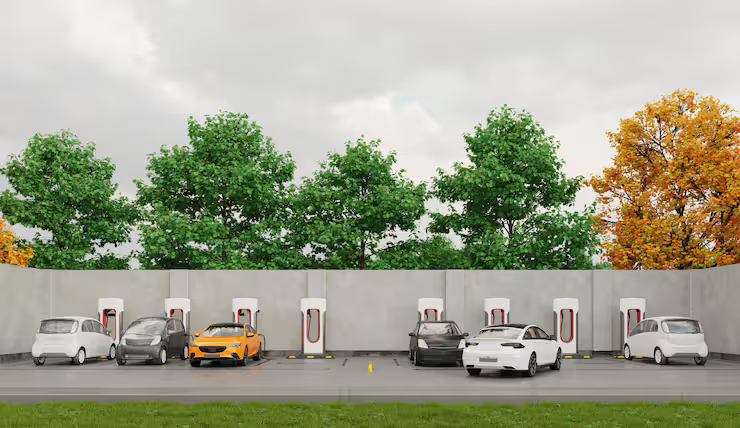
Electric charging infrastructure includes residential charging points, workplace charging units, commercial charging hubs, and public fast-charging networks. Each system uses different voltage levels and power outputs depending on the application. For example, slow AC charging is common in homes, while high-power DC charging supports rapid energy transfer for highway travel and commercial fleets.
Understanding how electric charging systems work helps individuals, researchers, policymakers, and technology developers better evaluate electric mobility solutions and energy transition strategies.
Understanding the Importance of Electric Charging Infrastructure
Electric charging systems play a critical role in the transition toward sustainable transportation and clean energy ecosystems. As global energy systems move away from fossil fuels, electric mobility requires reliable and scalable charging networks.
Several factors explain why EV charging infrastructure has become a central focus of modern transportation planning.
• Growth of electric vehicles worldwide has increased the need for reliable charging networks.
• Smart charging technology supports grid stability and efficient electricity distribution.
• Electric charging reduces dependence on petroleum-based fuels.
• Charging infrastructure supports urban mobility, logistics fleets, and public transportation electrification.
• Integration with renewable energy systems such as solar and wind improves sustainability.
High-power charging systems now support rapid energy transfer that can recharge large battery packs quickly. These technologies rely on advanced power electronics, thermal management systems, and high-capacity grid connections.
Charging infrastructure also plays a key role in range confidence for electric vehicle users. When drivers know that charging stations are accessible along highways, cities, and workplaces, electric mobility becomes more practical and reliable.
Table: Common Types of Electric Charging Systems
| Charging Type | Power Range | Typical Use Case | Key Technology |
|---|---|---|---|
| AC Level 1 | 1–3 kW | Residential overnight charging | Standard electrical outlet |
| AC Level 2 | 3–22 kW | Homes, workplaces, parking areas | Dedicated AC charging station |
| DC Fast Charging | 50–350 kW | Highways, public charging hubs | High-power DC converters |
| Ultra-Fast Charging | 350 kW+ | Commercial fleet and long-distance travel | High-voltage charging architecture |
Each charging category supports different infrastructure needs and grid capacities.
Recent Developments in Electric Charging Technology
The past year has seen major developments in electric charging technology, driven by rapid adoption of electric vehicles and investments in charging infrastructure.
One important trend during 2024–2025 is the expansion of ultra-fast charging networks. These systems support charging speeds exceeding 300 kW, enabling compatible vehicles to gain significant range within minutes.
Another development involves smart charging platforms that connect charging stations with energy management software. These systems optimize electricity usage based on demand, grid capacity, and renewable energy availability.
Several global trends have shaped electric charging systems recently:
• Expansion of high-power charging corridors along highways.
• Development of megawatt charging systems for electric trucks.
• Integration of vehicle-to-grid (V2G) communication technology.
• Growth of wireless charging research for automated charging environments.
• Increased use of AI-based energy optimization software.
Graph: EV Charging Power Growth Trend (Conceptual)
| Year | Typical Fast Charging Power |
|---|---|
| 2018 | 50 kW |
| 2020 | 150 kW |
| 2023 | 250 kW |
| 2025 | 350 kW+ |
Higher charging power reduces charging time but requires advanced cooling systems, improved cables, and stronger grid connections.
Another innovation involves battery swapping and automated charging systems, which allow electric fleets to minimize downtime. Research institutions and automotive manufacturers continue exploring these technologies for future mobility ecosystems.
Policies and Regulations Influencing Electric Charging Systems
Government policies strongly influence the development of electric charging infrastructure. Regulations often focus on safety standards, interoperability requirements, and national electrification strategies.
Many countries now implement policies encouraging the expansion of EV charging networks as part of climate and energy transition plans.
Important regulatory frameworks typically address:
• Electrical safety standards for charging stations
• Charging connector compatibility requirements
• Grid connection and power distribution regulations
• Energy efficiency guidelines for charging equipment
• Infrastructure planning for public charging networks
In India, electric mobility initiatives encourage infrastructure development for electric charging systems as part of national energy transition strategies.
Key initiatives and programs include:
• National Electric Mobility Mission Plan (NEMMP)
• Faster Adoption and Manufacturing of Electric Vehicles (FAME) initiatives
• State-level EV infrastructure roadmaps
• Smart city mobility electrification projects
These frameworks aim to improve charging infrastructure coverage, support electric vehicle adoption, and encourage innovation in charging technology.
International standards organizations also define charging protocols and safety requirements. These standards ensure compatibility across vehicle manufacturers, charging equipment providers, and grid operators.
Tools and Resources for Understanding Electric Charging Systems
Several digital platforms, analytical tools, and research resources help individuals and organizations study electric charging systems and EV infrastructure.
These resources support energy analysis, infrastructure planning, and technical research.
Useful tools and platforms include:
• EV charging infrastructure maps and network databases
• Battery charging simulation software
• Electric vehicle range and energy consumption calculators
• Smart grid energy monitoring platforms
• EV infrastructure planning models
• Academic research databases on power electronics and battery technology
Table: Common EV Charging Connectors
| Connector Type | Region | Charging Type |
|---|---|---|
| Type 1 (SAE J1772) | North America, Japan | AC Charging |
| Type 2 (Mennekes) | Europe, India | AC Charging |
| CCS (Combined Charging System) | Global | AC + DC Charging |
| CHAdeMO | Japan | DC Fast Charging |
| GB/T | China | AC + DC Charging |
Understanding connector standards helps ensure compatibility between vehicles and charging stations.
Researchers and engineers also use advanced modeling software to analyze grid load impacts from EV charging networks. These models help optimize charging station placement and electricity distribution.
Frequently Asked Questions
What is an electric charging system?
An electric charging system is a combination of hardware and software that delivers electricity from the power grid to recharge electric vehicle batteries. It includes charging stations, connectors, power converters, and communication systems.
What are the main types of EV charging?
The most common types are AC Level 1, AC Level 2, and DC fast charging. Each type provides different power levels and charging speeds depending on the infrastructure and vehicle capability.
How does fast charging differ from standard charging?
Fast charging uses direct current (DC) to deliver electricity directly to the vehicle battery, bypassing the onboard charger. This allows much higher charging power and shorter charging times.
What is smart charging technology?
Smart charging uses communication systems and energy management software to control electricity flow. It can schedule charging, reduce grid overload, and integrate renewable energy sources.
What role do charging systems play in energy transition?
Electric charging infrastructure supports the shift toward electrified transportation and renewable energy integration. It enables large-scale adoption of electric mobility while maintaining grid stability.
Conclusion
Electric charging systems are a fundamental component of the evolving electric mobility ecosystem. As transportation electrification accelerates worldwide, charging infrastructure continues to expand and improve through technological innovation and policy support.
Modern charging systems combine high-power electronics, intelligent software platforms, and standardized connectors to deliver efficient energy transfer between power grids and electric vehicles. Advancements in ultra-fast charging, smart energy management, and vehicle-to-grid integration are shaping the future of electric transportation.
Understanding the basics, technologies, regulatory frameworks, and analytical tools related to electric charging infrastructure provides valuable insight into the global transition toward sustainable mobility and clean energy systems.