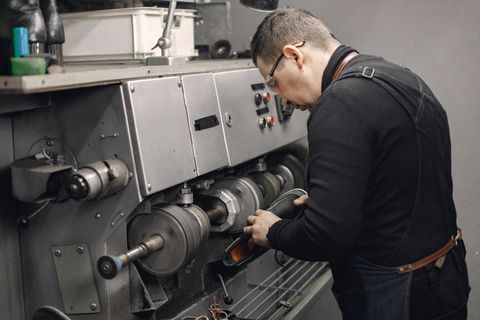
Drilling Machines Explained: Types, Specifications, and Industrial Applications
Drilling machines are essential tools used to create round holes in solid materials such as metal, wood, plastic, and composites. These machines operate by rotating a cutting tool, commonly known as a drill bit, and applying controlled force to penetrate the material.
The concept of drilling dates back to early mechanical engineering developments when manual tools were replaced by powered systems to improve precision and efficiency. Today, modern drilling machines are a critical part of manufacturing, construction, automotive production, and infrastructure development.
In industrial environments, drilling machines are designed to handle repetitive tasks with high accuracy. From small bench-mounted units to large-scale industrial drilling machines, these systems vary widely in design and capability. The evolution of drilling machine types reflects the increasing demand for productivity, automation, and material versatility.
Common drilling machine types include:
- Bench drilling machines
- Pillar drilling machines
- Radial drilling machines
- CNC drilling machines
- Multi-spindle drilling machines
Each type is suited to specific use cases depending on size, complexity, and production requirements.
Importance – Why Drilling Machines Matter Today
Drilling machines play a central role in modern industrial operations. They enable precise hole-making, which is fundamental to assembly, fastening, and structural integrity in manufactured products.
Industries that heavily rely on drilling machine applications include:
- Automotive manufacturing
- Aerospace engineering
- Construction and infrastructure
- Oil and gas equipment fabrication
- Electrical and electronics production
The importance of heavy duty drilling machines has grown due to the need to process harder materials such as alloys, composites, and high-strength steel. These machines are built to handle high torque and continuous operation without compromising accuracy.
Key problems solved by drilling machines include:
- Ensuring uniform hole dimensions across mass production
- Reducing manual labor and associated errors
- Increasing production speed and efficiency
- Supporting complex fabrication processes
The use of radial drilling machines is particularly important in large-scale manufacturing. These machines allow the drill head to move across a wide area, making them suitable for large and heavy workpieces that cannot be easily repositioned.
Recent Updates – Trends and Developments in the Past Year
Over the past year, several notable trends have influenced the development and use of drilling machines, especially in industrial contexts.
Automation and CNC Integration (2025–2026)
Computer Numerical Control (CNC) drilling machines have seen increased adoption. These systems allow automated drilling operations with high precision and repeatability. Industries are integrating CNC drilling with smart manufacturing systems to reduce downtime and improve productivity.
Energy Efficiency Improvements (2025)
Manufacturers are focusing on energy-efficient motors and optimized power consumption. New models of industrial drilling machines are designed to minimize energy usage while maintaining performance.
Digital Monitoring and IoT Integration (2025–2026)
Smart sensors and IoT-enabled systems are being integrated into drilling machines. These features allow real-time monitoring of parameters such as speed, temperature, and vibration, helping in predictive maintenance.
Advanced Materials Compatibility (2026)
Modern drilling machines are increasingly designed to work with advanced materials such as carbon fiber composites and titanium alloys. This is particularly important in aerospace and defense sectors.
Workplace Safety Enhancements (2025)
New safety features such as automatic shut-off systems, improved guarding, and ergonomic designs are being incorporated to reduce workplace accidents.
Laws or Policies – Regulatory and Compliance Factors
Drilling machines, especially industrial and heavy duty drilling machines, are subject to various safety and operational regulations. These rules ensure worker safety, environmental compliance, and equipment reliability.
In India, several regulatory frameworks influence the use of drilling machines:
-
Factories Act, 1948
This law governs workplace safety and requires proper maintenance and safe operation of machinery, including drilling machines. -
Occupational Safety, Health and Working Conditions Code (OSH Code), 2020
This code emphasizes machine safety, operator training, and hazard prevention in industrial environments. -
Bureau of Indian Standards (BIS)
BIS provides guidelines for machine design, performance, and safety standards. Compliance ensures that drilling machine specifications meet quality benchmarks. -
Energy Efficiency Norms
Industrial equipment must align with energy efficiency guidelines promoted by national programs, encouraging reduced power consumption. -
Environmental Regulations
Noise levels, waste management, and emissions from industrial operations are regulated to minimize environmental impact.
Organizations must ensure that their drilling machines meet these standards to operate legally and safely.
Tools and Resources – Helpful Utilities and Systems
Understanding and working with drilling machines often involves using various tools and digital resources. These help in selecting the right machine, calculating parameters, and improving operational efficiency.
Common tools and resources include:
- Drilling speed and feed calculators
- CAD (Computer-Aided Design) software for planning drilling operations
- CNC programming software for automated drilling
- Maintenance management systems
- Material compatibility charts
Below is a simple reference table for drilling machine specifications:
| Specification Parameter | Description | Typical Range |
|---|---|---|
| Spindle Speed | Rotation speed of drill bit | 500 – 3000 RPM |
| Drill Capacity | Maximum hole diameter | 10 mm – 75 mm |
| Motor Power | Power of the machine motor | 0.5 HP – 10 HP |
| Feed Mechanism | Manual or automatic feed system | Manual / Auto |
| Table Size | Work surface dimensions | Varies by machine type |
Another important comparison is between common drilling machine types:
| Machine Type | Best Use Case | Key Advantage |
|---|---|---|
| Bench Drilling Machine | Small workshops | Compact and easy to operate |
| Pillar Drilling Machine | Medium-scale operations | Better stability |
| Radial Drilling Machine | Large workpieces | Flexible arm movement |
| CNC Drilling Machine | High precision manufacturing | Automation and accuracy |
| Multi-Spindle Machine | Mass production | Multiple holes simultaneously |
These tools and references help engineers and operators make informed decisions about machine selection and usage.
FAQs – Common Questions About Drilling Machines
1. What are the main drilling machine types used in industry?
The main types include bench, pillar, radial drilling machines, CNC drilling machines, and multi-spindle machines. Each type serves different operational needs based on size, precision, and production volume.
2. What is a radial drilling machine used for?
A radial drilling machine is used for drilling large and heavy workpieces. Its movable arm allows the drill head to reach different areas without repositioning the material.
3. What are important drilling machine specifications to consider?
Key specifications include spindle speed, drill capacity, motor power, feed mechanism, and table size. These factors determine the machine’s performance and suitability for specific tasks.
4. Where are industrial drilling machines commonly used?
They are widely used in manufacturing, construction, automotive, aerospace, and metal fabrication industries.
5. What makes a heavy duty drilling machine different?
A heavy duty drilling machine is designed for continuous operation, higher power output, and the ability to handle hard materials and large workpieces.
Conclusion
Drilling machines are fundamental tools in modern engineering and manufacturing. Their ability to produce precise holes efficiently makes them indispensable across a wide range of industries. From basic bench models to advanced CNC systems, the variety of drilling machine types ensures that different operational needs are met effectively.
Understanding drilling machine specifications and applications helps in selecting the right equipment for specific tasks. As technology evolves, the integration of automation, digital monitoring, and energy-efficient systems is shaping the future of industrial drilling machines.
Compliance with safety regulations and proper use of tools and resources further enhances operational reliability. Whether used in small workshops or large-scale industrial settings, drilling machines continue to play a vital role in supporting production and innovation.