Discover What Sets Luxury Wedding Catering Apart: A Complete Guide
Luxury wedding catering refers to food and drink services that go beyond the standard banquet distribution. It focuses on culinary craftsmanship, adaptation, service precision, component perfection, stability practice and design of guest experiences.
It exists because modern couples see fast food as a main story about their marriage – culture, personality, an expression of morality (biological, local, zero, garbage) and hospitality standards are usually associated with good food.
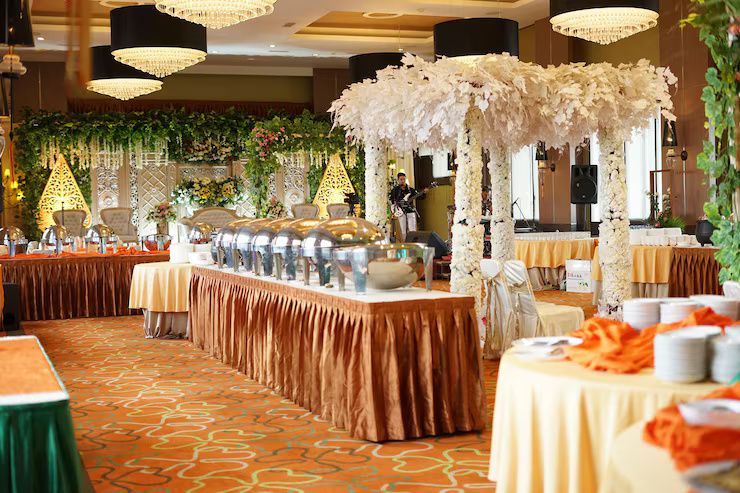
Unlike traditional packages that offer a certain buffet or set menu, luxurious cases provide:
-
Multicorrres
-
Seasonal and local sour materials
-
Bispoke Wine Paring and Craft Drink Program
-
Detailed allergen and diet mapping
-
High staff-to-gesture relationship for seamless service
-
In line with the beauty of the incident adjusted design integration (tiling, serviceware, tablescapes)
Importance - why does it mean something today, who affects it, and what problems it solves
Why does it mean something now
-
Experienced weddings: Couples want immersive, memorable food that matches the rest of the event design.
-
Diet complexity: Vegetarians, gluten-free, walnut-free, halal and jain requirements are now common. The luxurious catering system handles them without compromising quality.
-
Expectations of stability: Guests increase fast purchases and low illustrated strategies.
-
Health and safety transparency: Expectations after the pandemic for hygiene, labeling and training of staff are very high.
That affects
-
Couples and families planned at high appropriate events
-
Guests with specific diet or cultural requirements
-
Takes, event planners, wenu and regulatory
-
Craftsman manufacturers, local farms and special beverage suppliers
Resolves problems
-
Allergen reduces the risk of abuse and dissatisfaction with guests
-
The menu provides privatization in a scale without chaos
-
The overall event adjusts the boiling presentation with design
-
Relationship compliance in areas such as alcohol, food security and label ensures
Newer updates - changes, trends or news from last year
(Date -Refred use 2024–2025 Development and general industrial changes; specific rules vary from the country.)
-
Hyper-personalized flavor trips (2024–2025): Several Catters offer individual tasting profiles, where couples choose micro teachers for different guest groups (eg older, children, vegetarian groups).
-
Zeroilliterate and spherical purchasing (at the end of 2024): The stated material, compost partnership and proposals for carbon accounting are more visible in suggestions.
-
Plant-Forward Luxury (2024–2025): Plant-based taste menu not just a "vegetarian alternative" — technology (fermentation, smoke, UMMI layer).
-
Tech-Saksham Yojana (2024–2025): Digital menu staff, live allergen dashboards and databases from Guest Diet are now standard among top level top.
-
Curated drinking program (2024–2025): Low and without alcohol, thermal-driven tea, coffee rod with an originally, and omatar-lined taste is quickly common.
-
Chef Cooperation (2024–2025): Pop-up partnership with Michelin-Toked or Award-winning chef for the same course or the entire menu has increased in popularity.
Law or policy - how rules and government programs form luxury wedding food
The regulation is site-specific. Below are the general frameworks and examples (to consult local authorities and updated laws before signing the contract):
Food security and hygiene
-
India: India's food security and standard authority (FSSAI) applies to professional catering operations.
-
USA: Local Health Department Authorization; FDA Food Code (the latest consolidated version 2022 published, compliance with compliance with 2024-2025).
-
UK: Food Standards Agency (FSA) Hygiene assessment; NATAS's rules (applicable from October 2021) require full component and allergen labeling to pre-determine food for direct sales.
-
EU: Regulation (EU) No 1169/2011 Consumers make clarification of allergens for consumers on food information.
Alcohol service
-
Licensing varies by jurisdiction. Expect:
-
A temporary event warning (ten) or similar permits in the UK.
-
Local/state liquor license in America and India.
-
Liangular obligations and training of employees at responsible service.
-
Treasure
-
GST/VAT applies to catering services in many countries. Contracts usually explain whether the quotes are inclusive or exclusive such taxes.
Orgen and diet disclosure
-
Apparently written disclosure and control across them is either mainly developed or mostly developed in the developed regulatory environment.
Waste management and stability
-
Some municipalities require separate waste streams (organic, recycled) and may provide encouragement or impose punishment. Carbon accounting and reporting are quickly encouraged, although it is often not compulsory.
Tools and resources – helpful (no links provided)
Planning & costing
-
Menu cost calculators: Help break down per-plate cost, labor, rentals, and service ratios.
-
Event budgeting spreadsheets/templates: Track tasting sessions, deposits, and add-ons.
-
Timeline planners (Gantt-style): Visualize proposal, tasting, locking menus, and final guest count deadlines.
Operations & compliance
-
Allergen management apps that log guest restrictions and generate allergen-safe menu versions.
-
Food safety training platforms for staff certifications.
-
Inventory and batch-tracking software for traceability and recalls.
Guest experience
-
Digital RSVP platforms that collect dietary data and feed it to caterers.
-
Interactive menu builders where guests can pre-select courses.
-
Wine/cocktail pairing calculators used by sommeliers/mixologists for ABV balance and sequence design.
Sustainability
-
Carbon footprint calculators tailored for events.
-
Waste tracking apps to monitor surplus and adjust production.
Questions to ask
-
What is the main difference between luxury and standard wedding service?
Personalization of luxurious catering preference, fine food design and a high service standard. This detailed menu is built around engineering, premium sourcing and experienced design, while the standard catering package emphasizes efficiency and scale. -
How much joints should be ordered a luxurious Cactor?
Usually 9-12 months ago, destination for weddings for a long time or if they are supported with high deficiencies. Smaller terms may work, but the depth of adaptation and tastings will often be limited. -
Does luxury automatically mean a multi-gourd menu?
Not always. Luxury can also mean an interactive cook station, family style party or progressive cocktail-style service—to the quality of design, design consistency and guest care is preferable. -
Is the plant-based luxury menu now common?
Yes. 2024-2025 saw an increase in the creative plant-based flavor menu, often used advanced culinary techniques to provide depth and complexity similar to meat-based menu. -
How do I evaluate suggestions impartial in Caterrans?
Request the outline of clear cost distribution, staff-to-gold ratio, component purchasing details, allergen protocols, waste plans and tastings. Compare line-by-line not just the heading number.
Conclusion
Luxury wedding catering is not just about serving food; it is about creating an engrossing dining experience that reflects the couple's personality, cultural preferences and commitment to quality. By focusing on food art, privatization and stability, luxurious catering makes a wedding meal a festive attraction.
Recent trends such as plant-based fine foods, zero waste strategies and technology-driven menu planning, couples now have several opportunities to prepare a memorable event. It is necessary to understand laws, food safety rules and operating standards to ensure compliance and guest safety.
Planning equipment, allergen management systems and guest-centered technologies, couples and planners can streamline the process by maintaining the quality of extraordinary service. Finally, luxurious wedding is about taste, presentation and hospitality in an experience that resonates with each guest — to change food in a nutritious memory.