Discover Hybrid Cars: In-Depth Explanation, Resources, and Helpful Suggestions
Hybrid cars are vehicles designed to use more than one source of power to move. Most commonly, they combine a traditional internal combustion engine with an electric motor and a battery system. The goal is not complexity for its own sake, but efficiency. By sharing the workload between fuel and electricity, hybrid cars aim to reduce energy waste that typically occurs in conventional vehicles.
The concept emerged in response to two long-standing challenges in transportation: reliance on fossil fuels and the environmental impact of vehicle emissions. Engineers and policymakers have long searched for ways to improve fuel efficiency without requiring a complete shift to fully electric infrastructure. Hybrid technology became a practical middle step, allowing drivers to use familiar fueling systems while benefiting from electric assistance during certain driving conditions.
Early experimental hybrids appeared decades ago, but modern hybrid cars gained public attention in the late 1990s with models such as the Toyota Prius, which demonstrated that combining technologies could work reliably in everyday driving. Since then, hybrid systems have evolved into several forms, including mild hybrids, full hybrids, and plug-in hybrids, each with different levels of electric involvement.
Importance: Why Hybrid Cars Matter Today
Hybrid cars matter because transportation plays a major role in global energy use and emissions. As urban populations grow and personal mobility remains essential, improving vehicle efficiency has become a priority for governments, manufacturers, and consumers alike.
This topic affects a wide range of people:
-
Daily commuters looking for dependable transportation
-
Families seeking practical vehicles with lower environmental impact
-
City planners aiming to reduce urban air pollution
-
Policymakers working toward climate and energy goals
Hybrid cars help address several ongoing challenges. They reduce fuel consumption by capturing energy that would otherwise be lost during braking and by allowing the engine to operate more efficiently. In slow or stop-and-go traffic, the electric motor can take on a greater role, which is especially useful in cities.
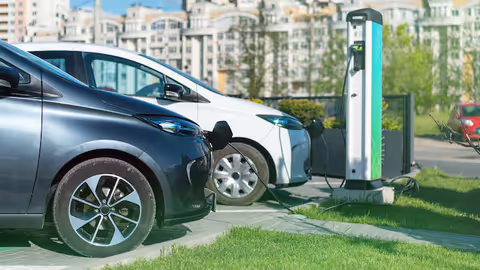
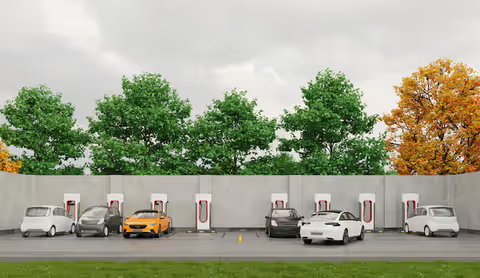
Another important aspect is accessibility. Fully electric vehicles require charging infrastructure that is not evenly available worldwide. Hybrid cars can operate without relying entirely on charging stations, making them suitable in regions where infrastructure development is still in progress. This flexibility has made hybrids a widely adopted transitional technology rather than a niche solution.
Recent Updates: Changes and Trends in the Past Year
Over the past year, hybrid car technology has continued to mature. During 2024, several manufacturers expanded hybrid options across more vehicle categories, including compact SUVs and midsize sedans. This reflects a broader trend of integrating hybrid systems into mainstream vehicle lineups rather than limiting them to specific models.
Battery management systems have also improved. Recent developments focus on durability and efficiency rather than simply increasing battery size. Many 2024 and early-2025 hybrid models use updated software that better balances energy use between the engine and electric motor, leading to smoother transitions while driving.
Another notable trend is consumer perception. Surveys published in late 2024 showed that hybrids are increasingly viewed as a long-term option rather than a temporary compromise. This shift is partly due to consistent performance records from established models like the Honda Insight and newer hybrid crossovers introduced during 2024.
Manufacturers have also aligned hybrid development with broader sustainability strategies, focusing on lifecycle emissions, including manufacturing and recycling processes. While these updates vary by region, they indicate continued investment in hybrid technology rather than a slowdown.
Laws or Policies: How Regulations Shape Hybrid Cars
Hybrid cars are influenced by transportation, environmental, and energy policies in many countries. Regulations typically focus on emissions standards, fuel efficiency targets, and long-term climate commitments.
In several regions, governments have introduced stricter emissions limits that encourage manufacturers to improve average fleet efficiency. Hybrid vehicles help manufacturers meet these requirements by lowering overall emissions across their vehicle ranges.
Some countries also include hybrid cars in broader clean transportation programs. These programs may involve:
-
Reduced registration fees for low-emission vehicles
-
Access to specific traffic zones in urban areas
-
Inclusion in national sustainability roadmaps
Policies differ widely by country and are updated frequently. In the European Union, fleet-wide emission targets updated in 2024 continued to recognize hybrids as a contributing technology. In parts of Asia, national strategies emphasize hybrid adoption as a practical solution alongside electric vehicles, particularly where charging infrastructure expansion is gradual.
It is important for readers to review local regulations, as definitions of hybrid categories and eligibility criteria vary significantly across regions.
Tools and Resources: Helpful Ways to Learn and Plan
Understanding hybrid cars is easier with practical tools and educational resources. The following categories are commonly used by drivers, researchers, and students:
Vehicle comparison platforms
These tools allow side-by-side evaluation of hybrid and non-hybrid models based on specifications such as fuel efficiency, drivetrain type, and environmental ratings.
Fuel efficiency estimators
Online calculators help estimate annual fuel usage under different driving conditions. While results depend on driving habits, they provide a useful baseline for comparison.
Emissions data dashboards
Some environmental agencies publish interactive dashboards showing average vehicle emissions by category. These tools help users understand how hybrids compare within broader transportation systems.
Owner experience databases
Community-driven databases collect long-term reliability feedback and maintenance patterns. These resources are often used for educational research rather than promotional purposes.
Educational publications
Universities, transportation institutes, and government agencies regularly publish reports explaining hybrid technology, battery systems, and future trends in mobility.
FAQs: Common Questions About Hybrid Cars
1. How does a hybrid car decide when to use electricity or fuel?
Hybrid systems use onboard computers to monitor speed, acceleration, battery level, and driving conditions. Based on this data, the system automatically switches between or combines power sources for efficiency.
2. Do hybrid cars need to be plugged in?
Many hybrids do not require external charging and recharge their batteries through braking and engine operation. Plug-in hybrids are a separate category designed to allow external charging as an option.
3. Are hybrid cars suitable for long-distance driving?
Yes. Hybrid cars are designed for both city and highway use. On longer trips, the fuel engine provides consistent power while the electric system supports efficiency.
4. How long do hybrid batteries typically last?
Hybrid batteries are engineered for durability and are managed to avoid extreme charge levels. Longevity depends on usage patterns, climate, and system design.
5. Do hybrid cars drive differently from conventional vehicles?
Most drivers report a similar experience. Some hybrids feel quieter at low speeds due to electric operation, but controls and handling are generally familiar.
Comparative Overview Table
| Feature | Conventional Vehicles | Hybrid Cars |
|---|---|---|
| Primary Power Source | Fuel engine | Engine + electric motor |
| Energy Recovery | Limited | Regenerative braking |
| Urban Efficiency | Moderate | Higher in traffic conditions |
| Emissions Profile | Higher overall | Reduced compared to conventional |
Conclusion
Hybrid cars represent a thoughtful response to modern transportation challenges. By combining established engine technology with electric assistance, they provide improved efficiency without requiring a complete shift in infrastructure. Over the past year, continued development, supportive policies, and broader model availability have reinforced their role in the global mobility landscape.
For readers seeking a balanced understanding of evolving vehicle technologies, hybrid cars offer a clear example of how incremental innovation can make a meaningful difference. As regulations, technology, and consumer expectations continue to evolve, hybrids are likely to remain an important part of the transportation conversation.