Digital Oscilloscope Equipment Overview: Detailed Explanation of Working Principles, Functions, and Signal Testing Insights
A digital oscilloscope is an electronic test instrument used to measure, visualize, and analyze electrical signals. It converts electrical voltage signals into visual waveforms displayed on a screen, allowing engineers and technicians to observe how signals change over time.
The concept of oscilloscopes emerged from the need to analyze electrical behavior beyond simple voltage readings. While traditional meters can measure voltage, current, or resistance, they cannot show how signals fluctuate or interact in real time. Oscilloscopes were developed to provide a graphical representation of electrical activity, enabling detailed observation of signal patterns.
Digital oscilloscopes differ from older analog versions by converting incoming signals into digital data. This allows advanced features such as signal storage, automated measurement, waveform analysis, and digital processing. Today, these devices are essential in electronics laboratories, manufacturing environments, telecommunications development, and educational institutions.
They exist primarily to help engineers and technicians understand signal behavior, diagnose problems, verify system performance, and ensure that electronic circuits operate as intended.
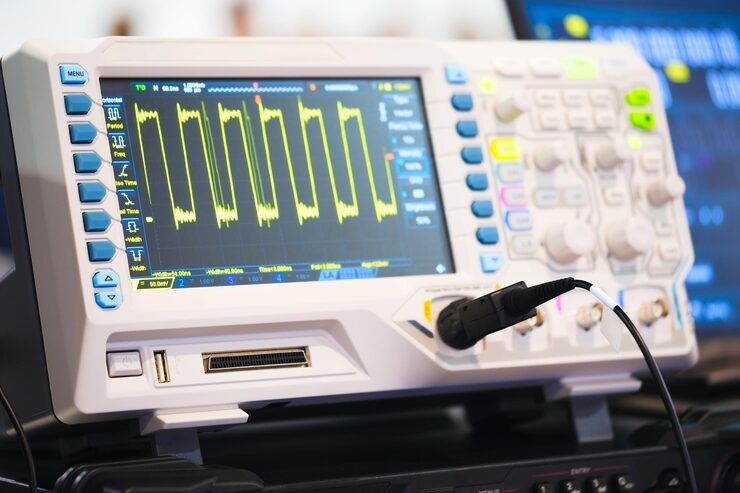
Importance: Why Digital Oscilloscopes Matter Today
Digital oscilloscopes play a crucial role in modern electronics because nearly all technology—from consumer devices to industrial systems—relies on electrical signals for communication and control.
Why this topic matters today
-
Signal analysis: Engineers use oscilloscopes to study waveform characteristics such as frequency, amplitude, and noise.
-
Troubleshooting: They help identify faults in circuits, power supplies, and communication systems.
-
Product development: Designers verify whether electronic components behave according to specifications.
-
Education and research: Universities and training institutions rely on oscilloscopes to teach electronic principles.
-
Quality assurance: Manufacturing environments use them to test and validate electronic products.
These devices affect electrical engineers, electronics technicians, telecommunications specialists, research scientists, and students learning circuit design. Without oscilloscopes, diagnosing complex signal problems would be significantly more difficult.
Digital oscilloscopes solve challenges such as hidden signal distortion, timing errors, electromagnetic interference, and unexpected waveform behavior in modern electronic systems.
Recent Updates: Trends and Developments (2024–2025)
Over the past year, digital oscilloscope technology has advanced in areas such as data processing, connectivity, and measurement accuracy.
| Year | Development or Trend | Impact |
|---|---|---|
| 2024 | Higher sampling rate instruments | Improved ability to capture high-frequency signals |
| 2024 | Advanced digital filtering tools | Clearer waveform visualization in noisy environments |
| 2025 | Cloud-connected measurement systems | Easier sharing of waveform data across teams |
| 2025 | AI-assisted signal analysis | Faster detection of waveform anomalies |
Recent engineering reports from late 2024 highlighted the growing use of oscilloscopes in emerging technologies such as electric vehicles, renewable energy systems, and high-speed communication networks. Improved bandwidth capabilities now allow engineers to analyze signals in advanced communication circuits and digital processors.
Another trend is the integration of automated measurement tools that help users quickly extract parameters such as rise time, pulse width, and duty cycle.
Laws, Regulations, and Standards
Digital oscilloscope equipment is influenced by electrical safety standards, measurement accuracy guidelines, and laboratory certification requirements.
Common standards and regulatory influences include:
-
IEC electrical measurement standards: Define safety and performance criteria for electronic test equipment.
-
ISO quality management frameworks: Require traceable measurement practices in manufacturing environments.
-
National electrical safety regulations: Ensure safe operation when measuring high-voltage circuits.
-
Laboratory calibration requirements: Measurement equipment must be periodically verified for accuracy.
In many countries, testing laboratories and electronics manufacturers follow accredited calibration programs to ensure measurement reliability. Government-supported standards organizations encourage standardized measurement procedures to maintain consistency in engineering and scientific testing.
Tools and Resources for Signal Testing and Learning
Understanding digital oscilloscopes and signal analysis often involves additional tools and resources.
Common tools used alongside oscilloscopes
-
Signal generators for creating test waveforms
-
Multimeters for complementary electrical measurements
-
Logic analyzers for digital signal debugging
-
Oscilloscope probes with different attenuation levels
-
Isolation transformers for safe measurement of certain circuits
Helpful learning resources
-
Electronics engineering textbooks explaining waveform analysis
-
Technical tutorials from instrumentation manufacturers
-
Online waveform simulation tools
-
Electrical measurement training courses
-
Signal frequency and timing calculation charts
These resources help engineers and learners interpret waveform data more effectively and apply measurement techniques accurately.
Functions and Key Features of Digital Oscilloscopes
Digital oscilloscopes include several core functions that allow detailed signal analysis.
Important capabilities include
-
Waveform visualization: Displays voltage over time for signal observation.
-
Signal storage: Captures and saves waveform data for later analysis.
-
Automated measurements: Calculates parameters such as frequency, peak voltage, and rise time.
-
Trigger systems: Allows users to capture specific signal events.
-
Data export: Enables sharing measurement results with analysis software or documentation tools.
These functions allow engineers to evaluate both simple signals and complex digital communication patterns.
Working Principles: How Digital Oscilloscopes Operate
The operation of a digital oscilloscope involves several stages:
-
Signal acquisition: The input probe captures the electrical signal from a circuit.
-
Analog-to-digital conversion: The oscilloscope converts the analog voltage into digital data points.
-
Data processing: Internal processors organize and analyze the sampled data.
-
Display generation: The processed data is presented as a waveform on the screen.
-
Measurement analysis: Software tools measure signal parameters automatically.
Sampling rate and bandwidth are key performance factors that determine how accurately a signal can be captured.
Frequently Asked Questions
What is the main purpose of a digital oscilloscope?
Its primary purpose is to display and analyze electrical signals over time, allowing engineers to observe waveform characteristics.
How does a digital oscilloscope differ from an analog one?
Digital oscilloscopes convert signals into digital data, enabling storage, advanced processing, and automated measurements.
What is bandwidth in an oscilloscope?
Bandwidth refers to the highest signal frequency the oscilloscope can accurately measure.
Why is sampling rate important?
A higher sampling rate allows the oscilloscope to capture more detailed waveform information.
Where are oscilloscopes commonly used?
They are used in electronics laboratories, telecommunications development, automotive electronics testing, and research environments.
Conclusion
Digital oscilloscopes are fundamental tools in electronics engineering and signal analysis. By converting electrical signals into visual waveforms, they allow engineers to observe, measure, and understand complex electrical behavior. Their ability to capture fast-changing signals and perform automated analysis makes them indispensable in modern technology development.
As electronic systems continue to evolve—particularly in fields such as telecommunications, electric vehicles, and renewable energy—digital oscilloscopes will remain critical instruments for testing, troubleshooting, and innovation. Understanding their working principles, features, and measurement capabilities provides valuable insight into the world of electronic signal analysis.