Concrete Mixers Comparison Guide: Insights, Tips, Basics, Facts & Practical Knowledge
Concrete mixers are essential machines used to combine cement, aggregates (such as sand or gravel), and water into a uniform mixture for construction. Whether for small home projects or large-scale infrastructure, mixers play a critical role in ensuring consistency, strength, and efficiency in concrete production.
In recent years, the comparison of different types of concrete mixers has become increasingly important. This is driven by rapid urbanization, infrastructure expansion, and the push for higher productivity with lower environmental impact. Construction companies and individual users now evaluate mixers not just on capacity, but also on energy efficiency, automation features, and maintenance requirements.
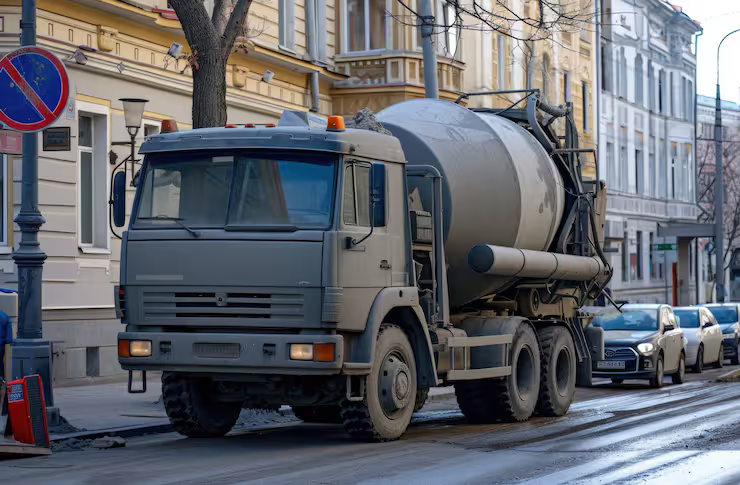
Technological trends such as electric-powered mixers, IoT-enabled monitoring, and automated batching systems are reshaping the industry. At the same time, sustainability concerns are influencing the adoption of low-emission equipment. These changes impact project timelines, cost efficiency, and overall construction quality, making it essential to understand how different mixer types compare.
Who It Affects and What Problems It Solves
Concrete mixers are used across a wide range of industries and users. These include construction companies, civil engineers, contractors, small builders, and even homeowners handling DIY projects. Large infrastructure developers rely on high-capacity mixers for roads, bridges, and commercial buildings, while smaller users may prefer portable mixers for residential work.
The choice of mixer directly affects productivity, cost control, and quality outcomes. For example, a contractor using an under-capacity mixer may face delays, while an oversized machine can increase operational costs unnecessarily.
Problems Concrete Mixers Solve
- Inconsistent Mixing: Manual mixing often leads to uneven composition, reducing structural strength. Mixers ensure uniformity.
- Time Inefficiency: Automated mixers significantly reduce preparation time compared to manual methods.
- Labor Dependency: Machines reduce the need for manual labor, improving safety and efficiency.
- Material Waste: Accurate mixing ratios minimize waste of cement and aggregates.
- Scalability Issues: Different mixer types allow projects to scale from small repairs to large construction.
Recent Updates and Trends
The concrete mixer industry has seen notable developments over the past year, reflecting broader changes in construction technology and sustainability.
- Electric and Hybrid Mixers: There is a growing shift toward electric-powered mixers to reduce emissions and comply with environmental regulations.
- Smart Mixers: IoT-enabled mixers now allow real-time monitoring of mix quality, machine health, and operational efficiency.
- Automation Integration: Advanced batching systems are being integrated with mixers to automate proportioning and reduce human error.
- Compact Designs: Urban construction has increased demand for compact, portable mixers that can operate in tight spaces.
- Sustainability Focus: Manufacturers are designing mixers that support recycled materials and low-carbon concrete mixes.
These updates reflect a move toward efficiency, precision, and environmental responsibility in construction processes.
Concrete Mixers Comparison Table
| Feature | Drum Mixer | Pan Mixer | Twin Shaft Mixer | Volumetric Mixer |
|---|---|---|---|---|
| Mixing Mechanism | Rotating drum | Stationary pan with blades | Dual horizontal shafts | On-site continuous mixing |
| Best For | Small to medium projects | Precast and uniform mixes | Large-scale production | On-demand concrete supply |
| Mixing Speed | Moderate | Fast | Very fast | Continuous |
| Consistency Quality | متوسط (Moderate) | High | Very high | High |
| Mobility | High (portable models) | Low | Low | High |
| Cost Range | Low to medium | Medium | High | High |
| Maintenance | Low | Moderate | High | Moderate |
| Automation Level | Basic | Medium | High | High |
Laws and Policies
Concrete mixers and their usage are influenced by construction regulations, environmental standards, and workplace safety laws. In countries like India, these regulations are shaped by organizations such as the Bureau of Indian Standards (BIS) and environmental authorities.
Key Regulatory Areas
- Quality Standards: Concrete mixing must comply with standards such as IS 1791 and IS 4925 for batching and mixing.
- Environmental Regulations: Emission norms encourage the use of electric or low-emission mixers. Dust and noise control measures are also required.
- Workplace Safety: Operators must follow safety guidelines, including protective equipment and proper machine handling.
- Waste Management: Rules promote efficient use of materials and proper disposal of leftover concrete.
Practical Guidance
- Use drum mixers for small residential projects where regulations are less complex.
- Choose pan or twin shaft mixers for projects requiring strict quality compliance.
- Opt for volumetric mixers in projects where on-site flexibility and reduced waste are important.
Understanding these policies helps ensure compliance and avoids legal or operational risks.
Tools and Resources
Several tools and resources can help users choose and operate concrete mixers more effectively:
Tools
- Concrete Mix Calculators:
- Project Planning Software: Tools like construction management platforms help integrate mixer usage into workflows.
- Maintenance Checklists: Templates to track servicing and ensure machine longevity.
Digital Resources
- Industry standards documentation (BIS guidelines)
- Online training modules for equipment operation
- Manufacturer manuals and technical specifications
Practical Resources
- Equipment rental services for short-term projects
- On-site training programs for workers
- निरीक्षण (inspection) checklists for quality control
Frequently Asked Questions (FAQ)
What is the most commonly used type of concrete mixer?
Drum mixers are the most widely used due to their affordability, portability, and suitability for small to medium projects.
Which concrete mixer provides the best mixing quality?
Twin shaft mixers are known for delivering very high consistency and uniform mixing, especially for large-scale construction.
Are electric concrete mixers better than diesel ones?
Electric mixers are more environmentally friendly and quieter, but diesel mixers may be preferred in remote areas without reliable electricity.
How do I choose the right concrete mixer for my project?
Consider factors such as project size, required mixing quality, budget, and mobility needs before selecting a mixer.
Do concrete mixers require regular maintenance?
Yes, regular cleaning, lubrication, and inspection are essential to ensure efficiency and extend the machine’s lifespan.
Conclusion
Concrete mixers are a foundational component of modern construction, directly influencing efficiency, cost, and structural quality. The comparison between drum, pan, twin shaft, and volumetric mixers highlights that no single type fits all use cases. Instead, the optimal choice depends on project scale, required consistency, and operational constraints.
Data and industry trends suggest a shift toward automated, energy-efficient, and smart mixers. For small-scale projects, drum mixers remain practical and cost-effective. For high-precision and large-scale construction, twin shaft and pan mixers offer superior performance. Volumetric mixers provide flexibility and reduce waste, making them suitable for dynamic job sites.
In conclusion, selecting the right concrete mixer requires balancing technical requirements with practical considerations. A well-informed choice can improve productivity, ensure compliance with regulations, and enhance overall project outcomes.