CI/CD Tools Guide: Basics, Insights & Key Knowledge
CI/CD tools are technologies that support Continuous Integration (CI) and Continuous Delivery (CD) in modern software development. These practices help development teams automatically build, test, and deploy applications in a structured and reliable way.
Continuous Integration focuses on merging code changes frequently into a shared repository. Every change triggers automated testing to detect errors early. Continuous Delivery ensures that tested code can be released quickly and consistently to production environments. Together, they form a CI/CD pipeline — an automated workflow that reduces manual intervention.
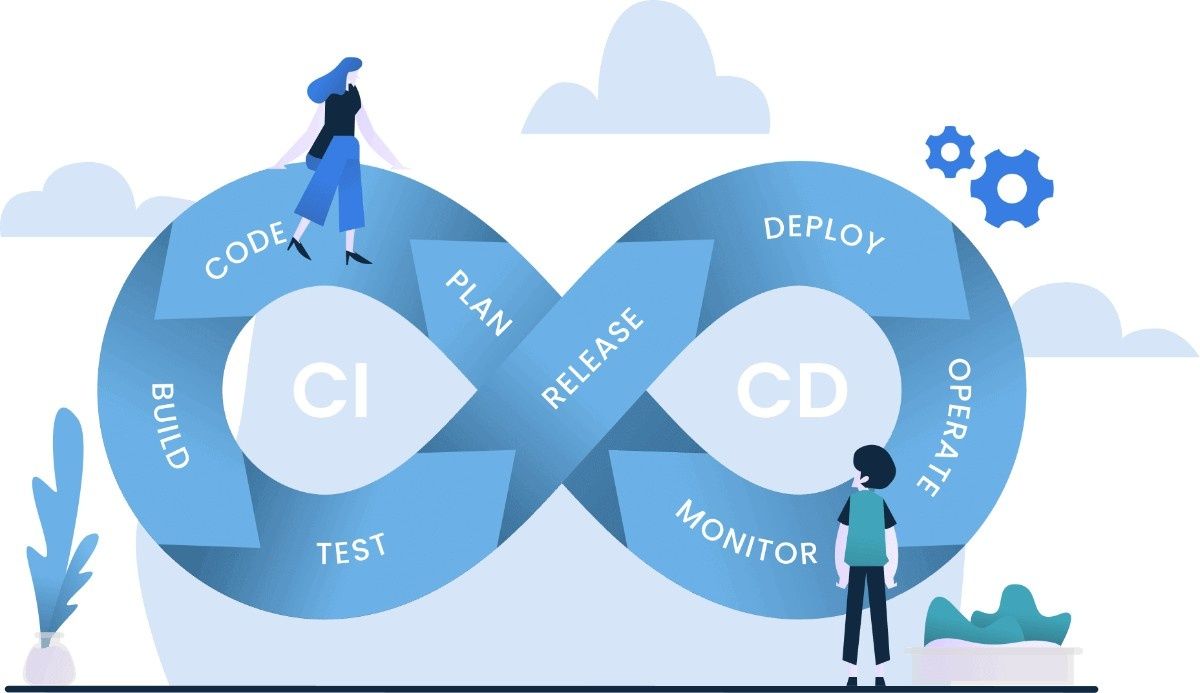
As software systems grew more complex, traditional development methods struggled to keep up with frequent updates and fast release cycles. Manual testing and deployment often led to delays, bugs, and inconsistent environments. CI/CD tools emerged to streamline this process through automation, monitoring, and standardization.
A simplified CI/CD workflow typically includes:
-
Code commit in a version control system
-
Automated build process
-
Automated testing (unit, integration, security)
-
Artifact storage
-
Deployment to staging or production
These tools integrate closely with version control systems such as Git-based repositories and container platforms such as Kubernetes environments.
Importance – Why CI/CD Tools Matter Today
Modern organizations depend on digital platforms, mobile applications, and cloud services. Frequent updates are necessary to fix bugs, patch security issues, and release new features. CI/CD tools support this demand by enabling faster and more reliable deployments.
Key reasons why CI/CD tools matter:
-
Reduced human error through automation
-
Faster release cycles
-
Improved collaboration between development and operations teams
-
Better software quality through automated testing
-
Enhanced application security testing within the pipeline
Industries such as finance, healthcare, e-commerce, education technology, and cloud computing rely heavily on DevOps automation to maintain secure and scalable applications. For example, cloud-native applications deployed through platforms like Kubernetes require automated pipelines for container builds and updates.
The adoption of infrastructure as code (IaC) has also increased. Infrastructure provisioning tools such as Terraform allow teams to manage servers and cloud environments through code, which integrates directly into CI/CD pipelines.
The following table highlights how CI/CD addresses common software development challenges:
| Traditional Challenge | CI/CD Approach | Outcome |
|---|---|---|
| Manual deployments | Automated pipeline execution | Fewer configuration errors |
| Late-stage bug detection | Continuous testing integration | Early error resolution |
| Slow release cycles | Automated build and deployment | Faster updates |
| Environment inconsistencies | Infrastructure as code | Consistent deployments |
| Security vulnerabilities | Integrated security scanning | Improved compliance |
These capabilities are especially relevant in cloud computing environments, where applications are deployed across distributed systems.
Recent Updates – Trends and Developments
Over the past year, several trends have influenced CI/CD tools and DevOps automation practices.
One major development has been the expansion of AI-assisted DevOps workflows. Machine learning models are increasingly used to detect anomalies in build pipelines and suggest performance optimizations. Platforms like GitHub Actions have enhanced automation capabilities by integrating advanced workflow management features.
Another trend is the rise of secure software supply chain practices. Following increased global focus on cybersecurity standards, many organizations have adopted stricter artifact verification and dependency scanning policies. Tools such as Jenkins and GitLab CI/CD have added enhanced security integrations.
Cloud providers have also updated their CI/CD integrations:
-
Improved container security scanning
-
Expanded serverless deployment support
-
Enhanced monitoring dashboards
-
Stronger identity and access controls
There has also been growing emphasis on “shift-left” security, where security testing is integrated early in the development lifecycle rather than at the final stage.
The diagram below represents a simplified CI/CD pipeline model:
Build → Test → Security Scan → Package → Deploy → Monitor
This continuous feedback loop ensures rapid identification of performance or compliance issues.
Laws and Policies – Regulatory and Compliance Considerations
CI/CD tools are influenced by software governance frameworks and data protection regulations. Organizations must ensure that automated deployment processes comply with security and privacy requirements.
Key policy areas affecting CI/CD implementation:
-
Data protection regulations requiring secure handling of personal data
-
Cybersecurity standards mandating vulnerability management
-
Digital infrastructure governance policies
-
Cloud security compliance frameworks
For example, regulations related to personal data protection require encrypted data handling and secure storage during deployments. CI/CD pipelines often integrate automated compliance scanning tools to ensure adherence to these requirements.
Security best practices commonly enforced through policy include:
-
Role-based access control (RBAC)
-
Multi-factor authentication for deployment approvals
-
Code review requirements before merging
-
Audit logging and traceability
Many government-backed cybersecurity programs encourage organizations to adopt secure DevOps practices, emphasizing vulnerability scanning and patch management automation.
Tools and Resources – Common CI/CD Platforms
Several widely used CI/CD tools support DevOps automation and cloud deployment automation workflows.
Popular tools include:
-
Jenkins – An open-source automation server supporting customizable pipelines
-
GitHub Actions – Workflow automation integrated with Git repositories
-
GitLab CI/CD – Built-in CI/CD platform with repository management
-
CircleCI – Cloud-based pipeline automation platform
-
Azure DevOps – Enterprise-grade DevOps lifecycle management
Supporting resources and related technologies:
-
Version control systems (Git repositories)
-
Container platforms like Docker
-
Infrastructure as code tools like Terraform
-
Monitoring platforms such as Prometheus
-
Application security testing tools
Below is a simplified comparison table:
| Tool | Deployment Type | Strength Focus |
|---|---|---|
| Jenkins | Self-hosted | Highly customizable |
| GitHub Actions | Cloud-native | Repository integration |
| GitLab CI/CD | Cloud/Hybrid | All-in-one DevOps platform |
| CircleCI | Cloud | Scalable pipelines |
| Azure DevOps | Enterprise | Integrated lifecycle tools |
Organizations select tools based on scalability, integration needs, compliance requirements, and infrastructure setup.
FAQs – Common Questions About CI/CD Tools
What is the difference between Continuous Integration and Continuous Delivery?
Continuous Integration focuses on automatically testing and merging code changes. Continuous Delivery ensures that tested code can be deployed to production environments reliably.
Are CI/CD tools only for large enterprises?
No. Small development teams and startups also use CI/CD pipelines to improve code quality and automate deployments.
How do CI/CD tools improve application security?
They integrate automated security scanning, dependency checks, and compliance validation within the development pipeline.
Can CI/CD pipelines work with cloud platforms?
Yes. Most CI/CD tools integrate with cloud environments and container orchestration systems for automated cloud deployment.
Is infrastructure as code required for CI/CD?
It is not mandatory, but it significantly improves environment consistency and automation efficiency.
Conclusion
CI/CD tools are a central component of modern software development. They enable automated build, testing, security validation, and deployment workflows that improve reliability and efficiency. As digital transformation accelerates, DevOps automation and cloud deployment automation practices continue to expand across industries.
Recent developments emphasize AI-assisted monitoring, enhanced software supply chain security, and stronger compliance integration. Regulatory frameworks increasingly require secure development practices, making CI/CD pipelines essential for maintaining governance standards.