Agriculture Drone Sprayers Complete Guide, Technology Insights & Regulatory Overview
Agriculture drone sprayers are transforming modern farming through precision agriculture and advanced UAV spraying systems. These intelligent aerial platforms are designed to distribute fertilizers, pesticides, herbicides, and micronutrients with high accuracy. As global food demand rises and sustainability becomes critical, smart farming technology is increasingly adopted to enhance crop productivity while reducing environmental impact.
Unlike traditional manual or tractor-based spraying, crop spraying drones use GPS mapping, AI-powered flight control, and variable rate application technology. This allows farmers to manage large agricultural fields efficiently while minimizing chemical overuse.
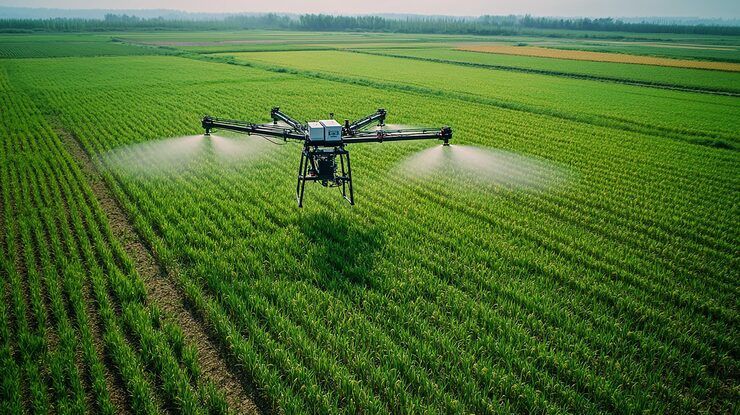
Below is a detailed exploration of how agriculture drone sprayers function, why they matter today, and how regulations and tools shape their use.
Context: What Agriculture Drone Sprayers Are and Why They Exist
Agriculture drone sprayers are unmanned aerial vehicles (UAVs) equipped with liquid tanks, precision nozzles, flow control systems, and intelligent navigation software. They were developed to address key agricultural challenges:
-
Uneven chemical distribution
-
Labor shortages in rural areas
-
Crop damage from heavy machinery
-
Inefficient pesticide application
-
Rising operational risks for farm workers
Modern agriculture relies heavily on precision farming and digital agriculture platforms. Drone sprayers fit within this ecosystem by integrating:
-
GPS-based route planning
-
AI-driven obstacle detection
-
Remote sensing and crop health analytics
-
Real-time data monitoring
The global rise of agri-tech innovation has accelerated drone deployment, particularly in countries with large-scale crop production such as India, the United States, China, and Brazil.
Drone sprayers typically operate through:
-
Pre-programmed flight paths
-
Automated altitude adjustment
-
Adjustable droplet size control
-
Smart return-to-home systems
This technology reduces human exposure to chemicals and improves spraying consistency.
Importance: Why Agriculture Drone Sprayers Matter Today
The importance of agriculture drone sprayers lies in their contribution to:
-
Sustainable farming solutions
-
Resource optimization
-
Climate-resilient agriculture
-
Improved crop yield management
-
Data-driven decision making
Key Benefits for Modern Farming
• Reduced chemical wastage
• Faster field coverage
• Lower water usage
• Improved precision targeting
• Enhanced crop health monitoring
Below is a simplified comparison table between traditional spraying and drone-based spraying:
| Parameter | Traditional Spraying | Drone Spraying |
|---|---|---|
| Precision Level | Moderate | High |
| Chemical Usage | Higher | Optimized |
| Labor Dependency | High | Lower |
| Crop Damage Risk | Possible | Minimal |
| Field Accessibility | Limited in wet soil | High |
Drone technology also plays a role in high-value crops such as fruits, vegetables, and horticulture where precision pesticide application is critical. Additionally, in regions with fragmented land holdings, drones provide flexible and scalable solutions.
From an economic perspective, agriculture drone sprayers support farm automation tools and help improve operational efficiency, especially during peak spraying seasons.
Recent Updates: Trends and Developments (2025–2026)
The agriculture drone sector has seen notable advancements in the past year.
Increased Adoption in India (2025)
The Government of India expanded support for drone-based precision agriculture through subsidy programs under the “Drone Shakti” initiative in 2025. Agricultural universities and farmer producer organizations have been encouraged to adopt UAV spraying systems for demonstration projects.
AI and Smart Analytics Integration (2025)
Manufacturers like DJI introduced updated agricultural drone models with enhanced AI flight stability and variable rate technology in early 2025. These systems can now automatically adjust spray flow based on crop density.
Battery and Payload Advancements (Late 2025)
Improved lithium battery systems have increased flight time and payload capacity, allowing coverage of larger fields per sortie. This has improved efficiency in large-scale farming regions.
Global Expansion of Smart Farming
Countries including the United States and Brazil reported expanded adoption of drone spraying in corn and soybean cultivation during 2025, especially in areas facing labor shortages.
The following simplified trend graph illustrates increasing adoption:
| Year | Estimated Adoption Index |
|---|---|
| 2022 | 40 |
| 2023 | 55 |
| 2024 | 70 |
| 2025 | 85 |
The upward trajectory indicates strong integration of UAV-based crop management within digital agriculture systems.
Laws or Policies: Regulatory Framework
Agriculture drone sprayers operate under aviation and agricultural regulations. These rules vary by country.
India
In India, drone operations are regulated by the Directorate General of Civil Aviation (DGCA). The Drone Rules 2021 simplified licensing requirements and categorized drones based on weight.
Key regulatory considerations:
-
Mandatory drone registration
-
Pilot certification requirements
-
Geofencing compliance
-
No-fly zone restrictions
-
Approved pesticide usage guidelines
Agricultural chemical application must also comply with the Insecticides Act and related state agricultural department policies.
United States
In the United States, drone spraying must follow FAA Part 107 regulations and additional agricultural application rules issued by environmental authorities.
Data Protection and Airspace Rules
Operators must ensure:
-
Secure data storage
-
Compliance with airspace maps
-
Safe altitude operation
-
Insurance coverage where required
Government-backed agricultural modernization programs continue to support drone deployment under structured guidelines.
Tools and Resources for Agriculture Drone Sprayers
Several tools and platforms support effective drone-based precision agriculture.
Mapping and Flight Planning Software
• DJI Agriculture App
• Pix4Dfields mapping software
• DroneDeploy agriculture mapping
Government and Regulatory Resources
• DGCA Digital Sky Platform (India)
• FAA DroneZone (United States)
• Ministry of Agriculture portals
Crop Monitoring Tools
• NDVI vegetation index apps
• Satellite-based farm analytics platforms
• IoT soil monitoring sensors
Training and Knowledge Platforms
• Agricultural university extension programs
• Online precision farming certification courses
• Agri-tech innovation incubators
These resources help farmers integrate smart farming technology into broader crop management strategies.
Frequently Asked Questions (FAQs)
What is an agriculture drone sprayer used for?
An agriculture drone sprayer is used for precision pesticide application, fertilizer spraying, crop monitoring, and targeted chemical distribution in farming operations.
Are drone sprayers suitable for small farms?
Yes. They are particularly beneficial for small and medium-sized farms where access to heavy machinery may be limited and precision spraying is required.
Do agriculture drones reduce environmental impact?
Drone sprayers can reduce excessive chemical usage through targeted application, contributing to sustainable farming solutions.
Is certification required to operate agricultural drones?
In most countries, operators must comply with aviation authority guidelines and obtain necessary certifications or registrations.
Can drone sprayers work in uneven terrain?
Yes. Advanced UAV spraying systems are designed with terrain-following radar and GPS technology, allowing operation in uneven or hilly farmland.
Conclusion
Agriculture drone sprayers represent a major advancement in precision agriculture and digital farming transformation. By combining UAV spraying systems, AI-powered mapping, and sustainable farming solutions, these technologies enhance productivity while addressing environmental and operational challenges.
With supportive government policies, regulatory clarity, and rapid technological improvements in battery efficiency and smart analytics, drone sprayers are becoming integral to modern agricultural ecosystems.
As global agriculture shifts toward data-driven and climate-resilient practices, agriculture drone sprayers are positioned as a key component of next-generation smart farming technology.