A Guide to Garment Printers for Small Businesses
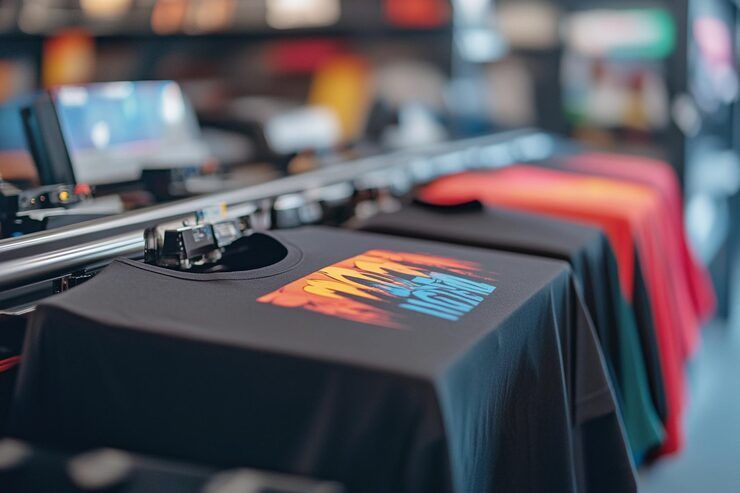
Garment printers are machines that place digital or transferred artwork onto textiles—most commonly T-shirts, hoodies, tote bags, caps, and sportswear. They emerged to solve two long-standing problems in apparel decoration: the need to print short runs economically and the need to personalize items quickly without the setup overhead of traditional screen printing.
Today, small businesses use several technologies—Direct to Garment (DTG), Direct to Film (DTF), sublimation, white-toner laser transfer, and heat-transfer vinyl (HTV)—each balancing cost, speed, fabric compatibility, and color vibrancy differently.
Importance – Why This Matters Now and Who It Affects
Who it benefits:
-
Micro and small brands that require low minimum ordering volume (MOQs) and rapid fulfillment.
-
Print-on-demand (POD) houses that need low-risk entry.
-
Local stores offering business uniforms, school apparel, team sets or event shirts.
-
Creators and influencers running limited drops.
Problems solved:
-
High setup costs for screen printing of small batches.
-
Complex color separation for multicolored designs.
-
Stock risk – print after sale reduces inventory waste.
-
Personalization (name, number, variant) at scale.
New challenges introduced:
-
Ink/film costs.
-
RIP (Raster Image Processor) software learning curves.
-
Pretreatment phase for DTG.
-
Film management for DTF.
-
Color management.
-
Textile chemical standards compliance.
Recent Updates (July 2024 – July 2025)
-
DTF consolidation and hybrid machines – Several suppliers released hybrid DTG/DTF printers, allowing stores to switch fabric types and order sizes. Competition focused on reducing surplus and ink waste.
-
Falling consumable costs (late 2024) – Prices of DTF films and powders dropped, improving margins for small shops.
-
Eco and safety focus (2024–2025) – More inks marketed as OEKO-Tex® ECO Passport ready; brands are demanding compliance.
-
Automation in RIPs (early 2025) – Cloud queue management, auto-nesting for DTF gang sheets, and built-in cost estimators became common in mid-tier software.
-
Maintenance improvements (2024–2025) – Entry-level DTG/DTF units added auto-nozzle checks and white ink circulation to reduce clogging during downtime.
-
Color management reforms (2025) – Wider use of ICC profiles and calibration wizards in budget printers, delivering stable color without expert staff.
Laws and Guidelines – Regulatory Touchpoints
Chemical safety (inks and pretreatments):
-
EU: REACH (Registration, Evaluation, Authorization and Restriction of Chemicals).
-
Global certification: OEKO-Tex® Standard 100 and ECO Passport ensure textiles and chemicals are tested for harmful substances.
Children’s clothing:
-
USA: CPSIA (Consumer Product Safety Improvement Act) for lead/phthalate limits and tracking labels.
-
EU: General Product Safety Regulation (GPSR) and national laws may apply.
Labeling and fiber content:
-
USA: Textile Fiber Products Identification Act (origin, fiber percentage, manufacturer/importer).
-
EU/UK: Fiber content labeling rules; care labeling is typically industry standard though not always mandatory.
Environment and waste:
-
EU: Extended Producer Responsibility (EPR) schemes for textiles encourage decorators to manage waste and track material flows.
Intellectual property:
-
Printing copyrighted or trademarked designs without permission can lead to legal liability.
Tools and Resources
RIP and workflow software:
-
Auto-nesting for DTF gang sheets, underbase control, cost calculators.
-
Cloud-based job queues with role-based access.
Color management:
-
ICC profile libraries bundled with printers/inks.
-
Entry-level spectrophotometers for custom profiling.
Maintenance and monitoring:
-
Automated nozzle checks and white-ink circulation.
-
Firmware/software-based service scheduling.
-
Consumables tracking for total cost of ownership (TCO).
Financial tools:
-
TCO spreadsheets (ink, film, powder, labor, waste, depreciation).
-
Per-print margin calculators (sometimes built into RIPs).
Learning and compliance:
-
OEKO-Tex® resources and chemical compliance cross-references.
-
SME compliance checklists from government portals.
How to Choose – A Quick Decision Framework
-
Order profile: For 1–50 piece orders, consider DTF, DTG or white-toner.
-
Fabric mix: Heavy polyester = sublimation or DTF; cotton = DTG or DTF.
-
Hand feel priority: DTG offers softer results; DTF may feel more “film-like.”
-
Maintenance tolerance: White-toner or sublimation need less upkeep; DTG/DTF need more.
-
Budget: Start with DTF or white-toner for lower capital cost; scale to DTG or hybrid later.
-
Compliance needs: For kidswear or EU markets, prioritize chemical compliance and keep SDS records.
Cost Components to Model Before Buying
-
Capital costs: Printer, heat press, ventilation, pretreat/dryer (DTG), film/powder shaker (DTF).
-
Consumables: Inks, pretreatments, films, powders, cleaning solutions, waste pads.
-
Labor: Setup, pretreatment, curing, packaging, QA.
-
Spoilage rate: Misprints, clogging, color mismatch.
-
Downtime/maintenance: Printhead replacement, service visits, cleaning cycles.
-
Software/profiles: RIP license, upgrades, spectrophotometer.
-
Compliance: Testing, documentation, labeling, possible re-certifications.
FAQs
Q1. DTG or DTF – what should a small shop start with?
If handling mixed fabrics and wanting to avoid pretreatment, DTF is usually more flexible and affordable. For premium cotton tees with soft feel (and willingness to manage pretreatment/maintenance), DTG gives excellent results.
Q2. How important is RIP software?
Very important. RIP controls white underbase, color management, cost estimates, nesting (DTF), and workflow automation. A solid RIP saves ink, reduces waste, and improves pricing accuracy.
Q3. Are these prints environmentally friendly?
That depends on chemistry, waste management, and energy use. Follow REACH/CPSIA as applicable, manage waste ink/films properly, and choose OEKO-Tex® or ECO Passport certified inks.
Q4. Can I legally print fan art or brand logos for customers?
Not without permission. Licenses or written authority are required. Always keep artwork records and order approvals.
Q5. How do I calculate price per print?
Add ink/film/powder + labor + overhead (rent, depreciation, utilities) + spoilage, then apply your profit margin. Many RIPs now include cost-per-print and TCO tools.
Conclusion
Clothing printing technologies have reshaped how small businesses produce and customize garments. With options like DTG, DTF, sublimation, and white-toner printers, entrepreneurs can match their method to order volumes, fabric types, budgets, and compliance needs.
Rapid innovations in 2024–2025—hybrid machines, lower consumable costs, and improved color management—are helping small shops compete with larger players.
However, success in garment printing goes beyond buying the right machine. Understanding total cost of ownership (TCO), following safety and labeling rules, and building reliable workflows are just as critical as print quality. With careful planning and compliance, small companies can deliver personalized apparel while keeping risks and costs under control.