A Complete Guide to Industrial Tapping Machines and Their Variants
A tapping machine is a specialized tool used to create internal threads inside holes, allowing components to be fastened securely with bolts or screws. In manufacturing environments, an industrial tapping machine plays a critical role in ensuring precision, consistency, and efficiency during production.
These machines exist because manual threading methods are time-consuming and prone to inconsistency. As industries evolved toward automation and mass production, tapping machines became essential for improving accuracy and reducing human error.
Different variants such as automatic tapping machine, semi automatic tapping machine, multi spindle tapping machine, vertical tapping machine, and high speed tapping machine have been developed to meet diverse industrial needs. Each type addresses specific operational requirements, from small workshops to large-scale production lines.
Why Industrial Tapping Machines Matter Today
Industrial tapping machines are increasingly relevant in modern manufacturing due to the growing demand for precision engineering and scalable production processes. Industries such as automotive, aerospace, electronics, and construction rely heavily on threaded components.
One of the main problems these machines solve is inconsistency in thread quality. Manual tapping often leads to uneven threads, tool breakage, or misalignment. Automated systems reduce these risks significantly.
Key benefits include:
- Improved accuracy in thread formation
- Higher production efficiency with reduced cycle times
- Lower material waste due to fewer errors
- Enhanced operator safety in controlled environments
The adoption of automatic tapping machine systems has particularly increased in high-volume manufacturing settings. Meanwhile, semi automatic tapping machine models remain relevant for medium-scale operations where flexibility is required.
Types of Industrial Tapping Machines
Vertical Tapping Machine
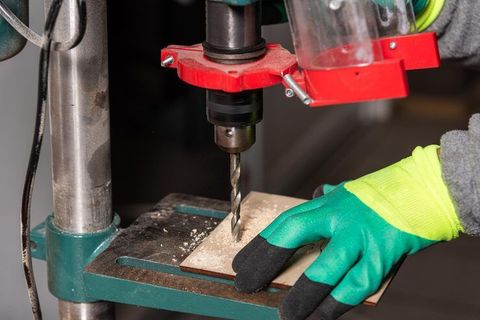
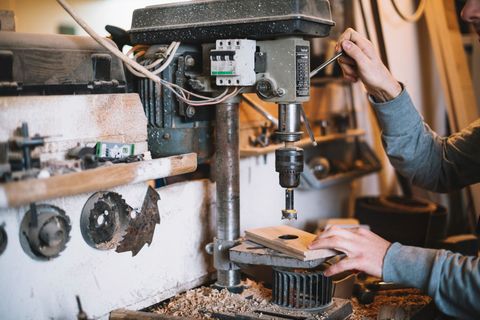
A vertical tapping machine is designed with a vertically aligned spindle, making it suitable for operations where gravity assists alignment. It is commonly used for drilling and tapping in fixed positions.
- Ideal for precision work
- Suitable for heavy components
- Common in workshops and assembly units
Automatic Tapping Machine
An automatic tapping machine operates with minimal human intervention. It is programmed to perform repetitive tapping tasks efficiently.
- High productivity in mass production
- Consistent thread quality
- Reduced labor dependency
Semi Automatic Tapping Machine
A semi automatic tapping machine combines manual control with automated functions. Operators typically position the workpiece, while the machine handles the tapping process.
- Flexible for varied tasks
- Lower complexity than fully automated systems
- Suitable for small to medium production volumes
Multi Spindle Tapping Machine
A multi spindle tapping machine uses multiple spindles to perform tapping operations simultaneously. This significantly increases throughput.
- Multiple threads created at once
- Efficient for batch production
- Reduces operational time
High Speed Tapping Machine
A high speed tapping machine is engineered for rapid operations without compromising accuracy. It is commonly used in industries where speed is critical.
- Faster cycle times
- Suitable for lightweight materials
- Optimized for continuous production
Comparative Overview of Tapping Machine Types
| Machine Type | Automation Level | Best Use Case | Speed Level | Flexibility |
|---|---|---|---|---|
| Vertical Tapping Machine | Low | Precision stationary work | Moderate | Medium |
| Automatic Tapping Machine | High | Mass production | High | Low |
| Semi Automatic Tapping Machine | Medium | Medium-scale operations | Moderate | High |
| Multi Spindle Tapping Machine | High | Batch processing | Very High | Low |
| High Speed Tapping Machine | High | Rapid production environments | Very High | Medium |
Recent Updates and Industry Trends
Over the past year, industrial tapping machines have seen several technological advancements driven by Industry 4.0 and smart manufacturing initiatives.
In 2025, manufacturers increasingly integrated IoT-enabled monitoring systems into tapping machines. These systems allow real-time tracking of performance metrics such as spindle speed, torque, and tool wear.
Another notable trend is the adoption of servo-driven tapping systems, which provide greater control over threading operations. This development improves precision and reduces the likelihood of tool breakage.
There has also been a shift toward energy-efficient machines, with updated models consuming less power while maintaining performance. This aligns with global sustainability goals introduced in 2024 and reinforced in 2025.
Additionally, the use of CNC-controlled automatic tapping machine systems has expanded. These machines enable programmable operations, making them adaptable to complex manufacturing requirements.
Regulations and Industrial Policies
Industrial tapping machines are influenced by various safety, environmental, and manufacturing regulations. In India, these machines fall under broader industrial machinery standards governed by national and international frameworks.
Key regulatory aspects include:
- Workplace safety standards ensuring proper machine guarding and operator protection
- Electrical compliance requirements for industrial equipment
- Environmental guidelines related to energy consumption and emissions
Government initiatives such as the Make in India program encourage the adoption of advanced manufacturing technologies, including automated tapping systems.
Additionally, compliance with standards such as ISO certifications ensures that tapping machines meet global quality benchmarks. These standards cover areas like machine safety, operational efficiency, and product reliability.
Manufacturers and operators must also adhere to labor safety laws, which require proper training and safe handling of industrial machinery.
Tools and Resources for Tapping Machine Applications
Several tools and resources support the effective use and understanding of industrial tapping machines. These resources help improve productivity, ensure accuracy, and assist in decision-making.
Commonly used tools include:
- Thread pitch calculators for determining correct threading specifications
- Torque calculation tools to prevent tool breakage
- CNC programming software for automated tapping operations
- Maintenance tracking systems to monitor machine performance
Useful resource categories include:
- Engineering design software for thread modeling
- Industrial automation platforms for machine integration
- Training modules for machine operators
- Technical manuals and specification guides
These tools contribute to better planning, execution, and maintenance of tapping operations across industries.
Frequently Asked Questions
What is the primary function of a tapping machine?
A tapping machine is used to create internal threads inside holes so that fasteners like bolts and screws can be securely fitted. It ensures precision and uniformity in threaded components.
How does an automatic tapping machine differ from a semi automatic tapping machine?
An automatic tapping machine performs operations with minimal human involvement, while a semi automatic tapping machine requires some level of manual input, such as positioning the workpiece.
What industries commonly use industrial tapping machines?
Industries such as automotive, aerospace, electronics, metal fabrication, and construction widely use industrial tapping machines for producing threaded components.
Why is a multi spindle tapping machine important in manufacturing?
A multi spindle tapping machine increases productivity by performing multiple tapping operations simultaneously. This reduces cycle time and improves efficiency in batch production.
What factors influence the choice of a tapping machine?
Key factors include:
- Production volume
- Material type
- Required precision
- Automation level
- Operational speed
Conclusion
Industrial tapping machines are essential tools in modern manufacturing, enabling precise and efficient thread creation across a wide range of applications. From vertical tapping machine setups to advanced high speed tapping machine systems, each variant serves a specific purpose in meeting production demands.
The increasing adoption of automation, smart technologies, and energy-efficient designs reflects the evolving nature of industrial processes. As industries continue to prioritize accuracy and scalability, tapping machines will remain a critical component of manufacturing infrastructure.
Understanding the different types, applications, and trends associated with tapping machines helps businesses and professionals make informed decisions and adapt to changing industrial requirements.