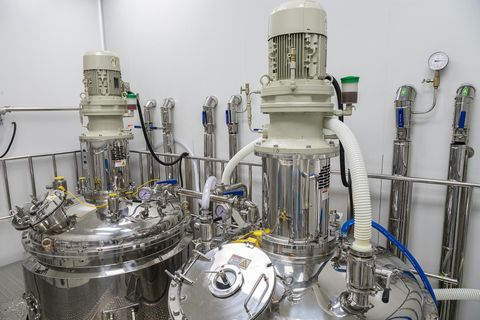
A Complete Guide to Distillation Units in Industry
Distillation units are essential systems used in many industries to separate mixtures into individual components based on differences in boiling points. This method has been used for centuries, beginning with early forms of alcohol production and evolving into complex industrial processes found in modern refineries and chemical plants. Today, distillation plays a central role in sectors such as energy, pharmaceuticals, water treatment, and food processing.
At the core of this process is the distillation column, a tall structure where liquids are heated, vaporized, and then condensed to achieve separation. Industrial setups such as an oil refinery distillation unit rely on these columns to process crude oil into usable products like gasoline, diesel, and jet fuel. A crude distillation unit (CDU) is typically the first stage in refining, while a vacuum distillation unit refinery handles heavier fractions under reduced pressure.
The development of distillation plant design has become more advanced over time, incorporating automation, energy efficiency, and environmental considerations. Alongside this, distillation column manufacturers play a role in engineering and producing equipment tailored to specific industrial requirements.
Importance
Distillation units are vital to modern life, even though they often operate behind the scenes. Many everyday products depend on refined materials that originate from distillation processes. Fuels for transportation, purified water, chemicals used in manufacturing, and even certain food ingredients are all linked to this technology.
The importance of these systems can be understood through their impact on key areas:
- Energy production supports transportation and electricity generation through refined fuels
- Environmental management enables separation and treatment of waste streams
- Industrial manufacturing ensures consistent quality in chemicals and materials
- Public health contributes to clean water and pharmaceutical production
In an oil refinery distillation unit, crude oil is separated into different fractions, each with a specific use. Without this step, raw crude oil would remain largely unusable. Similarly, the vacuum distillation unit refinery allows further processing of heavier residues that cannot be separated under normal atmospheric conditions.
As global demand for energy and materials continues, efficient distillation plant design becomes increasingly important. It helps reduce energy consumption, improves output quality, and minimizes environmental impact.
Recent Updates
Between 2024 and 2026, several trends have influenced how distillation units are designed and operated. While the core principles remain unchanged, advancements in technology and environmental priorities have shaped modern practices.
One notable trend is the integration of digital monitoring systems. Many distillation columns now include sensors and control software that track temperature, pressure, and flow rates in real time. This improves operational accuracy and reduces the likelihood of system imbalances.
Another development is the focus on energy efficiency. Distillation is energy-intensive, especially in large-scale facilities like a crude distillation unit (CDU). Engineers are adopting techniques such as heat integration, where excess heat from one part of the process is reused elsewhere, lowering overall energy demand.
There is also growing attention to modular plant design. Instead of constructing large, fixed installations, some facilities are being built using modular units that can be transported and assembled more easily. This approach offers flexibility in scaling operations.
Environmental considerations have also influenced the design of vacuum distillation unit refinery systems. Reduced emissions, improved waste handling, and better control of by-products are now common priorities.
Laws or Policies
Distillation units operate within a framework of regulations that aim to ensure safety, environmental protection, and operational reliability. These rules vary by country but generally follow similar principles.
In India, industrial distillation systems are influenced by regulations from bodies such as the Central Pollution Control Board (CPCB) and the Ministry of Environment, Forest and Climate Change. These organizations set guidelines for emissions, waste disposal, and energy usage.
Key regulatory areas include:
- Emission standards limit the release of pollutants into the air
- Safety protocols govern the handling of high-temperature and high-pressure systems
- Waste management rules ensure proper treatment of residues and by-products
- Energy efficiency guidelines encourage reduced consumption and improved system design
For example, an oil refinery distillation unit must comply with strict emission norms to reduce the release of sulfur compounds and other pollutants. Similarly, a crude distillation unit (CDU) must follow safety standards related to flammable materials and pressure control.
Internationally, guidelines from organizations such as the International Organization for Standardization (ISO) and the American Petroleum Institute (API) are often referenced in distillation plant design. These standards help maintain consistency and safety across different regions.
Tools and Resources
Designing and operating distillation units involves a range of tools and resources that support engineers, operators, and planners. These tools help simulate processes, analyze performance, and improve system efficiency.
Some commonly used resources include:
- Process simulation software such as Aspen HYSYS or ChemCAD, which models distillation behavior under different conditions
- Engineering design tools that assist in calculating column dimensions, tray efficiency, and heat exchange requirements
- Online calculators for estimating boiling points, vapor-liquid equilibrium, and energy consumption
- Industry publications and technical standards that provide guidelines for distillation plant design
In addition, collaboration with distillation column manufacturers helps ensure that equipment meets specific operational needs. These manufacturers often provide technical documentation, performance data, and customization options based on the intended application.
The combination of digital tools and practical expertise allows industries to optimize their distillation systems while maintaining safety and compliance.
Types of Distillation Units
Understanding the different types of distillation units helps clarify how they are used across industries. Each type is designed for a specific purpose and operating condition.
Crude Distillation Unit (CDU)
A crude distillation unit (CDU) is the primary stage in an oil refinery. It separates crude oil into fractions based on boiling point ranges.
Typical outputs include:
- Light gases used for fuel or further processing
- Naphtha used in petrochemical production
- Kerosene for aviation fuel
- Diesel and gas oil for transportation and industry
Vacuum Distillation Unit Refinery
A vacuum distillation unit refinery processes the heavier fractions that remain after the CDU stage. By operating under reduced pressure, it lowers boiling points and prevents thermal decomposition.
This unit is important for producing:
- Vacuum gas oil used in further refining processes
- Residues used in asphalt or heavy fuel production
Other Distillation Systems
Beyond oil refining, distillation is used in various industries:
- Fractional distillation for separating complex mixtures
- Steam distillation for extracting essential oils
- Simple distillation for basic separation tasks
Basic Components of a Distillation Column
A distillation column consists of several key components that work together to achieve separation.
| Component | Function |
|---|---|
| Reboiler | Heats the liquid mixture to generate vapor |
| Column trays/packing | Provides surface area for vapor-liquid interaction |
| Condenser | Cools vapor back into liquid |
| Distillate outlet | Collects the lighter fraction |
| Bottoms outlet | Removes heavier components |
Each part plays a role in maintaining the balance between vapor and liquid phases, which is essential for effective separation.
FAQs
What is a crude distillation unit (CDU) and how does it work?
A crude distillation unit (CDU) is the first processing step in an oil refinery. It heats crude oil and separates it into different fractions based on boiling points, producing fuels and intermediate products.
How does a vacuum distillation unit refinery differ from a CDU?
A vacuum distillation unit refinery operates under reduced pressure, allowing heavier components to be separated at lower temperatures. This prevents thermal damage and enables further refining of residues from the CDU.
What factors influence distillation plant design?
Distillation plant design depends on factors such as feed composition, desired output products, energy efficiency requirements, and environmental regulations. Equipment size and operating conditions are also important considerations.
What do distillation column manufacturers provide?
Distillation column manufacturers design and produce columns, trays, packing materials, and related components. They also supply technical specifications and customization options for different industrial applications.
Why is an oil refinery distillation unit important?
An oil refinery distillation unit is important because it converts raw crude oil into usable products like gasoline, diesel, and jet fuel. Without this process, crude oil would not be suitable for most applications.
Conclusion
Distillation units are fundamental to many industrial processes, particularly in energy and chemical production. Systems such as the crude distillation unit (CDU) and vacuum distillation unit refinery enable the transformation of raw materials into useful products. Advances in technology and design continue to improve efficiency and environmental performance. Understanding the role of distillation plant design and the contribution of distillation column manufacturers helps clarify how these systems operate within modern industry.